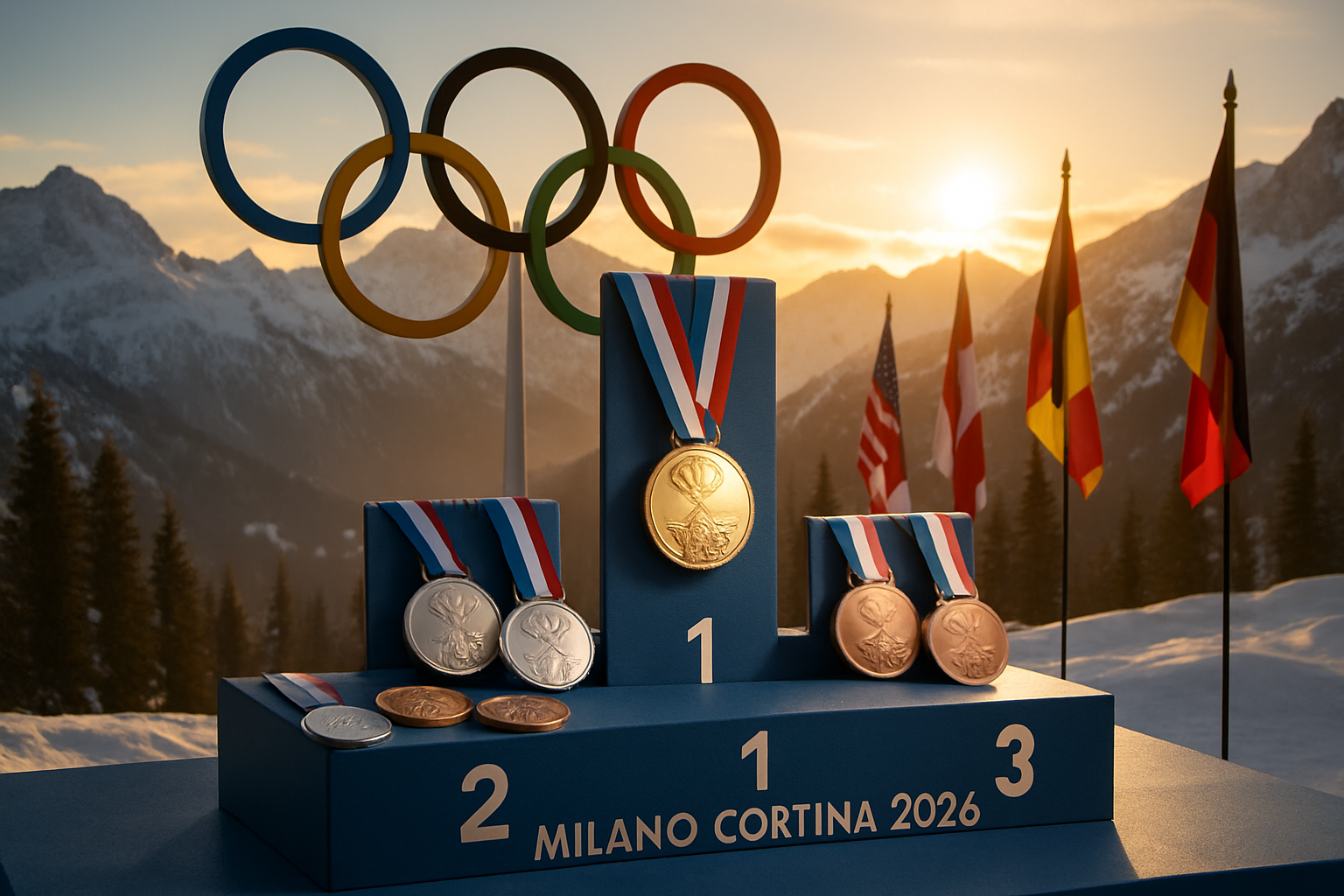
Day two of the 2026 Milano-Cortina Winter Olympics delivered historic performances, breakthrough victories, and heart-stopping drama across the snow-capped Alps as athletes from 92 nations competed for Olympic glory in the most geographically dispersed Winter Games in history.
Bulgaria Breaks 20-Year Medal Drought
In perhaps the most emotional moment of the day, 20-year-old Bulgarian snowboarder Tervel Zamfirov captured bronze in the parallel giant slalom, ending Bulgaria's 20-year Winter Olympic medal drought. Competing as an Olympic debutant, Zamfirov defeated Slovenia's experienced Tim Mastnak in a dramatic photo-finish small final that required careful review.
The victory marks Bulgaria's first Winter Olympic medal since Evgenia Radanova's silver in short track speed skating at Turin 2006. Zamfirov's achievement represents the culmination of Bulgaria's expanded investment in winter sports programs and provides inspiration for the nation's growing community of winter sports athletes.
"This bronze medal means everything to Bulgaria and our winter sports development. After 20 years, we're back on the Olympic podium."
— Tervel Zamfirov, Bulgarian Olympic Bronze Medalist
Norway's Cross-Country Skiing Dominance Continues
Johannes Høsflot Klæbo reinforced Norway's legendary status in cross-country skiing by claiming his sixth Olympic gold medal in the men's 20-kilometer skiathlon. The Trøndelag athlete dominated the challenging course that combined classical and freestyle techniques, demonstrating the technical mastery that has made him one of Norway's most successful Winter Olympians.
The skiathlon event, featuring the demanding ski change from classical to freestyle technique, proved dramatic with multiple falls, equipment failures, and strategic battles that kept spectators on edge throughout the 20-kilometer course.
International Medal Celebrations
The second day of competition showcased the global reach of winter sports with multiple nations claiming their first medals of the Games:
Women's Alpine Skiing Downhill
American Breezy Johnson claimed gold in the women's downhill after a masterful performance on the challenging Tofana course in Cortina d'Ampezzo. Germany's Emma Aicher secured silver, earning her nation's first medal of the Games, while Italy's Sofia Goggia claimed bronze, completing a podium that reflected the international competitive depth.
The race was overshadowed by a serious crash involving American veteran Lindsey Vonn, whose remarkable comeback attempt at age 41 ended dramatically when she crashed just 13 seconds into her run. The 41-year-old legend, competing with a recently ruptured ACL, was evacuated by helicopter after the incident.
Snowboard Parallel Giant Slalom
Austria's Benjamin Karl successfully defended his Olympic title, capturing gold in the men's parallel giant slalom final against South Korean surprise finalist Kim Sang-kyum. The Austrian's victory came after a superb final run that demonstrated his continued dominance in the discipline.
South Korea's Kim Sang-kyum provided one of the day's biggest surprises by reaching the final and claiming silver - his nation's first medal of the Milano-Cortina Games. His breakthrough performance highlights the global expansion of winter sports participation.
French Medal Campaign Opens
France ended its medal drought when Mathis Desloges claimed silver in the men's skiathlon, providing the French delegation with its first podium finish of the Games. The result positions France well for upcoming biathlon events where the team enters as medal favorites.
The French biathlon team led the mixed relay competition, demonstrating the depth that has made them consistent Olympic contenders in Nordic disciplines.
Dramatic Incidents and Challenges
The second day of competition highlighted both the triumphs and risks inherent in Winter Olympic sports. Beyond Vonn's crash, multiple athletes faced equipment failures, challenging weather conditions, and the physical demands of competing at the highest level.
Competition continued despite ongoing infrastructure challenges, including power outages that had affected earlier curling matches and transportation difficulties caused by incomplete cable car systems in the Cortina region.
Looking Ahead
As the Games progress through their second day, medal expectations remain high for traditional winter sports powers including Norway, Germany, and the Netherlands. The United States showed strong early form in alpine skiing despite the Vonn incident, while host nation Italy celebrated home victories across multiple venues.
The diverse medal distribution across nations and disciplines reflects the global growth of winter sports and the success of the Olympic development programs that have expanded participation beyond traditional winter sports countries.
Competition continues across all seven Olympic venues spanning more than 400 kilometers from Milan to Cortina d'Ampezzo, with 116 medal events scheduled through February 22. The unique geographic spread of venues has created logistical challenges but also showcased the stunning Alpine landscape that serves as the backdrop for these historic Games.