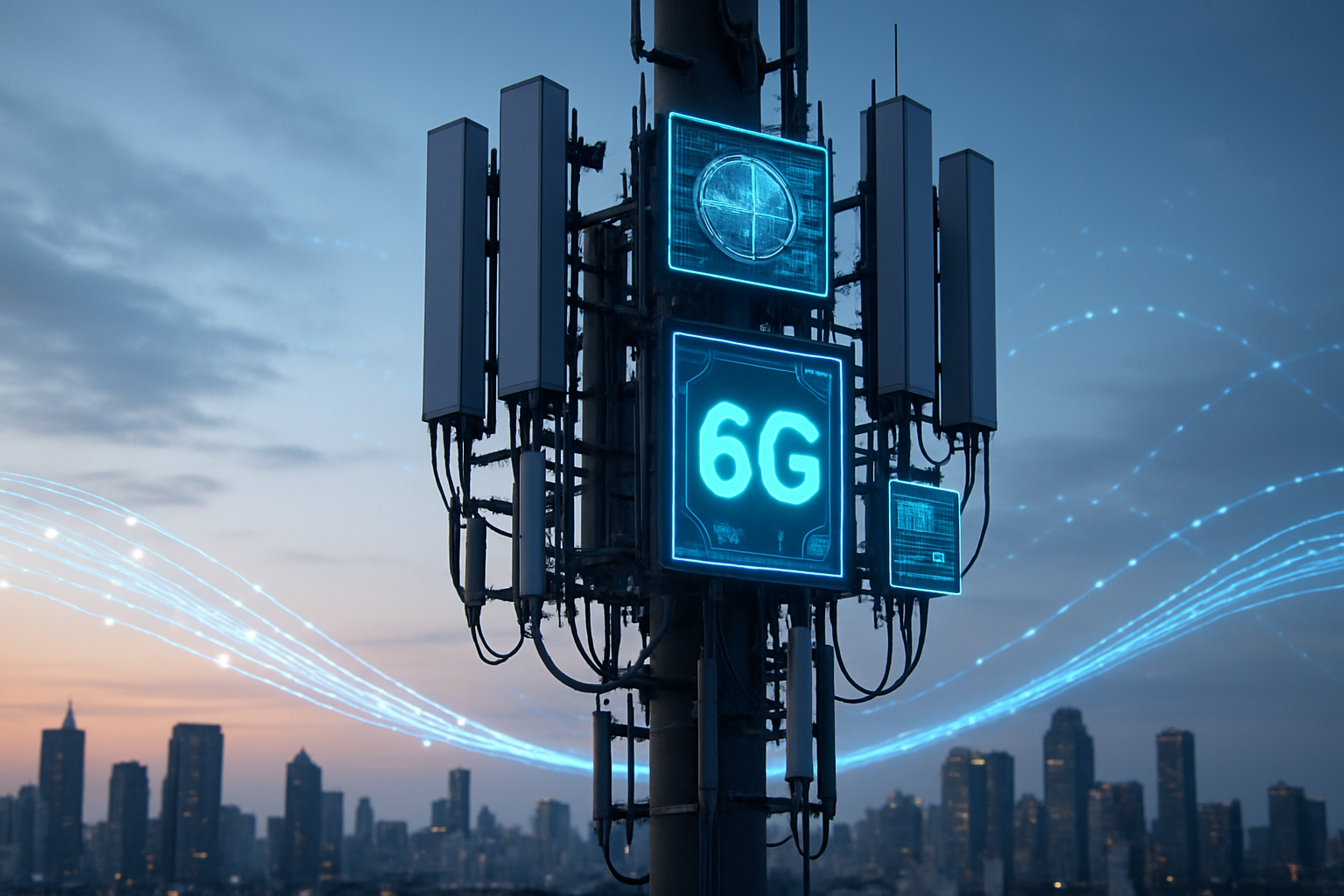
The next generation of wireless technology is approaching faster than anticipated, with industry experts suggesting that first commercial 6G networks could become operational within just two years, fundamentally transforming how consumers interact with digital services and telecommunications infrastructure.
Finnish telecommunications leaders, building on the country's pioneering role in mobile technology development, have indicated that 6G networks with their promise of ultra-low latency could debut commercially as early as 2028. This timeline significantly accelerates previous industry projections, which had typically targeted the early 2030s for widespread 6G deployment.
Revolutionary Consumer Applications
The implications of 6G technology extend far beyond faster download speeds. According to Finnish industry analysis, 6G networks will enable entirely new categories of consumer applications that were previously impossible due to latency and bandwidth limitations. These include real-time holographic communications, immersive augmented reality experiences integrated into daily life, and instantaneous response times that could revolutionize everything from gaming to autonomous vehicle operations.
The ultra-low latency promised by 6G technology – potentially as low as 0.1 milliseconds compared to 5G's 1-5 milliseconds – opens possibilities for applications requiring near-instantaneous response times. This includes remote surgery, real-time industrial automation, and sophisticated AI-powered services that can process and respond to user inputs faster than human perception.
Building on 5G Infrastructure Success
The accelerated 6G timeline builds upon significant advances in 5G technology and AI integration that have emerged throughout 2025 and 2026. Major telecommunications companies have been developing AI-enhanced network optimization capabilities, with Nokia's partnership with Nvidia in Brazil demonstrating how artificial intelligence can enable real-time network optimization, predictive maintenance, and automatic traffic routing.
These AI-powered 5G networks have proven successful in diverse geographical conditions, from urban density in São Paulo to remote Amazonian regions, providing crucial operational experience that directly informs 6G development. The integration of edge computing architecture, which processes AI directly in base stations, has achieved the ultra-low latency requirements that serve as foundational technology for 6G advancement.
"The transition from 5G to 6G represents more than just improved specifications – it's about enabling entirely new ways of connecting and interacting with technology."
— Finnish Telecommunications Industry Analysis
Global Competition and Strategic Positioning
The race to deploy 6G networks has intensified amid growing competition between Western and Chinese telecommunications companies. Samsung Electronics achieved critical 6G technology milestones through successful testing with South Korean partners, while Chinese companies have invested heavily in AI-enhanced telecommunications infrastructure.
Finland's position in leading 6G development reflects the country's continued telecommunications innovation leadership, building on its historical role in mobile technology advancement. The Finnish approach emphasizes trusted supply chain relationships and technological sovereignty considerations that have become increasingly important in global telecommunications policy.
European telecommunications companies, including Nokia, are positioning themselves as preferred Western alternatives to Chinese suppliers in markets where governments and operators prioritize supply chain security and technological sovereignty over cost considerations alone.
Infrastructure and Economic Implications
The deployment of 6G networks will require massive infrastructure investment, building upon the unprecedented $570+ billion global infrastructure surge occurring throughout 2026. Modern telecommunications projects now incorporate sophisticated technology integration from the design phase, including real-time monitoring, predictive maintenance, digital payments, and environmental optimization.
However, the industry faces significant challenges, including the global semiconductor shortage that has driven memory chip prices up sixfold, affecting companies like Samsung, SK Hynix, and Micron. These supply chain constraints have created a "critical vulnerability window" that extends until new fabrication facilities come online in 2027, potentially impacting 6G infrastructure deployment timelines.
Despite these challenges, the economic multiplier effects of 6G networks are expected to be substantial, enabling new industries and services while enhancing business competitiveness across sectors. The technology will likely create comprehensive employment opportunities spanning software development, data analysis, cybersecurity, and specialized network operations.
Technical Challenges and Solutions
The transition to 6G networks presents complex technical challenges that extend beyond traditional telecommunications infrastructure. The technology requires integration with existing 5G networks while simultaneously preparing for emerging applications that don't yet exist in commercial form.
Engineers are addressing frequency spectrum management, power efficiency requirements, and the need for backward compatibility with current mobile devices and systems. The successful deployment will depend on seamless integration across existing network components while introducing revolutionary new capabilities.
Advanced AI integration will be central to 6G networks, with systems capable of learning and adapting to user patterns, predicting network congestion, and automatically optimizing performance across millions of connected devices simultaneously.
Global Standards and Cooperation
The development of 6G technology requires unprecedented international cooperation despite the competitive dynamics in the telecommunications industry. Technical standards must be established that ensure global interoperability while addressing security concerns and sovereignty requirements of different nations.
Finnish leadership in 6G development provides valuable technical expertise that could influence worldwide purchasing decisions and industry adoption patterns. The success of Finnish-led initiatives could establish international standards for intelligent network infrastructure, potentially affecting the competitive dynamics between Western and Chinese telecommunications suppliers.
Consumer Impact and Future Applications
For consumers, 6G technology promises to eliminate many current limitations of mobile connectivity. Download speeds could reach terabit levels, while the ultra-low latency enables applications that blur the line between digital and physical experiences. Smart cities will become more responsive, autonomous vehicles more reliable, and remote work more immersive through advanced AR/VR capabilities.
The technology will enable new forms of human-computer interaction, potentially including direct neural interfaces and seamless integration between artificial intelligence and human decision-making processes. Healthcare applications could include real-time monitoring and intervention systems that respond faster than human practitioners.
Strategic Timeline and Market Readiness
The potential two-year timeline for 6G deployment represents a remarkable acceleration in telecommunications development cycles. This timeline reflects both the maturation of underlying technologies and the competitive pressure to achieve market leadership in next-generation wireless capabilities.
Industry preparation involves extensive testing phases, regulatory approvals, and the complex process of upgrading existing infrastructure while maintaining service continuity for current users. The success of these efforts will determine whether the ambitious timeline can be achieved while maintaining network reliability and security standards.
The convergence of technological advancement, competitive pressure, and economic incentives suggests that 6G networks may indeed become operational sooner than previously anticipated, potentially reshaping global telecommunications within the current decade rather than the next.