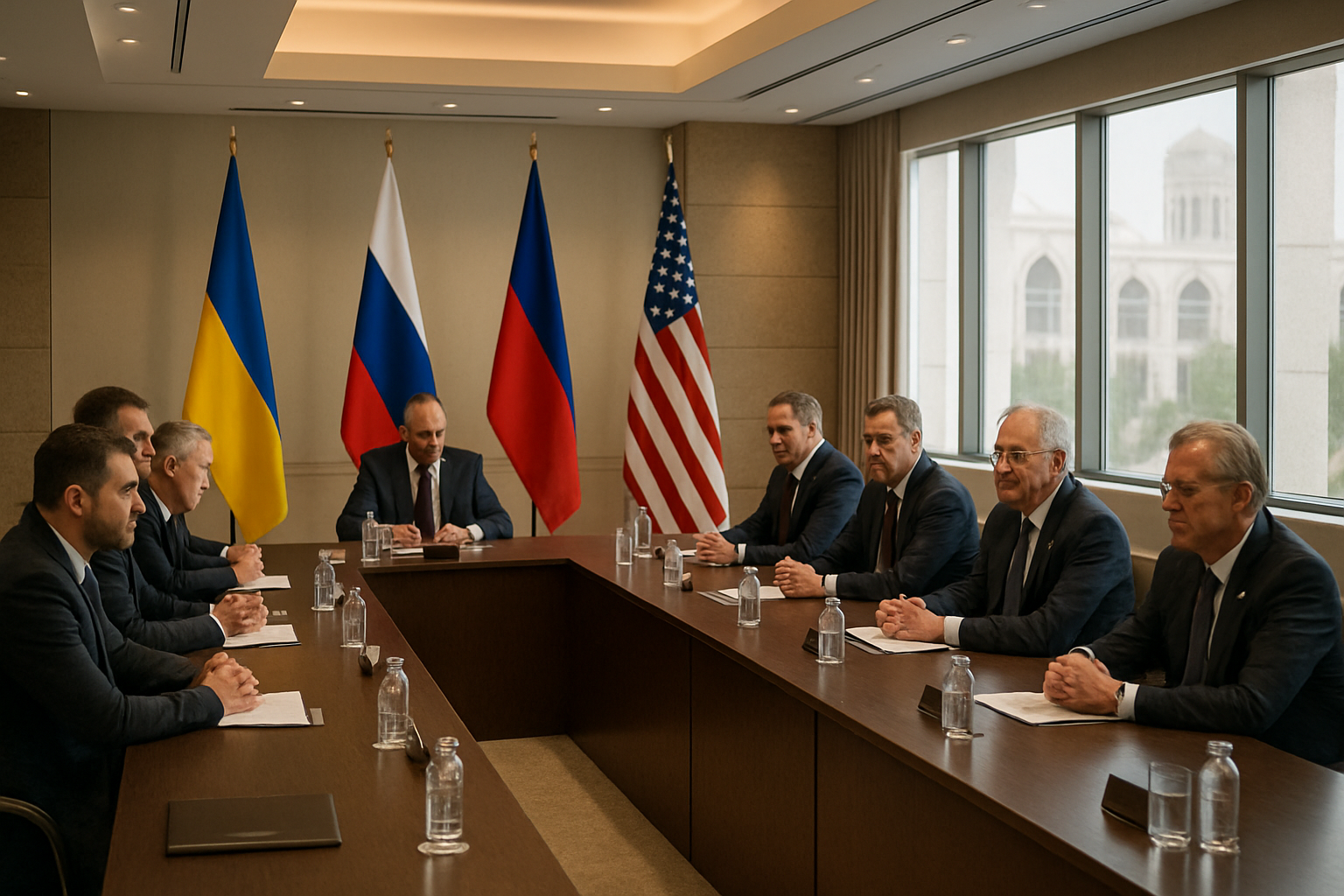
High-level negotiators from Ukraine, Russia, and the United States gathered in Abu Dhabi on Wednesday for a crucial second round of peace talks aimed at ending the four-year conflict, even as Russia unleashed what Ukrainian authorities described as its "most powerful" missile and drone attack of 2026 on energy infrastructure across multiple regions.
The talks, which began Wednesday morning local time, represent the most significant diplomatic effort to resolve the Ukraine-Russia war since the conflict began in February 2022. However, they commence under the shadow of devastating Russian strikes that have left more than 1,170 buildings in Kyiv without heating amid temperatures plummeting to minus-20°C, with some northern regions expecting minus-30°C.
Major Escalation on Eve of Negotiations
Just hours before the peace negotiations were scheduled to begin, Russia launched what DTEK, Ukraine's largest private energy company, called the "most powerful blow" to the country's power grid in 2026. The coordinated assault involved hundreds of drones and missiles targeting energy infrastructure across eight Ukrainian oblasts, effectively breaking an informal Trump-Putin agreement to avoid energy targets during diplomatic efforts.
The attacks struck multiple critical facilities: Kyiv's Darnytska CHP-4 power plant was temporarily shut down, forcing emergency power cuts across the capital's left bank. In Kharkiv, a three-hour bombardment forced 820 buildings to drain their heating systems to prevent freezing, while a thermal power plant was completely shut down. The port city of Zaporizhzhia reported one civilian death and injuries from drone strikes.
"This is terror and escalation by Moscow," Ukrainian President Volodymyr Zelensky declared in response to the attacks.
— President Volodymyr Zelensky
Energy Minister Herman Halushchenko described the situation in Kyiv as "critical," with hundreds of thousands of families left without electricity and heating during one of the harshest winter periods in recent memory. Emergency warming centers have been activated across affected regions.
Key Negotiators and Format
The Ukrainian delegation is led by Rustem Umerov, head of the country's Security Council, while Russia is represented by Igor Kostyukov, director of the Russian military intelligence service. The American team is headed by President Donald Trump's special envoy Steve Witkoff, who previously participated in preliminary talks in January.
According to Cypriot sources familiar with the negotiations, this represents a continuation of the trilateral format that was established during the first round of talks held in Abu Dhabi last month. The United Arab Emirates continues to serve as a neutral host venue, leveraging its diplomatic relationships with all parties involved.
The timing of the talks is particularly significant, occurring just days after NATO Secretary General Mark Rutte made a surprise visit to Kyiv on Tuesday, where he addressed the Ukrainian Parliament and condemned the Russian attacks as sending a "bad signal" before crucial negotiations.
Central Sticking Points
According to France 24's reporting, the main sticking point remains the long-term fate of territory in eastern Ukraine currently under Russian control. Russia has made maximalist demands regarding territorial concessions, while Ukraine maintains its position on territorial integrity and sovereignty.
The negotiations face additional complexity due to European diplomatic divisions. Germany continues to oppose direct Putin talks, citing Russia's "maximalist demands," while France and Italy have pushed for maintaining diplomatic channels with Moscow. The UK and France have pledged potential troop deployments for any future peace agreement enforcement, a proposal that has prompted Russian threats.
Strategic Context
The talks come as military dynamics on the ground continue to favor Russia. According to the Institute for Study of War, Russian forces captured 481 square kilometers of Ukrainian territory in January 2026, compared to 260 square kilometers in December 2025. Over 10,000 Russian drones and bombs were launched against Ukrainian targets in January alone.
Despite this military pressure, President Zelensky has expressed "cautious optimism" about achieving what he terms "dignified and lasting peace." However, the latest energy infrastructure attacks suggest Russia is attempting to use humanitarian pressure during extreme winter conditions to strengthen its negotiating position.
International Response
Poland responded to the Russian attacks by deploying fighter jets preemptively, while Sweden and Denmark announced a new €246 million air defense package for Ukraine, including advanced Tridon Mk2 systems. The timing of these pledges, just as peace talks were beginning, underscores the complex balance between diplomatic engagement and continued military support.
Trump administration officials have maintained that the talks should proceed despite the escalation. President Trump had previously stated he wanted Putin to "put an end" to the war, though Russian sources indicate Moscow views the current military pressure as necessary leverage for negotiations.
Humanitarian Crisis Deepens
The energy attacks have created an acute humanitarian crisis in the midst of diplomatic efforts. Over 17.8 million Ukrainians have accessed winter support programs, and emergency warming centers are struggling to accommodate the influx of families without heating.
In a separate development highlighting international cooperation during the crisis, SpaceX successfully blocked Russian attempts to use Starlink satellite internet for controlling attack drones, with Ukrainian Defense Minister Rustem Umerov thanking Elon Musk for the "true championship of freedom."
"The first measures are already yielding results. Elon Musk is a true champion of freedom and a true friend of the Ukrainian people."
— Rustem Umerov, Ukrainian Defense Minister
Looking Ahead
The Abu Dhabi talks are expected to continue through the week, with multiple sources suggesting the framework established during these sessions could determine whether more substantive negotiations involving higher-level officials, potentially including Putin and Zelensky directly, might be possible in the future.
However, the Kremlin has insisted that any direct Putin-Zelensky talks must occur only in Moscow, a condition that Ukrainian officials have not accepted. The current trilateral format represents a compromise that allows for substantive discussions while avoiding some of the symbolic concessions that direct bilateral talks might require.
The success or failure of these talks will likely have profound implications not only for Ukraine and Russia but for the broader European security architecture and America's role in mediating international conflicts. With both sides maintaining significant military capabilities and showing willingness to escalate even during diplomatic engagement, the path to peace remains fraught with challenges.
As negotiations continue, the world watches to see whether diplomatic engagement can overcome the momentum of military conflict, or whether the latest escalation represents a calculated effort to achieve through humanitarian pressure what four years of warfare have failed to deliver through military means alone.