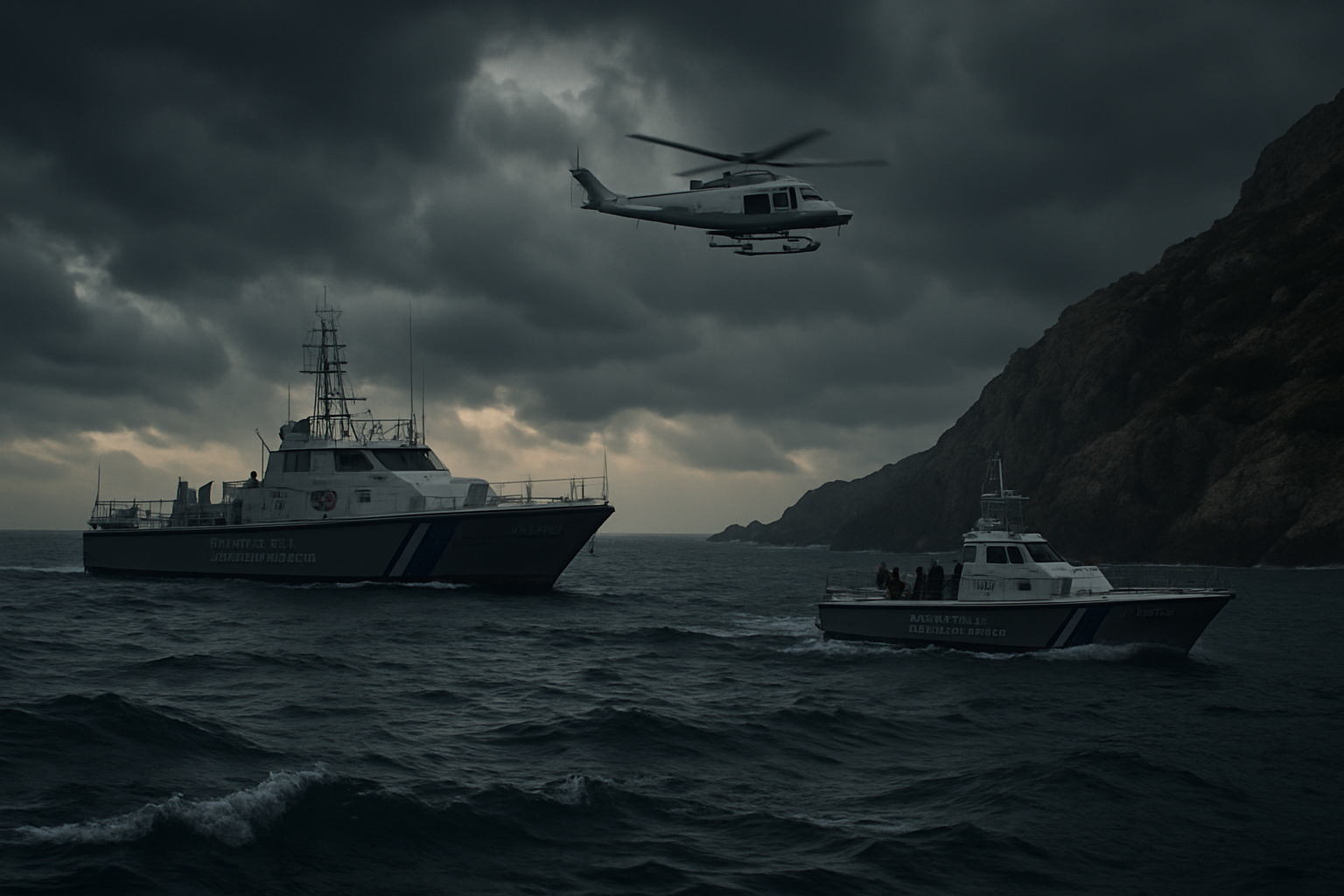
At least 15 migrants died and 25 others were injured when their boat collided with a Greek coast guard vessel off the island of Chios in the eastern Aegean Sea on Tuesday, marking one of the latest tragedies along the dangerous Mediterranean migration route.
Greek authorities confirmed that 14 bodies—11 men and three women—were initially recovered from the sea shortly after the collision. One injured woman later succumbed to her wounds in hospital, raising the death toll to 15. Among the 25 injured were 11 children and two Greek coast guard officers who were transferred to medical facilities for treatment.
The incident occurred when a coast guard patrol spotted a dinghy transporting migrants toward Chios, which lies just a few miles off the coast of Turkey. According to a coast guard official who spoke to Reuters, the migrants were ordered to turn back when their vessel was detected approaching Greek territorial waters.
"The smugglers maneuvered toward the coast guard vessel causing a collision," the official told Reuters.
— Greek Coast Guard Official
However, Reuters was unable to independently verify exactly how the collision occurred, and the nationality of the migrants aboard the vessel has not been confirmed. Witness reports suggest that approximately 30-35 people were on board the migrant boat at the time of the accident.
Immediate Response and Rescue Operations
A large-scale search and rescue operation was launched immediately following the collision. Greek coast guard vessels, private boats, divers, and a helicopter were deployed to search for any missing passengers, as authorities worked to determine the exact number of migrants who had been aboard the speedboat.
The injured survivors were transported to Chios port, where emergency medical teams rushed them to the island's hospital for treatment. According to Greece's public broadcaster ERT, two coast guard officers sustained injuries during the incident and were also hospitalized.
Search operations continued through the night and into Wednesday morning as authorities sought to ensure no additional victims remained in the water. The coast guard has not yet declared the search officially concluded, as uncertainty remains about the total number of passengers aboard the migrant vessel.
Context of Aegean Migration Crisis
This tragedy underscores the ongoing humanitarian crisis in the Aegean Sea, where migrants regularly attempt dangerous crossings from Turkey to reach the Greek islands—often the first point of entry into the European Union. The short distance between the Turkish coast and Greek islands like Chios, Lesbos, and Samos has made this route particularly popular among those seeking asylum or better economic opportunities in Europe.
Greece, positioned in the southeast corner of Europe, has long served as a primary gateway for migrants and refugees fleeing conflict, persecution, and economic hardship in the Middle East, Africa, and Asia. The country has struggled to manage the influx while maintaining border security and providing humanitarian assistance.
The waters between Turkey and Greece have witnessed numerous similar tragedies over the years, with overcrowded and often unseaworthy vessels regularly capsizing or encountering difficulties during the crossing. The use of speedboats and dinghies in rough sea conditions has contributed to the high casualty rates along this migration route.
Investigation and Broader Implications
Greek authorities have launched an investigation into the circumstances surrounding the collision. The incident raises questions about patrol procedures and the challenges faced by coast guard forces in managing migration flows while ensuring the safety of all involved parties.
The tragedy occurs against the backdrop of broader European debates about migration policy, border security, and humanitarian obligations. Greece and other frontline EU member states have repeatedly called for greater European solidarity in managing migration flows and providing adequate resources for border management and refugee support.
European Union officials have emphasized the need for comprehensive approaches that address both the humanitarian aspects of migration and the security concerns of member states. However, achieving consensus on migration policy remains one of the most challenging issues facing the bloc.
Ongoing Challenges in the Eastern Mediterranean
The Eastern Mediterranean route remains one of the most active and dangerous migration passages into Europe. Despite various efforts to strengthen border controls and improve cooperation between Turkey and the EU, migrants continue to attempt the perilous crossing in search of safety and opportunity.
Weather conditions in the Aegean Sea can change rapidly, making the journey particularly hazardous for those traveling in small, overcrowded boats. The winter months typically see more dangerous sea conditions, yet desperate circumstances continue to drive people to attempt the crossing regardless of the risks.
Human rights organizations have repeatedly called for safer, legal pathways for migration and asylum seeking to reduce the reliance on dangerous irregular crossings. They argue that without viable alternatives, tragedies like the one off Chios will continue to occur with devastating regularity.
As search and rescue operations conclude and investigations continue, this latest tragedy serves as a stark reminder of the human cost of the ongoing migration crisis and the urgent need for comprehensive, humane solutions that prioritize the preservation of life while addressing legitimate security concerns.