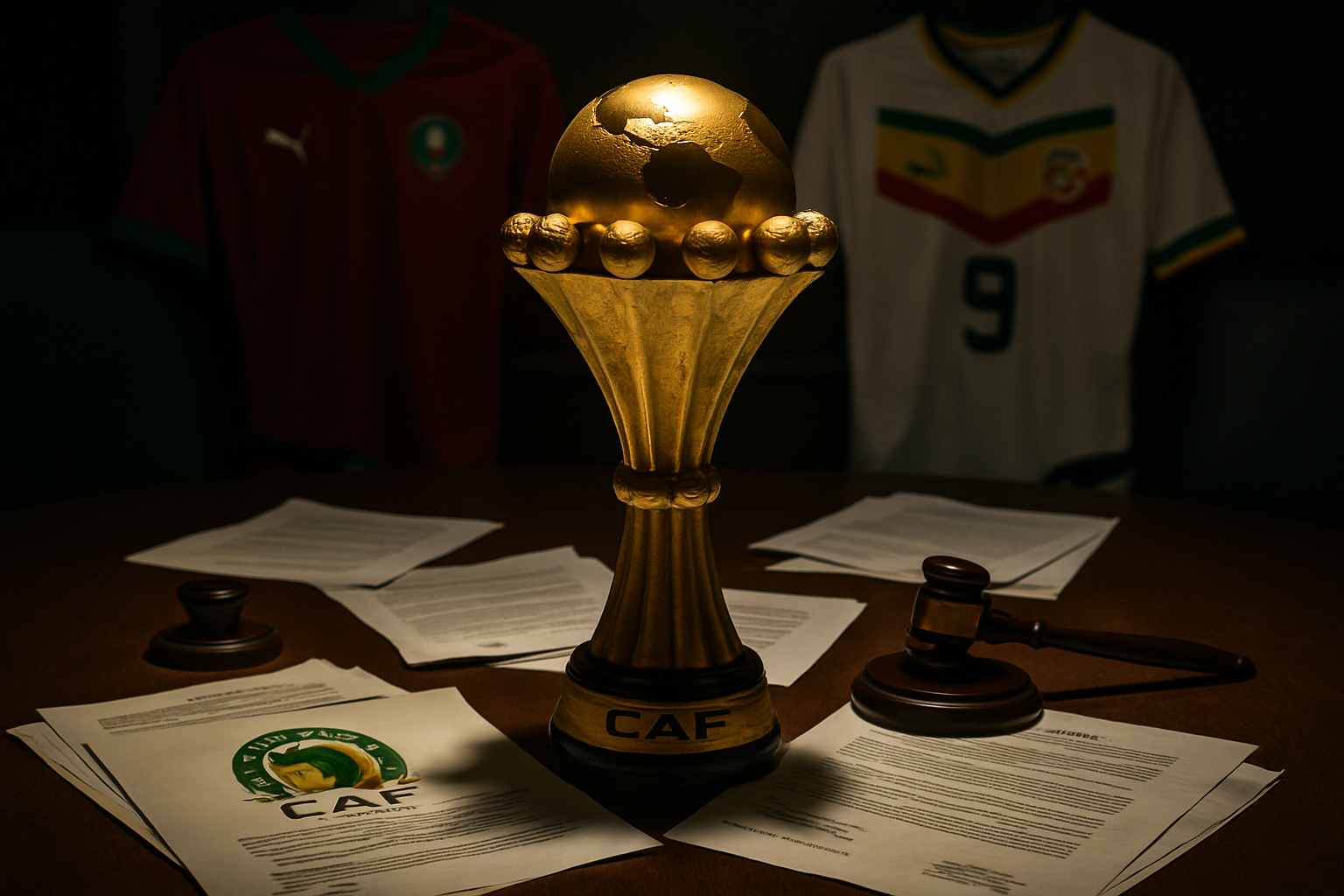
In an unprecedented and highly controversial decision, the Confederation of African Football (CAF) has stripped Senegal of the 2025 Africa Cup of Nations title and awarded it to Morocco, two months after the Lions of Teranga celebrated victory in the final held in Rabat on January 18, 2026.
The decision, announced by CAF's Appeals Board following a virtual meeting held on March 17, 2026, has sent shockwaves across the African football community and sparked fierce reactions from Dakar to international football circles. It represents the first time in AFCON history that a title has been revoked months after a tournament's conclusion.
The Controversial Final and Its Aftermath
The controversy stems from the highly contested AFCON 2025 final played at the Stade Prince Moulay Abdellah in Rabat, where Senegal initially emerged victorious against host nation Morocco. However, the match was marred by incidents that led to CAF sanctions against both federations in February 2026.
Both the Senegalese Football Federation (FSF) and the Royal Moroccan Football Federation (FRMF) were fined $50,000 each, with individual sanctions imposed on key figures. Senegal coach Pape Bouna Thiaw received a five-match suspension and $10,000 fine, while players Ismaïla Sarr and Iliman Ndiaye were each handed two-match suspensions and $5,000 fines.
The Royal Moroccan Football Federation had initially appealed the result, claiming procedural violations during the final. According to multiple sources, Morocco's appeal focused on what they termed "proper enforcement of competition regulations" rather than contesting the sporting merit of Senegal's victory.
CAF's Defense of the Decision
CAF President Patrice Motsepe defended the controversial ruling during a press conference on Thursday, March 19, stating that the organization's disciplinary and appeals panels had "acted independently" in their deliberations. The virtual Appeals Board meeting was conducted via video conference on March 17, with a panel of legal experts making the final determination.
"The disciplinary and appeals panels have acted independently after careful consideration of all evidence presented regarding the final in Rabat on 18 January."
— Patrice Motsepe, CAF President
Motsepe acknowledged that the decision had "damaged trust in African football" while maintaining that "Senegal has the right to appeal" the ruling through the Court of Arbitration for Sport (CAS).
Senegalese Outrage and Legal Response
The reaction from Senegal has been swift and furious. FSF President Augustin Senghor has declared that his federation "will not surrender the trophy" and confirmed that legal proceedings through CAS are already underway. The Senegalese government has also thrown its weight behind the federation, with reports suggesting high-level diplomatic intervention.
Ferdinand Coly, a former Senegal international defender, expressed the nation's shock at a press conference following the CAF announcement: "We are under shock, but the trophy will remain in Senegal." His words encapsulate the defiant mood sweeping through the West African nation.
Sports law expert Me Moustapha Kamara, with 25 years of experience in international football law, has identified what he terms "irregularities" in the process, particularly the unprecedented nature of declaring a team forfeit two months after the match's completion. This timing has raised significant questions about CAF's procedural consistency.
Morocco's Measured Response
In contrast to the explosive reactions from Senegal, the Royal Moroccan Football Federation has issued a diplomatic response to the CAF decision. The FRMF welcomed the Appeals Board ruling while emphasizing that their appeal "never aimed at contesting sporting merit" but focused on ensuring "proper enforcement of competition regulations."
The federation's statement reaffirmed their commitment to "respecting regulations and ensuring clarity of the competitive framework," representing a measured diplomatic approach to what has become African football's most controversial decision in recent memory.
Morocco fans in Rabat expressed mixed emotions upon hearing the news, with many supporters acknowledging the controversial nature of their team's path to the title while celebrating the historic achievement.
International Condemnation and Support
The decision has drawn criticism from across the international football community. Former Egyptian star Ahmed Hossam Mido denounced the ruling as the "greatest scandal in African football history," representing some of the strongest condemnation yet from prominent African football figures.
European media outlets have also weighed in, with French publications describing the situation as a "joke of the century," while Portuguese media have raised questions about potential corruption in the decision-making process.
In an unprecedented show of solidarity, Spanish club Cádiz CF expressed support for Senegal with a "Todos con vosotros" (We are all with you) message, representing rare international club intervention in continental football governance matters.
Historical Precedent and Governance Questions
The decision sets a troubling precedent for African football governance. Legal experts point to historical inconsistencies in CAF's application of regulations, noting that Morocco's walkoff incident in 2019 did not result in similar sanctions despite the team "never returning to finish the encounter."
This marks the first time an AFCON title has been stripped months after tournament completion, raising fundamental questions about the finality of sporting results and the timing of administrative interventions. The precedent could have far-reaching implications for continental competitions worldwide.
Diplomatic and Commercial Implications
The controversy extends beyond sport into diplomatic and commercial realms. Morocco-Senegal relations, already strained by previous incidents including the imprisonment of 18 Senegalese football fans in Morocco on hooliganism charges, face further complications.
The decision also disrupts both nations' preparations for the 2026 FIFA World Cup, with Senegal's campaign overshadowed by the legal battle while Morocco gains controversial momentum heading into the global tournament.
Commercial implications include prize money redistribution and sponsorship complications that require resolution, while the broader impact on CAF's credibility could affect future broadcast and commercial partnerships.
The Path Forward
As this unprecedented crisis unfolds, several key developments are expected in the coming weeks:
- CAS proceedings are ongoing, with the Senegalese Federation maintaining their position that "the result obtained on the field must stand"
- Diplomatic pressure continues to mount, with international investigation demands escalating
- The African football community faces a fundamental choice between governance reform and prolonged credibility crisis
The resolution of this crisis will likely determine the future of African football governance and establish precedents for how continental competitions handle post-tournament administrative disputes. With both nations qualified for the 2026 World Cup, the stakes extend far beyond continental football.
A Watershed Moment for African Football
March 19, 2026, may well be remembered as a watershed moment in African sports governance. The international sports law community is closely monitoring this precedent-setting case, which will influence how sporting achievements are preserved versus institutional interpretations in modern football.
The success or failure of Senegal's appeal, and the international community's response to CAF's decision, will determine whether this becomes a template for protecting sporting integrity or a cautionary tale about administrative overreach in continental competition.
As Senegal's Prime Minister Ousmane Sonko's administration backs comprehensive legal challenges and former President Macky Sall begins lobbying efforts for UN positions in Paris, the crisis has evolved far beyond traditional sporting disputes into questions of institutional credibility that could affect African development efforts for decades to come.
The coming weeks will be decisive in determining not only who holds the AFCON 2025 title but also the future of transparent, accountable governance in African football. The continent's football community watches and waits, hoping that the beautiful game can ultimately transcend the political and administrative controversies that threaten to overshadow sporting excellence.