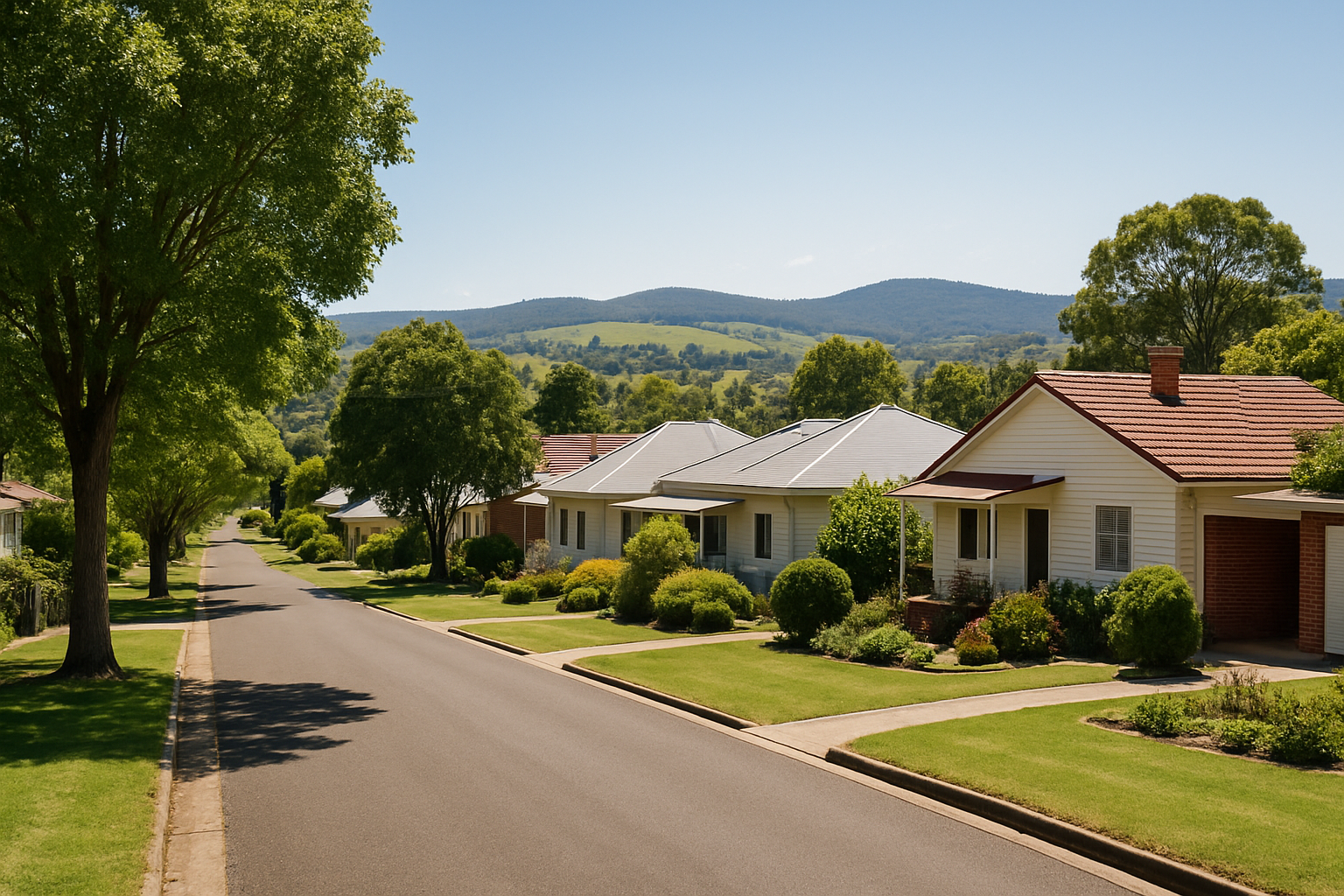
As capital city property prices surge past the $2 million mark for inner-city apartments and the Reserve Bank of Australia maintains its cash rate at 3.85%, creating unprecedented challenges for first-time buyers, a new narrative is emerging across regional Australia where affordable housing meets quality of life.
Analysis reveals ten regional hubs that have bucked the national trend, offering not just affordable entry points into the property market but genuine lifestyle benefits that are drawing Australians away from the metropolitan grind. These communities represent a fundamental shift in how Australians are redefining the home ownership dream amid the ongoing housing affordability crisis.
The Regional Renaissance
While Sydney grapples with median house prices approaching $2.6 million and Melbourne's middle-ring suburbs face unprecedented density pressures, regional Australia is experiencing what property experts describe as a "lifestyle-led transformation." These ten hubs combine housing affordability with employment opportunities, quality infrastructure, and community amenities that rival their metropolitan counterparts.
The shift reflects broader market dynamics where buy-versus-rent calculations are being rewritten across Australia. As the RBA's sustained high interest rates create mounting pressure for existing homeowners and effectively price out first-time buyers from capital cities, regional markets are providing viable alternatives for families seeking both financial sustainability and quality of life.
"We're seeing a fundamental recalibration of Australian housing preferences. It's no longer just about proximity to capital cities – it's about finding communities where housing remains accessible while offering genuine lifestyle benefits."
— Regional Housing Market Analyst
The Perfect Storm Driving Regional Migration
Several converging factors are driving this regional renaissance. Digital infrastructure improvements have made remote work viable for increasing numbers of professionals, while capital city housing costs have reached levels that even middle-income earners find unsustainable. The Domain report showing homeowners possessing a "financial shield" through record property profits simultaneously highlights the growing gap between established property owners and those seeking to enter the market.
Construction industry challenges have compounded the problem. Rising material costs are creating negative developer profit margins across Australia, constraining new housing supply despite strong demand. Memory chip shortages have driven semiconductor prices sixfold, affecting smart building technologies and adding 20-30% to construction costs – pressures that are expected to continue until 2027 when new fabrication facilities come online.
Demographics Driving Change
Young women, particularly, are finding themselves systematically excluded from traditional wealth-building pathways in capital cities despite expressing stronger homeownership desires than their male counterparts. Under-30s are increasingly turning away from property investment as deposit requirements extend beyond reasonable saving timelines, creating generational wealth divides that threaten long-term economic stability.
This demographic shift is reshaping regional Australia. Communities that can offer affordable housing alongside career opportunities, quality education, and lifestyle amenities are attracting young professionals who might traditionally have remained in capital cities. The result is a revitalization of regional centers that had previously struggled with population decline and economic stagnation.
Technology as the Great Enabler
Digital infrastructure has emerged as the critical factor enabling regional Australia's housing revival. Smart city systems, sustainable materials, and community-centered design are becoming standard requirements rather than premium options, even in smaller regional centers. Environmental consciousness and government mandates are increasingly influencing property valuations and investment decisions, creating opportunities for regional developers to compete on sustainability and innovation.
The integration of technology infrastructure with housing development is creating self-sustaining regional ecosystems. Where once professionals faced the choice between career advancement and affordable housing, digital connectivity is enabling the best of both worlds – metropolitan-level career opportunities combined with regional lifestyle benefits and housing affordability.
The Lifestyle Dividend
Beyond financial considerations, these regional hubs offer lifestyle benefits that are increasingly valued by Australian families. Shorter commutes, stronger community connections, better work-life balance, and proximity to natural environments are driving decisions that prioritize quality of life over traditional career advancement metrics.
The global experience has reinforced the importance of housing that serves as more than just shelter. As Australians reassess priorities beyond immediate aesthetics toward long-term potential and lifestyle alignment, regional markets are providing solutions that capital cities simply cannot match at comparable price points.
Policy Implications and Future Outlook
The success of these regional hubs demonstrates that housing accessibility is determining whether Australian communities can attract and retain diverse talent necessary for 21st-century economic development. Rather than becoming exclusive enclaves for the wealthy, these regional centers are maintaining accessibility across income levels while providing genuine economic opportunities.
Success in these markets requires sophisticated frameworks that balance housing supply adequacy with middle and lower-income affordability while maintaining construction industry viability. The evidence suggests that locally-adapted strategies incorporating community input, environmental considerations, and sustainable development principles are proving more effective than universal policy templates.
Investment Patterns and Market Evolution
Investment patterns are increasingly favoring these regional markets, with clear regulatory frameworks and transparent governance attracting larger long-term commitments. Policy predictability has become crucial when traditional economic indicators prove insufficient, and markets providing secure, transparent environments are seeing sustained investment interest.
The construction industry's current challenges – from material costs to semiconductor shortages – are actually creating opportunities for regional markets. Existing properties are gaining value due to limited new competition, while regional markets with established infrastructure can offer better value propositions than capital city developments facing massive cost overruns.
The Road Ahead
As Australia approaches a critical juncture in housing policy, these ten regional hubs provide templates for addressing universal challenges through regionally-specific solutions. The window for effective action is narrowing due to demographic pressures, urbanization trends, and climate adaptation complexity, making the success of these regional models increasingly important for national housing strategy.
International cooperation and knowledge sharing are essential as housing challenges prove increasingly interconnected through migration patterns and investment flows. The Australian experience with regional housing revival offers valuable lessons for other nations grappling with similar capital city affordability crises.
For Australian families facing the choice between financial sustainability and lifestyle aspirations, these regional hubs demonstrate that both objectives can be achieved. As the housing market continues to evolve, the success of regional Australia in providing affordable housing alongside genuine lifestyle benefits may well represent the future of the Australian dream – redefined for a new generation seeking both financial security and quality of life.