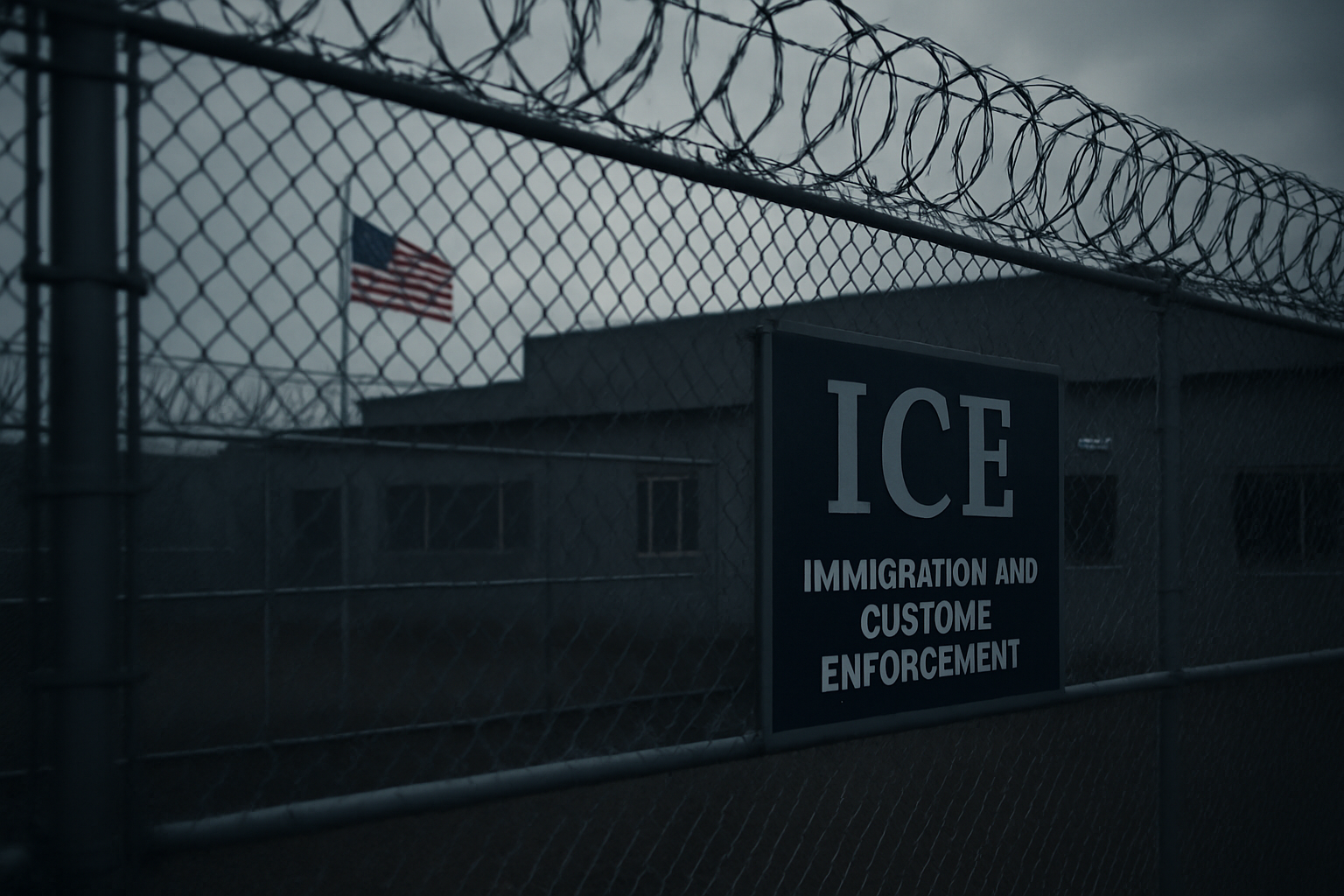
A former Afghan soldier who worked alongside U.S. special forces in Afghanistan died while in the custody of Immigration and Customs Enforcement (ICE), prompting the Council on American-Islamic Relations (CAIR) to demand a full and transparent investigation into the circumstances surrounding his death.
Nazeer Paktiawal died on March 14, 2026, just one day after being detained by ICE officers outside his Dallas-area home. According to family members and community representatives, the 40-year-old Afghan refugee had dropped his children off at school on March 13 when federal agents approached and took him into custody.
The tragic incident has cast a spotlight on the treatment of Afghan refugees in U.S. immigration detention, particularly those who served alongside American forces during the two-decade war in Afghanistan and later resettled in the United States following the Taliban's return to power in 2021.
Sudden Deterioration in Custody
According to information shared with CAIR-Texas, Paktiawal was detained by ICE officers on the morning of March 13, 2026, in what appeared to be a routine immigration enforcement operation. However, later that evening, he reportedly developed serious health complications while in federal custody.
Federal authorities notified Paktiawal's family the following day, March 14, that he had died. The specific nature of his medical emergency and the circumstances leading to his death remain unclear, as ICE has not released detailed information about the incident.
"Anyone taken into detention must be treated with dignity and respect," CAIR-Texas stated in a Sunday press release. The organization is urging authorities to clarify the circumstances surrounding both Paktiawal's detention and his subsequent death in custody.
A Life of Service to America
Paktiawal's death is particularly poignant given his history of service alongside U.S. forces in Afghanistan. According to family members and community advocates, he had worked directly with American special forces during the U.S. military presence in Afghanistan, making him eligible for refugee resettlement under programs designed to protect Afghan allies.
Following the chaotic U.S. withdrawal from Afghanistan in August 2021, Paktiawal was among the thousands of Afghan nationals who were evacuated and eventually resettled in the United States. He had been living in the Dallas metropolitan area, where he was remembered by relatives and community members as a devoted father and active participant in the local Afghan community.
The irony of his death in U.S. immigration custody was not lost on advocates, who noted that Paktiawal had risked his life to support American military operations in Afghanistan, only to die while detained by the same government he had served.
Broader Context of Immigration Enforcement
Paktiawal's death occurs against the backdrop of intensified immigration enforcement operations across the United States. Recent months have seen a significant expansion of ICE activities, with the University of California documenting a quadrupling of deportations during the first nine months of the current administration compared to previous levels.
The enforcement surge has included controversial operations such as "Operation Metro Surge" in Minnesota, which resulted in over 4,000 arrests but was ultimately scaled back following the fatal shootings of two U.S. citizens by federal agents in January 2026. That incident led to mandatory body camera requirements for ICE agents and sparked a broader debate about federal immigration enforcement accountability.
Afghan refugees have found themselves in a particularly vulnerable position within this enforcement landscape. Despite their history of cooperation with U.S. forces, many face uncertain legal status and potential detention if they encounter immigration authorities without proper documentation or if their cases become complicated by bureaucratic delays.
Civil Rights Response and Investigation Demands
CAIR-Texas has taken the lead in calling for accountability in Paktiawal's death, expressing condolences to his family while demanding a thorough investigation. The organization emphasized that all individuals in government custody, regardless of their immigration status, are entitled to basic human dignity and adequate medical care.
"We urge authorities to clarify the circumstances surrounding his detention and death," the civil rights organization stated, reflecting broader concerns about transparency in immigration detention facilities.
The call for investigation comes as multiple federal courts have implemented new oversight requirements for ICE operations. Recent rulings in Oregon and other jurisdictions have required federal agents to obtain warrants before making arrests unless individuals present a flight risk, marking a significant shift toward greater judicial oversight of immigration enforcement.
Systemic Issues in Immigration Detention
Paktiawal's death highlights ongoing concerns about medical care and conditions within the U.S. immigration detention system. The Trump administration has pursued a $38.3 billion plan to expand detention infrastructure, retrofitting warehouses into regional detention centers capable of holding thousands of individuals.
This expansion has occurred amid mounting criticism of ICE operations, with polling showing that two-thirds of Americans believe the agency has "gone too far" in its enforcement activities. Congressional Democrats have threatened to block Department of Homeland Security funding unless "drastic changes" are implemented in ICE operations.
The timing of Paktiawal's death is particularly sensitive, as it comes just weeks after DHS Secretary Kristi Noem implemented mandatory body cameras for ICE agents following the Minnesota shooting incidents. The new accountability measures were designed to prevent exactly the kind of tragedy that appears to have befallen the Afghan refugee.
International Implications
The death of an Afghan military ally in U.S. custody carries potential diplomatic ramifications at a time when the United States is working to maintain relationships with Afghan refugee communities worldwide. The incident could undermine trust among Afghan allies who worked with American forces and are now seeking refuge in the United States or other countries.
This concern is particularly acute given the broader regional crisis affecting Afghanistan. Recent weeks have seen unprecedented military confrontation between Pakistan and the Taliban government in Afghanistan, with Pakistani Defense Minister Khawaja Asif declaring "open war" following cross-border terrorist attacks. The conflict has resulted in hundreds of civilian casualties and threatens regional stability.
Against this volatile backdrop, the treatment of Afghan refugees in Western countries takes on added significance, as it sends a signal about the commitment of former international coalition partners to protecting those who supported their missions in Afghanistan.
Community Impact and Response
The Dallas-area Afghan community has been deeply affected by Paktiawal's death, with community leaders organizing support for his family and calling for answers about the circumstances that led to his death in custody. The incident has heightened anxiety within a community already struggling to rebuild their lives after fleeing the Taliban's return to power.
Afghan refugees in the United States face numerous challenges, from navigating complex immigration bureaucracy to finding employment and adapting to American society. The fear of detention and deportation adds another layer of stress to communities that have already endured significant trauma.
Community advocates argue that individuals like Paktiawal, who served alongside U.S. forces, deserve special consideration and protection rather than detention. They point to his military service record as evidence that he posed no threat to American security and question why he was detained in the first place.
Legal and Policy Questions
Paktiawal's case raises fundamental questions about how the United States treats individuals who served as allies during military operations abroad. Legal experts note that the Special Immigrant Visa (SIV) program, designed to provide pathways to permanent residence for Afghan and Iraqi allies, has been plagued by bureaucratic delays and administrative complications.
These delays can leave individuals in legal limbo, making them vulnerable to detention even if they ultimately have valid claims to remain in the United States. The complexity of immigration law means that even individuals with strong cases for protection can find themselves in detention while their cases work through the system.
Federal judges have increasingly intervened in immigration enforcement cases, with recent rulings requiring greater due process protections and oversight of ICE operations. The death of Paktiawal may prompt additional judicial scrutiny of detention conditions and medical care standards within immigration facilities.
The Path Forward
As calls for investigation into Paktiawal's death grow louder, the incident serves as a stark reminder of the human cost of immigration enforcement policies. Civil rights organizations are likely to use this case to push for broader reforms to the detention system, including enhanced medical care standards, greater transparency, and stronger oversight mechanisms.
The Biden administration had initially pursued more humanitarian immigration policies, but political pressures and operational challenges have led to continued reliance on detention and enforcement. Paktiawal's death may reignite debates about finding alternatives to detention, particularly for individuals with strong ties to the United States or histories of cooperation with American forces.
For the Afghan refugee community, the incident underscores their continued vulnerability despite their service to the United States. Community leaders are calling not only for justice in Paktiawal's case but for broader policy changes that would protect Afghan allies from unnecessary detention and ensure they receive the support they were promised when they agreed to work with American forces.
As this investigation unfolds, it will likely become a test case for how the United States honors its commitments to those who served alongside American forces during the longest war in U.S. history. The outcome may determine whether other Afghan refugees feel secure in their new homeland or continue to live in fear of the very government they once helped to protect.