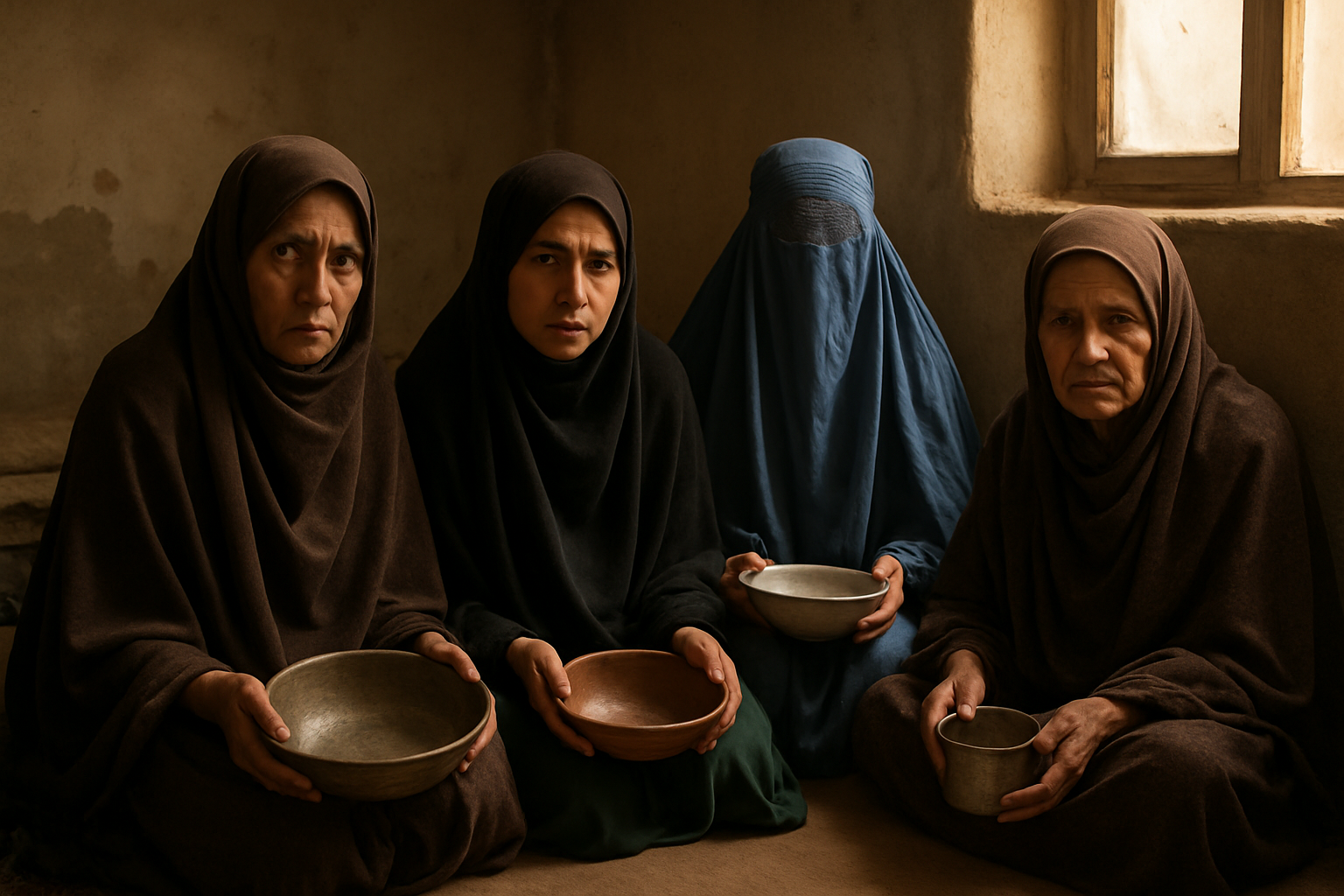
The UN Development Programme has issued a stark warning about the deteriorating economic conditions facing Afghan women, with new reports revealing that 88% of female-headed households cannot meet minimum living requirements as Taliban restrictions continue to limit their access to employment and financial resources.
According to the UNDP report released on Tuesday, Afghanistan's women face an increasingly dire economic landscape where limited job access and income opportunities are exacerbating household vulnerabilities nationwide. The findings paint a disturbing picture of a society where three-quarters of the population struggles to meet daily needs, but women bear a disproportionate burden of the crisis.
Alarming Statistics Reveal Gender-Based Economic Disparity
The UN data shows that while 75% of all Afghans struggle to meet daily necessities, the situation is markedly worse for households led by women. The 88% figure for female-headed households lacking access to minimum living requirements represents one of the most severe gender-based economic disparities documented globally.
This economic catastrophe has been building since the Taliban's return to power in August 2021, when sweeping restrictions on women's employment and education were implemented. The restrictions have effectively removed half the potential workforce from Afghanistan's economy, creating ripple effects that extend far beyond individual families.
"Women's economic conditions in Afghanistan remain extremely fragile, with limited access to jobs, income opportunities, and financial resources worsening household vulnerabilities nationwide."
— UN Development Programme Report, February 2026
Taliban Employment Restrictions Create Economic Devastation
The Taliban's systematic exclusion of women from most sectors of employment has created an unprecedented economic crisis affecting millions of families. Women, who previously worked as teachers, healthcare workers, civil servants, and in private businesses, have been largely barred from the workforce under the current regime's interpretation of Islamic law.
Healthcare remains one of the few sectors where women can still work, but even there, restrictions have been implemented. The World Health Organization's delivery of medical oxygen supplies to 23 hospitals across Afghanistan in February 2026 highlighted the broader healthcare crisis affecting the nation, with hundreds of health centers forced to close due to international aid cuts.
The economic impact extends beyond individual households. With women unable to contribute to family incomes, entire communities are experiencing increased poverty levels, reduced purchasing power, and diminished economic activity.
International Aid Challenges Compound Crisis
Afghanistan's economic troubles are further complicated by reduced international aid and the ongoing effects of sanctions. The country faces what experts describe as the "worst humanitarian crisis in 25 years," according to recent assessments by major international organizations.
The situation has prompted varied regional responses. While some countries, including China, have warned the UN Security Council about security threats emanating from Afghanistan, others have focused on humanitarian assistance. Pakistan's Prime Minister Shehbaz Sharif and Kazakhstan's President Tokayev have discussed regional stability concerns, emphasizing that security and economic development are interconnected.
Recent prisoner release diplomacy has shown some positive bilateral engagement, with Azerbaijan releasing 14 Afghan nationals following diplomatic efforts by Afghanistan's embassy in Baku. Such humanitarian gestures, while limited in scope, demonstrate functional diplomatic relationships despite Afghanistan's complex international status.
Broader Context of Afghanistan's Economic Struggles
The women's economic crisis occurs within a broader context of Afghanistan's post-2021 challenges. Despite some success in counter-narcotics efforts, with opium cultivation reaching near-zero levels per Supreme Leader decree, the country continues to grapple with fundamental economic structural problems.
The Taliban has shown capacity for certain types of governance, including infrastructure cooperation projects such as the ratified "Uzbekistan-Afghanistan-Pakistan" railway agreement, which could provide economic opportunities. However, these initiatives have done little to address the immediate crisis facing women and female-headed households.
Recent developments also include the completion of school meal programs by the World Food Programme, which provided nutrition to 880,000 children across Afghanistan during 2025. While such programs address immediate needs, they cannot substitute for the economic empowerment that comes from women's participation in the workforce.
Regional and International Implications
The economic marginalization of Afghan women has broader implications for regional stability and development. Experts note that sustainable peace and prosperity require the participation of all segments of society, including women who comprise roughly half the population.
The crisis also affects Afghanistan's relationships with neighboring countries and the international community. While some nations maintain diplomatic and trade relationships with the Taliban government, the treatment of women remains a significant obstacle to broader international recognition and normalized economic relationships.
Cricket star Rashid Khan's recent comments about hoping Afghanistan will "one day field a national women's cricket team" reflect the ongoing debate about women's participation in society, even in areas like sports that might seem peripheral to immediate economic concerns.
Looking Forward: Uncertain Prospects
The UN report underscores that Afghanistan's economic recovery cannot be achieved without addressing the systematic exclusion of women from the workforce. The current trajectory suggests that without policy changes, the humanitarian crisis will continue to deepen, affecting not just individual families but the country's overall stability and development prospects.
International humanitarian organizations continue to operate in Afghanistan, but their capacity is limited by funding constraints and operational restrictions. The challenge remains finding ways to provide essential support to vulnerable populations, particularly women and children, while navigating the complex political and security environment.
As Afghanistan grapples with these interconnected challenges of economic hardship, political restrictions, and international isolation, the plight of women serves as both a humanitarian concern and a critical factor in the country's long-term stability and development. The UN's latest findings serve as a sobering reminder that sustainable solutions must address not just immediate needs, but the fundamental barriers preventing half the population from contributing to the country's economic recovery.