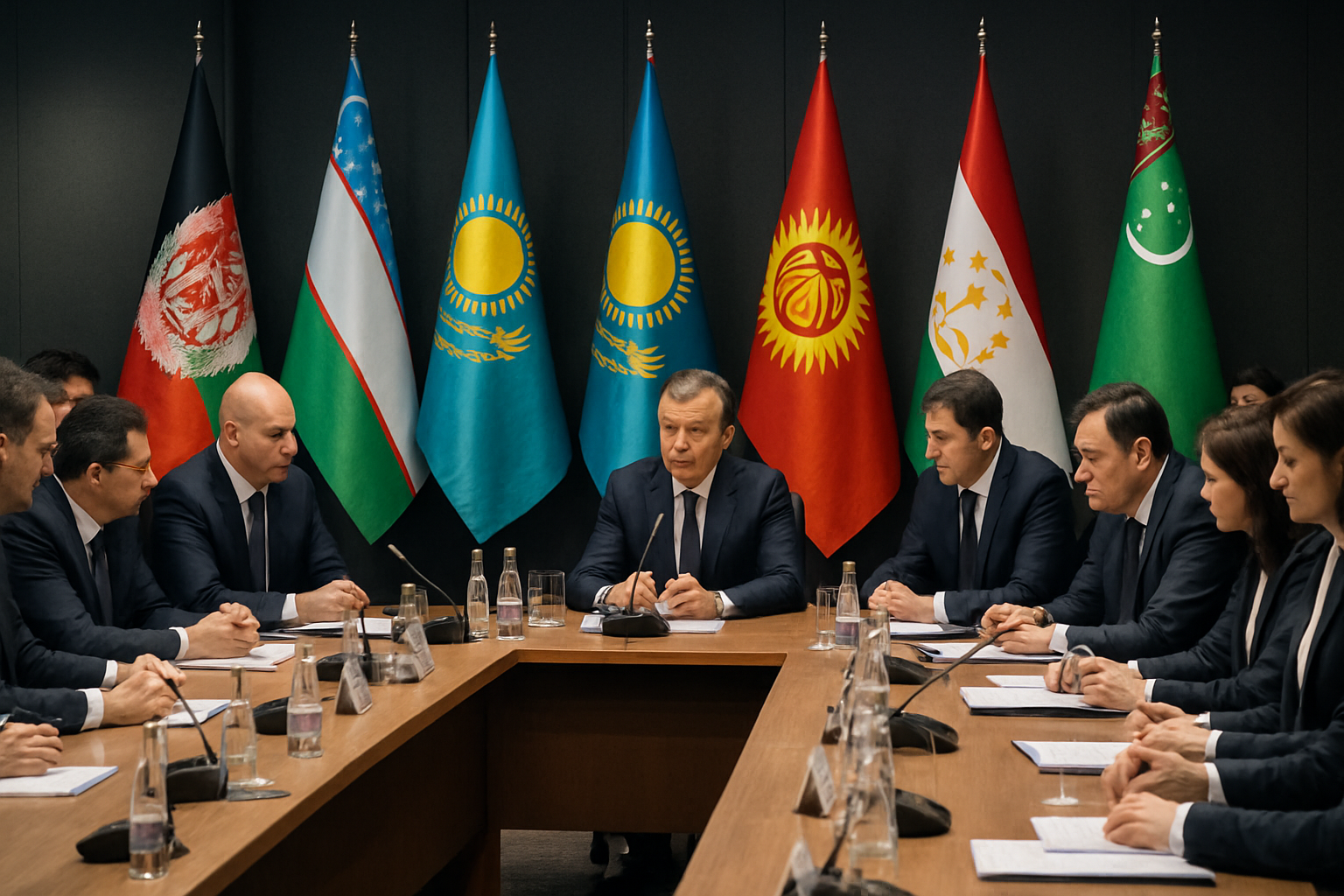
Afghanistan took a significant step toward regional economic integration on Sunday by hosting the first-ever Afghanistan–Central Asia Consultative Dialogue, bringing together high-level representatives from all five Central Asian nations in an ambitious diplomatic initiative that sets a $10 billion trade target within four years.
The groundbreaking summit in Kabul marked a historic milestone in regional diplomacy, with Afghanistan's Foreign Minister Amir Khan Muttaqi welcoming delegations from Uzbekistan, Kyrgyzstan, Turkmenistan, Tajikistan, and Kazakhstan. The dialogue represents the most comprehensive multilateral engagement Afghanistan has undertaken since the Taliban's return to power in 2021, signaling a strategic pivot toward pragmatic economic cooperation over ideological considerations.
Ambitious Economic Vision Unveiled
Minister Muttaqi announced Afghanistan's intention to quadruple trade with Central Asian countries from the current $2.7 billion to $10 billion within the next three to four years. This represents a dramatic expansion from recent levels, building on the significant growth already achieved – the 2025 trade volume itself marked a substantial increase over previous years according to official statements.
The trade target reflects Afghanistan's strategic positioning as a potential transit hub connecting Central Asia to global markets, leveraging its geographical position between major economic centers. This ambitious goal comes amid a broader context of regional economic transformation, with Central Asian nations increasingly seeking diversified trade partnerships and alternative connectivity routes.
"This platform will play a crucial role in advancing mutual trust, stability, and regional collaboration."
— Amir Khan Muttaqi, Afghanistan Foreign Minister
Historical Context and Diplomatic Significance
The consultative dialogue emerges from months of careful diplomatic groundwork, building on successful bilateral agreements that have demonstrated the potential for expanded cooperation. Notably, Afghanistan and Uzbekistan signed 25 trade agreements worth $300 million in February 2026, covering preferential arrangements for Afghan and Uzbek products. This partnership later expanded to an additional $514.8 million in agreements by March 2026, showcasing the momentum behind regional economic integration.
The initiative represents a departure from traditional diplomatic approaches in the region, focusing on practical economic cooperation rather than political ideology. This pragmatic framework has enabled sustained engagement despite the complex international status of Afghanistan's government, demonstrating how economic necessity can transcend political differences.
According to historical context from memory archives, this dialogue builds on Afghanistan's broader regional engagement strategy, including successful counter-narcotics cooperation and infrastructure development projects. The country has achieved near-zero opium cultivation following Supreme Leader directives, earning international recognition for addressing what was previously 80% of global production.
Infrastructure and Connectivity Framework
Central to the dialogue's vision is enhanced regional connectivity through major infrastructure projects. The Uzbekistan-Afghanistan-Pakistan railway project represents a cornerstone initiative, enabling landlocked Central Asian nations to access Pakistani ports through the Gwadar facility and broader China-Pakistan Economic Corridor framework.
Rail freight cooperation has already shown dramatic results, with Afghanistan-Iran rail transportation increasing 17-fold during the 1404 solar year (March 2025-February 2026), handling 650,000 tons of goods including 150,000 tons of transit cargo from third countries. This demonstrates the region's growing role as a critical trade corridor connecting Asia to international markets.
The infrastructure development extends beyond traditional transportation networks. Recent technological advances include Azerbaijan's pioneering solar-powered telecommunications infrastructure, with the first solar GPON stations in the South Caucasus providing templates for sustainable connectivity solutions across Central Asia.
Strategic Regional Context
The consultative dialogue occurs within a broader regional transformation, as Central Asian nations emerge as increasingly sophisticated economic players on the global stage. Kazakhstan recently ratified a historic green energy partnership agreement with Azerbaijan and Uzbekistan, creating the world's first transcontinental green energy corridor connecting Central Asia to European markets.
This regional cooperation trend reflects a fundamental shift from traditional great power competition toward middle power diplomacy and innovative partnership frameworks. The February 2026 C6 conference in Baku, organized by Azerbaijan's Center for Analysis of International Relations, established institutional frameworks for sustained regional cooperation, with working groups, joint investment committees, and monitoring mechanisms.
The economic significance extends beyond bilateral relationships. Central Asian countries are positioning themselves as strategic energy coordinators and technology hubs, with Azerbaijan gaining US Chamber of Commerce recognition as a key East-West energy hub, while Kazakhstan pursues critical minerals partnerships with international consortiums.
Challenges and Implementation
Despite the optimistic framework, significant challenges remain for achieving the ambitious trade targets. Afghanistan continues to face international sanctions and limited recognition, which complicates banking and financial transactions necessary for large-scale trade expansion. The country's humanitarian crisis, with 88% of female-headed households unable to meet minimum requirements according to UN data, poses additional constraints on economic development capacity.
Regional security concerns also present obstacles. The ongoing Pakistan-Afghanistan border tensions, which have seen military confrontations and civilian casualties, demonstrate how quickly regional stability can deteriorate. The success of economic cooperation initiatives will depend partly on maintaining peaceful relations among neighboring countries.
Implementation will require sophisticated coordination mechanisms, transparent governance structures, and sustained political commitment across multiple governments. The dialogue's success depends on translating political agreements into practical cooperation that delivers tangible benefits for participating nations' economies and populations.
Global Implications and Future Prospects
The Afghanistan–Central Asia Consultative Dialogue represents more than regional economic cooperation; it serves as a template for 21st-century diplomatic innovation. The initiative demonstrates how countries can pursue mutual benefits through issue-specific partnerships that respect national sovereignty while promoting practical collaboration.
For global supply chain diversification, the Central Asian corridor offers alternatives to traditional routes, potentially reducing dependencies on single chokepoints that have proven vulnerable during recent international crises. The region's strategic position between major economic centers makes successful cooperation frameworks particularly valuable for international commerce.
The dialogue's emphasis on institutional mechanisms – regular consultations, technical working groups, joint investment committees – provides continuity beyond individual meetings. This approach creates sustainable frameworks for addressing challenges and expanding cooperation as opportunities emerge.
"Afghanistan is positioning itself as a transit hub connecting Central Asia to global markets while regional cooperation demonstrates a pragmatic approach prioritizing economic engagement over confrontational policies."
— Regional Analysis from Strategic Documentation
Conclusion: A New Chapter in Regional Relations
The inaugural Afghanistan–Central Asia Consultative Dialogue marks a watershed moment in regional diplomacy, offering a pragmatic path forward for economic integration despite political complexities. The $10 billion trade target, while ambitious, reflects the substantial untapped potential for regional cooperation built on geographical advantages and complementary economic capabilities.
Success will require sustained commitment from all participating nations, innovative approaches to overcoming practical obstacles, and continued focus on mutual benefits over political differences. The dialogue's framework provides the institutional foundation for long-term cooperation, but realizing its potential depends on implementation effectiveness and regional stability maintenance.
As Central Asia emerges as a strategic economic region in the global economy, initiatives like this consultative dialogue could serve as models for international cooperation in an increasingly multipolar world. The emphasis on practical economic cooperation over ideological considerations offers lessons for conflict resolution and regional integration efforts worldwide.
The coming months will test whether this diplomatic breakthrough can translate into concrete economic benefits for participating nations, potentially reshaping Central Asian regional dynamics for decades to come.