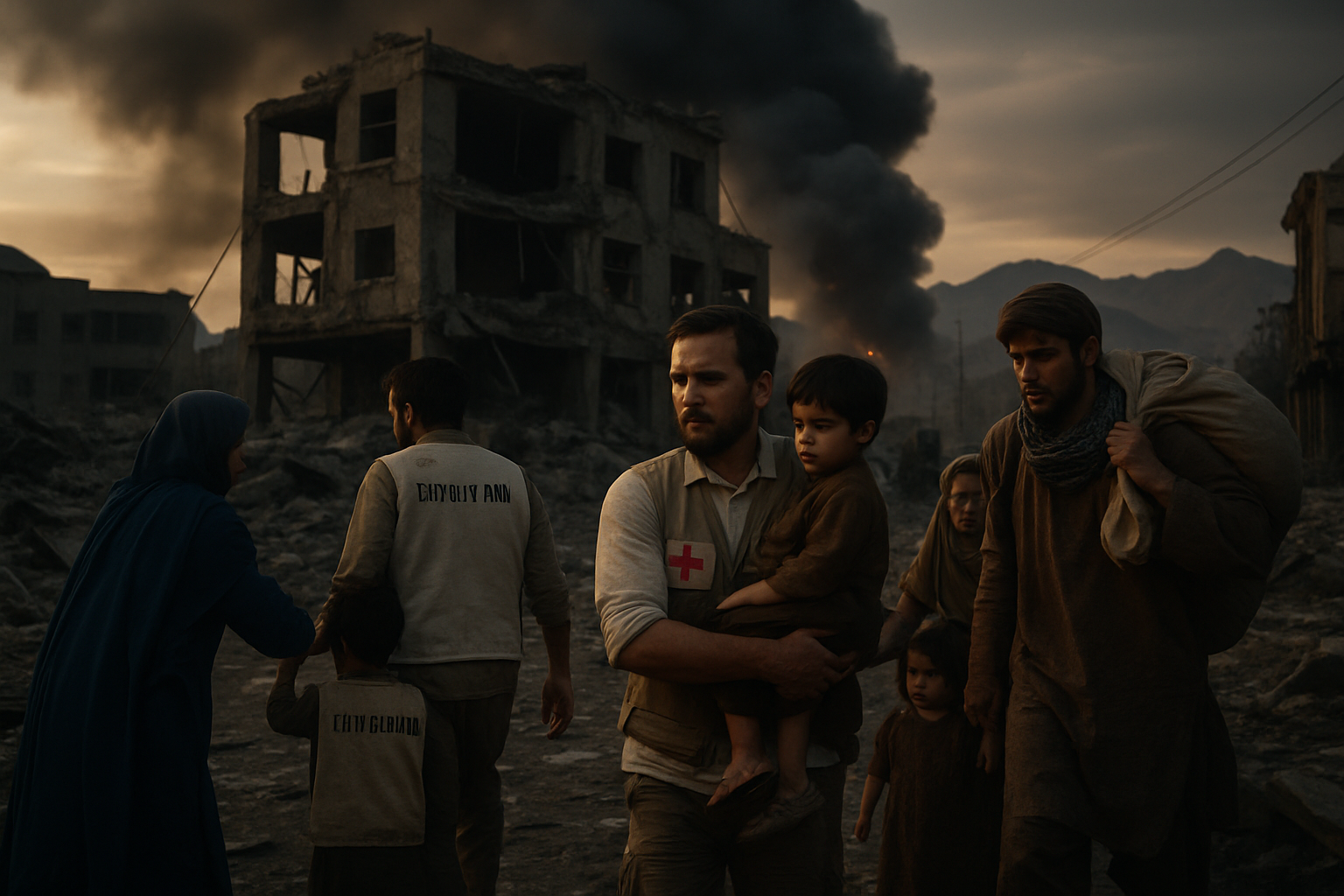
Afghanistan faces a deadly surge in violence as multiple attacks across the country claim civilian lives, with eleven people killed and eight others wounded in a brutal armed assault targeting families gathered for a picnic in Herat province's Injil district.
The latest incident occurred around 3:00 PM on Friday when unidentified gunmen opened fire on families in the village of "Dah Mehre," located in the Injil district of Herat province. Ahmadullah Muttaqi, Director of Information and Culture for Herat, confirmed the escalating death toll as the severity of injuries became clear overnight.
Initial reports indicated that four people were killed and fifteen others injured in the assault. However, as medical teams worked through the night, seven more of the wounded tragically succumbed to their injuries, bringing the final death toll to eleven with eight survivors, two of whom remain in critical condition.
UN Condemnation and International Response
The attack has drawn strong international condemnation, with UN officials highlighting the persistent threat to civilian populations in Afghanistan. Naseer Ahmad Faiq, Afghanistan's representative to the United Nations, condemned the deadly assault, emphasizing that the incident underscores ongoing security threats and the continued ability of extremist groups to carry out coordinated attacks against vulnerable communities.
The targeting of families engaged in peaceful activities represents a disturbing escalation in the pattern of violence affecting Afghan civilians. The UN has repeatedly called for the protection of non-combatants and the need for all parties to respect international humanitarian law.
Broader Security Context
This latest attack occurs within a complex security environment that has plagued Afghanistan for months. The country continues to grapple with multiple security challenges, including cross-border tensions with Pakistan that have resulted in hundreds of civilian casualties and displaced thousands of families.
The Pakistan-Afghanistan border region has witnessed sustained military confrontations since February 2026, when a series of attacks and retaliations created what officials described as the most serious crisis between the neighbors since the Taliban's return to power in 2021. These conflicts have resulted in over 289 documented civilian casualties and the displacement of more than 16,000 families across ten provinces.
The ongoing violence has severely impacted Afghanistan's already fragile humanitarian situation, with the World Health Organization reporting that emergency medical oxygen is available at only 23 hospitals nationwide, while hundreds of health centers have been forced to close due to security concerns and funding shortages.
Impact on Local Communities
The attack in Herat's Injil district represents the kind of localized violence that has devastating effects on community life. The targeting of families during leisure activities sends a chilling message about the vulnerability of civilians to arbitrary violence.
Local authorities have confirmed that one suspect has been arrested in connection with the attack, though details about the perpetrators' identity and motivations remain under investigation. The swift response by law enforcement suggests continued efforts to maintain security, despite the challenging environment.
"Initial reports indicated that four people were killed and fifteen others injured. However, as the severity of the injuries became clearer, seven more of the wounded tragically succumbed to their injuries overnight. The latest update puts the death toll at eleven, with eight survivors, two of whom are said to be in critical condition."
— Official Statement, Herat Information and Culture Directorate
Afghanistan's Ongoing Humanitarian Crisis
The violence in Herat comes against the backdrop of Afghanistan's severe humanitarian emergency, with international organizations documenting one of the world's worst hunger crises. According to UN data, 88% of female-headed households are unable to meet minimum living requirements, while medical facilities struggle with overwhelming patient loads and limited resources.
The country's healthcare system has been particularly strained, with emergency medical supplies reaching only a fraction of facilities that require them. The World Food Programme has warned that border conflicts and internal security challenges are severely restricting humanitarian aid access to populations in desperate need.
Economic pressures have compounded these challenges, with bilateral trade between Afghanistan and Pakistan collapsing by 59% over seven months, affecting border communities that depend on cross-border commerce. Traditional trade routes have faced repeated closures, further isolating communities and limiting access to essential goods.
International Diplomatic Efforts
While international mediation efforts have achieved some temporary successes, including brief ceasefires during religious holidays, underlying security challenges remain unresolved. Multiple diplomatic initiatives by Saudi Arabia, Turkey, Qatar, and China have sought to address various aspects of Afghanistan's security situation, but localized violence continues to affect civilian populations.
The pattern of attacks targeting civilians raises serious concerns about the protection of non-combatants and compliance with international humanitarian law. UN officials have consistently called for all parties to distinguish between civilian and military targets and to ensure the safety of vulnerable populations.
Regional Security Implications
The attack in Herat reflects broader regional security challenges that extend beyond Afghanistan's borders. The ongoing tensions between Afghanistan and Pakistan have created a volatile environment that affects regional stability and complicates international efforts to address humanitarian needs.
These security challenges have implications for neighboring countries and international partners seeking to provide assistance to Afghan populations. The ability of armed groups to carry out coordinated attacks demonstrates the persistent threat posed by various militant organizations operating in the region.
The international community continues to grapple with balancing security concerns against the urgent need to provide humanitarian assistance to millions of Afghans facing severe hardship. The latest violence in Herat underscores the complexity of addressing both immediate security threats and long-term stability requirements.
Looking Forward
As investigations continue into the Herat attack, the incident serves as a stark reminder of the ongoing challenges facing Afghanistan's civilian population. The targeting of families engaged in peaceful activities highlights the indiscriminate nature of the violence that continues to affect communities across the country.
The arrest of one suspect represents a step toward accountability, but broader questions about security provision and civilian protection remain pressing concerns. The international community's response to this latest incident will likely influence future diplomatic and humanitarian approaches to Afghanistan's complex crisis.
The path forward requires sustained attention to both immediate security challenges and underlying factors contributing to instability. As Afghanistan continues to face multiple crises simultaneously, the protection of civilian lives remains a paramount concern for both domestic authorities and international partners.