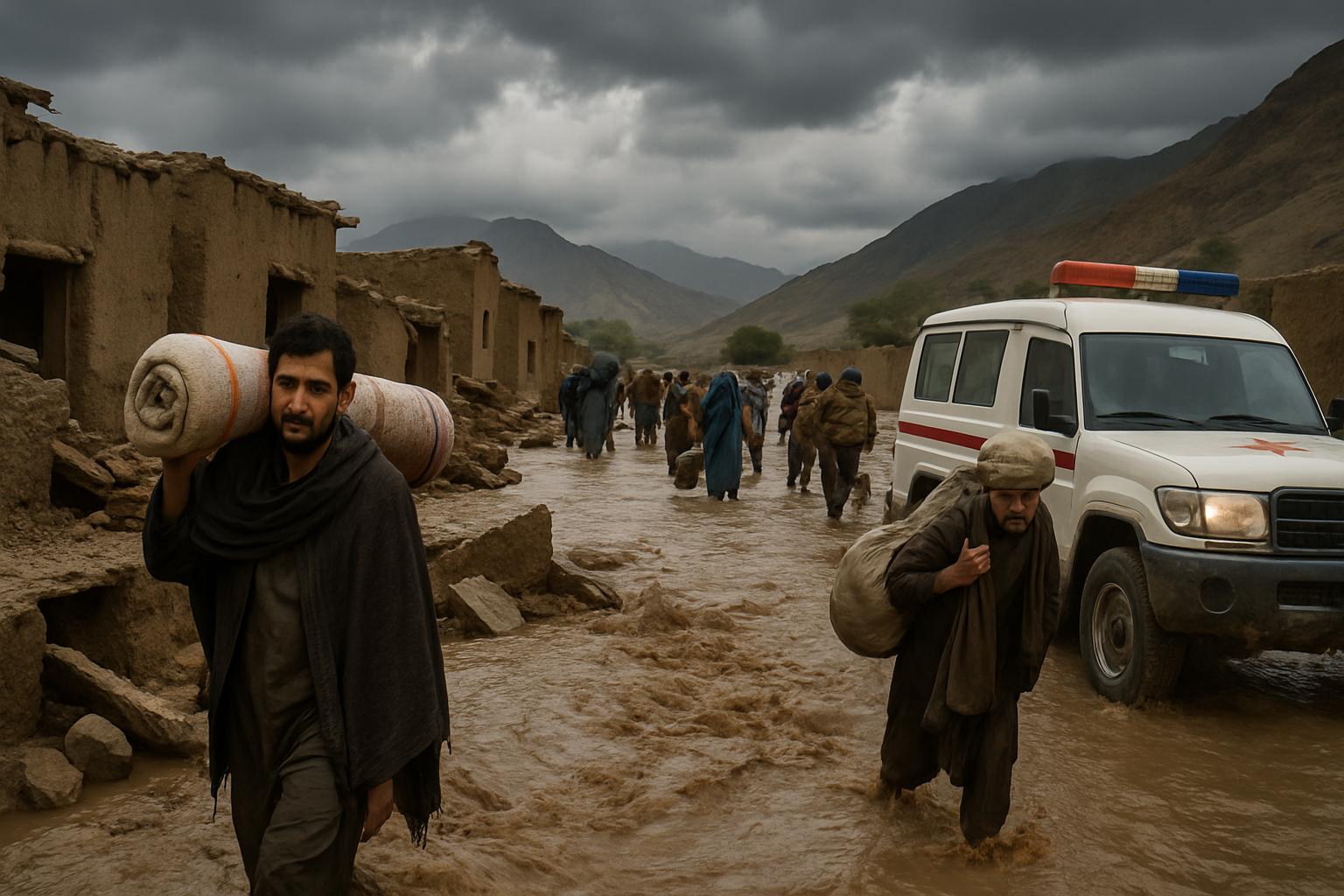
Afghanistan is reeling from a devastating natural disaster crisis as floods across more than 20 provinces have killed at least 99 people and injured 154 others, while simultaneous roof collapses from heavy rains have claimed an additional 9 lives in eastern regions, according to disaster management authorities.
The catastrophic flooding, described by the National Disaster Management Authority as a "rapidly worsening humanitarian emergency," represents the latest chapter in Afghanistan's mounting climate-related challenges during what officials call the worst humanitarian crisis in the nation's recent history.
Widespread Devastation Across Multiple Provinces
Heavy rains, landslides, and flash flooding have battered large parts of Afghanistan, with the National Disaster Management Authority confirming casualties across a vast geographic area stretching from eastern border regions to western provinces. The flooding has overwhelmed traditional drainage systems and exposed critical infrastructure vulnerabilities in rural communities dependent on traditional building methods.
In separate incidents highlighting the broader infrastructure crisis, at least nine people were killed and nine others injured when roofs of several homes collapsed in Nangarhar Province and Maidan Wardak Province. Local officials report that the victims were unable to escape when their traditional mud-brick structures failed under the weight of accumulated rainwater.
"The mounting human toll underscores Afghanistan's vulnerability to extreme weather events during a period of institutional weakness and international isolation."
— Disaster Management Official
Climate Crisis Compounds Humanitarian Emergency
The latest disasters occur during what climate scientists describe as an unprecedented period of global warming, with April 2026 marking the 22nd consecutive month that global temperatures have exceeded 1.5°C above pre-industrial levels—the longest sustained extreme warming streak in recorded human history.
Afghanistan's particular vulnerability to climate-driven disasters stems from its mountainous terrain, limited infrastructure investment, and reliance on traditional building techniques inadequately designed for increasingly extreme weather patterns. The country averages 560 earthquake-related deaths annually due to its position at the intersection of major tectonic plates, while climate-related disasters have become increasingly frequent and severe.
Historical context reveals a pattern of escalating natural disasters that have overwhelmed Afghanistan's limited emergency response capabilities. Previous flooding events in March 2026 killed 77 people and injured 137 others across multiple provinces, while recent earthquake activity has added to the mounting toll of climate-related casualties.
Infrastructure Vulnerabilities Exposed
The collapse of residential buildings during heavy rainfall highlights systemic infrastructure challenges facing Afghanistan's rural communities. Traditional mud-brick and stone construction, while suited to the region's historical climate patterns, has proven inadequate against the intensified precipitation and extreme weather events that have become increasingly common.
Emergency response operations face significant constraints due to limited resources, poor transportation infrastructure, and restricted international access since the Taliban's return to power in August 2021. The World Health Organization reports that only 23 hospitals across the country have access to emergency medical oxygen, while hundreds of health centers have been forced to close due to funding shortfalls.
Humanitarian Crisis Reaches Critical Levels
The natural disasters strike amid Afghanistan's worst humanitarian crisis in 25 years, with an estimated 88% of female-headed households unable to meet minimum living requirements. The World Food Programme has been forced to turn away three out of four hungry children due to severe budget shortfalls, while 4 million children face malnutrition risks—the highest level in the country's history.
International aid delivery remains severely constrained by political considerations, funding shortfalls, and access limitations. The United Kingdom recently provided an additional £3 million in humanitarian assistance, bringing total bilateral aid to £154 million, but aid organizations stress that current funding levels remain inadequate to address the scale of need.
Regional Climate Pattern Changes
Meteorological analysis indicates that Afghanistan's recent extreme weather events are part of a broader pattern of climate disruption affecting South and Central Asia. The region has experienced unprecedented temperature fluctuations, with traditional seasonal patterns becoming increasingly unreliable for agricultural planning and disaster preparedness.
The compound nature of current disasters—with flooding, structural collapses, and ongoing drought conditions occurring simultaneously across different regions—represents a new challenge for emergency management systems designed to handle sequential rather than concurrent catastrophes.
Emergency Response Limitations
Afghanistan's National Disaster Management Authority faces significant operational challenges in coordinating response efforts across the affected provinces. Limited helicopter and aircraft availability restricts access to remote mountainous areas where many casualties have occurred, while communication infrastructure damage has complicated rescue coordination efforts.
The International Federation of Red Cross and Red Crescent Societies demonstrated the potential for effective humanitarian response when it delivered health services to more than 2 million people during 2025 through 128 healthcare centers, despite political and operational challenges. However, scaling such efforts requires sustained international engagement and funding.
Long-term Recovery Challenges
Recovery prospects remain uncertain given Afghanistan's political isolation, economic sanctions, and limited government resources. Traditional building practices will require adaptation to accommodate changing climate conditions, while infrastructure investment needs far exceed current domestic and international funding availability.
The convergence of natural disasters with existing humanitarian challenges has created what experts describe as a "compound crisis" that demands innovative approaches to emergency response, development assistance, and climate adaptation. Without significant international support and improved governance structures, Afghanistan's vulnerability to climate-related disasters is expected to increase as global warming continues.
International Community Response
The international community faces difficult decisions regarding humanitarian assistance delivery in Afghanistan, balancing urgent humanitarian needs with political considerations surrounding Taliban governance. Recent natural disasters have highlighted the human cost of reduced aid flows and restricted international engagement.
Climate adaptation experts emphasize that Afghanistan's current crisis represents a preview of challenges facing vulnerable nations without adequate climate resilience investment. The intersection of political instability, economic collapse, and intensifying climate impacts creates unprecedented humanitarian suffering that requires sustained international attention and innovative response mechanisms.
As Afghanistan grapples with immediate disaster response needs, the latest flooding and infrastructure failures underscore the urgent requirement for transformative approaches to climate adaptation, infrastructure development, and humanitarian assistance in one of the world's most vulnerable regions during an era of accelerating environmental change.