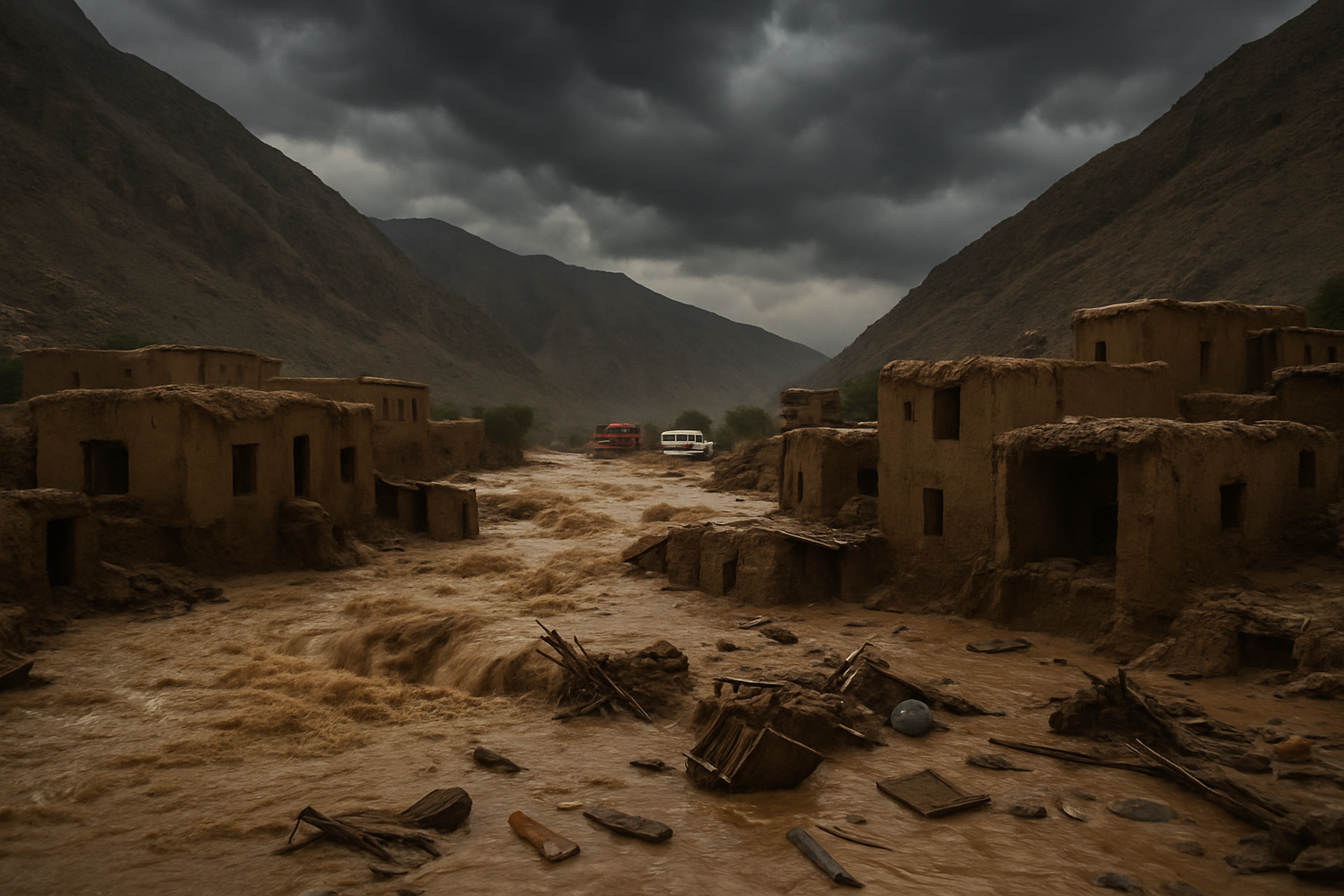
At least 17 people have lost their lives and 26 others have been injured as floods, landslides, and lightning strikes devastated multiple provinces across Afghanistan over a 24-hour period, marking one of the deadliest natural disaster events to strike the country in recent months.
Yousuf Hammad, spokesperson for Afghanistan's National Disaster Management Authority, confirmed that the natural disasters affected 13 provinces during Sunday's catastrophic weather system. The provinces of Parwan, Daikundi, Maidan Wardak, Logar, Herat, Farah, Ghor, Badghis, Samangan, Sar-e Pol, Jowzjan, Faryab, and Laghman all experienced varying degrees of devastation from the extreme weather conditions.
Scale of Destruction Across Afghanistan
The immediate aftermath reveals extensive property damage beyond the human toll. Emergency response teams have documented that 37 homes were completely destroyed, while an additional 110 houses suffered partial damage across the affected regions. The disaster's reach extended to critical infrastructure, with approximately 80 kilometers of roads rendered impassable or severely damaged.
Agricultural areas bore significant losses, with 582 jeribs (approximately 292 acres) of farmland either damaged or completely destroyed. This agricultural impact poses serious concerns for food security in a nation already grappling with widespread humanitarian challenges.
"Emergency response efforts are ongoing to provide relief and assistance to the affected communities."
— Yousuf Hammad, National Disaster Management Authority spokesperson
Historical Context of Afghanistan's Climate Vulnerability
This latest disaster adds to Afghanistan's mounting challenges with extreme weather events during a period of unprecedented global climate volatility. The floods occur during what scientists have identified as the 22nd consecutive month of global temperatures exceeding 1.5°C above pre-industrial levels—the longest sustained warming period in recorded human history.
Afghanistan's mountainous terrain and limited infrastructure make it particularly vulnerable to flash flooding and landslides. The country's disaster management capabilities have been severely tested throughout 2026, with previous incidents including earthquakes and seasonal flooding claiming dozens of lives and displacing thousands of families.
Emergency Response and International Context
Afghan authorities have mobilized emergency response teams across all 13 affected provinces, though the scale of simultaneous disasters presents significant logistical challenges. The National Disaster Management Authority is coordinating relief efforts while conducting ongoing assessments of damage and casualties.
The disaster occurs amid a broader pattern of extreme weather events affecting multiple countries simultaneously. Emergency services worldwide have reported operating at or beyond capacity limits as traditional mutual aid mechanisms prove inadequate for concurrent multi-continental disasters, rather than the sequential regional emergencies for which they were designed.
Infrastructure Vulnerabilities Exposed
The extensive road damage—80 kilometers across multiple provinces—highlights Afghanistan's infrastructure vulnerabilities to extreme weather events. Rural communities, already facing limited access to essential services, now confront additional isolation as transportation networks suffer severe disruption.
The destruction of agricultural land compounds existing food security concerns in a nation where millions already face hunger and malnutrition. International humanitarian organizations have previously warned that Afghanistan faces its worst hunger crisis on record, with 4 million children at risk of malnutrition.
Climate Change and Regional Implications
Meteorological experts note that the intensity and geographic spread of Sunday's disasters reflect broader climate patterns affecting the region. The Hindu Kush mountain range, which spans much of Afghanistan, has experienced increased seismic and weather-related instability throughout 2026.
Similar extreme weather events have recently affected neighboring regions, with Pakistan experiencing border tensions exacerbated by natural disasters, and broader South Asian nations reporting unprecedented seasonal weather disruptions.
Recovery and Long-term Challenges
The path to recovery faces significant obstacles, including limited financial resources, restricted international engagement, and the logistical challenges of reaching remote affected areas. The Taliban administration's capacity to mount comprehensive disaster response operations remains constrained by international sanctions and limited technical capabilities.
Rebuilding damaged infrastructure will require substantial investment in climate-resilient construction methods, as traditional building techniques prove inadequate against increasingly severe weather patterns. The agricultural losses threaten to worsen food insecurity during critical planting seasons.
Emergency response experts emphasize that current disaster preparedness strategies, designed for historical weather patterns, require fundamental restructuring to address what appears to be a permanent era of climate volatility. The convergence of extreme weather across multiple provinces simultaneously represents a new challenge requiring enhanced coordination capabilities and resources.
As authorities continue emergency response operations, the death toll may rise as search and rescue teams reach more remote areas. The disaster underscores Afghanistan's urgent need for enhanced disaster preparedness infrastructure and international support for building climate resilience in one of the world's most vulnerable regions.