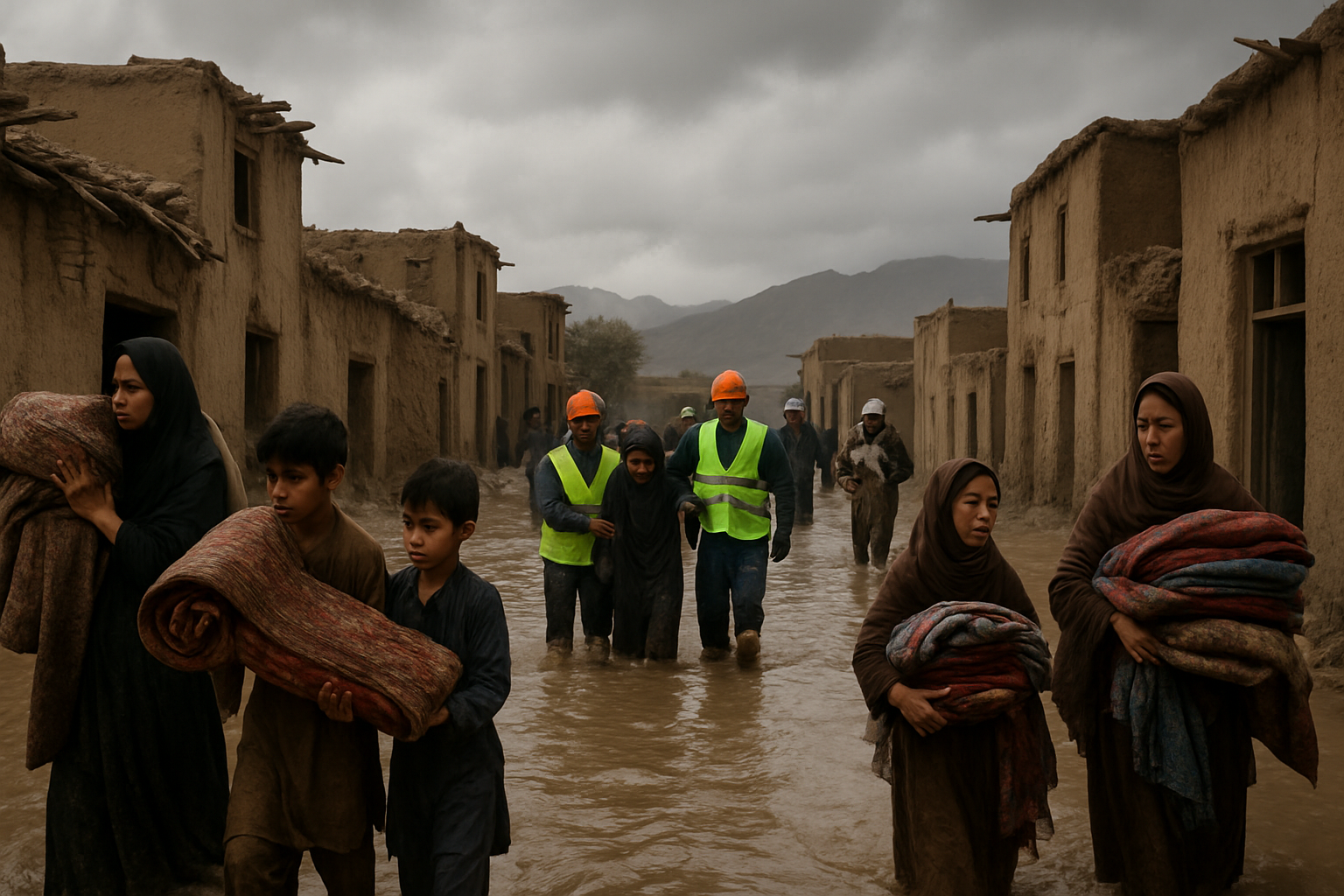
Afghanistan confronts a devastating dual crisis as deadly floods have claimed 77 lives since late March while the nation has been ranked as the world's unhappiest country for the third consecutive year, underscoring the severe humanitarian challenges facing the war-torn nation.
The National Disaster Preparedness and Disaster Management Authority (ANDMA) confirmed on Saturday that at least 77 people have died and 137 others were injured in floods that swept across multiple Afghan provinces between March 26 and April 4, 2026. The flooding has caused widespread destruction, leaving hundreds of homes either fully or partially damaged across the country.
ANDMA spokesman Mohammad Yousuf Hammad told AFP that 26 people were killed and 48 wounded in the past 48 hours alone due to rains, floods, landslides, and lightning strikes. The disaster has compounded Afghanistan's already dire humanitarian situation, occurring just as the nation faces its worst hunger crisis on record.
Deadly Floods Devastate Multiple Provinces
The severe weather system brought torrential rains that triggered flash floods, landslides, and dangerous lightning across several Afghan provinces. The mountainous terrain of Afghanistan, combined with poor drainage infrastructure and limited emergency response capabilities, has made the flooding particularly devastating for vulnerable communities.
Regional context reveals this disaster is part of a broader pattern of extreme weather affecting South Asia. According to Chinese state media reports, heavy rain and storms killed at least 121 people over two weeks across Afghanistan and Pakistan combined, demonstrating the cross-border nature of the climate crisis.

The disaster management authority's response has been hampered by limited resources and ongoing challenges in coordinating relief efforts. International humanitarian organizations have struggled to maintain adequate operations in Afghanistan since the Taliban's return to power in August 2021, creating significant gaps in emergency response capabilities.
World's Unhappiest Country for Third Year
Compounding the natural disaster, Afghanistan has been ranked as the world's unhappiest country for the third consecutive year in the latest World Happiness Report published in April 2026. Finland topped the global ranking once again, highlighting the stark contrast between the Nordic nation's stability and Afghanistan's ongoing crisis.
The happiness index, which measures factors including GDP per capita, social support, life expectancy, freedom to make life choices, generosity, and perceptions of corruption, places Afghanistan at the bottom of 143 countries surveyed. The ranking reflects the cumulative impact of decades of conflict, economic collapse, and humanitarian emergencies.
"Afghanistan's position as the unhappiest country reflects not just current challenges but the compound effect of ongoing instability, economic hardship, and limited opportunities for citizens to build meaningful lives."
— UN Development Programme Report
Historical Context of Natural Disasters
Afghanistan's vulnerability to natural disasters has been extensively documented in previous crises. In February 2026, a magnitude 5.8 earthquake struck the Hindu Kush region, affecting multiple neighboring countries including Pakistan, Tajikistan, and Uzbekistan. The earthquake, centered 38km from Bazarak at a depth of 79km, highlighted the region's seismic instability.
The country's challenging geography places it at the intersection of multiple climate threats. Afghanistan sits within the Hindu Kush mountain range, making it susceptible to both seismic activity and extreme weather events exacerbated by climate change. The nation has experienced the effects of the global climate crisis, with 2026 marking the 22nd consecutive month of global temperatures exceeding 1.5°C above pre-industrial levels.
Compound Humanitarian Crisis
The flooding disaster occurs against the backdrop of Afghanistan's worst hunger crisis on record. The World Food Programme (WFP) has confirmed that 4 million children are at risk of malnutrition—the highest recorded level in Afghanistan's history. Devastating aid cuts have forced the WFP to turn away three out of four hungry and malnourished children due to budget shortfalls.
Two-thirds of the country's population is affected by food insecurity, representing a systematic collapse of food security infrastructure amid international funding constraints. The situation has been exacerbated by the international community's response to Taliban governance policies, which has led to reduced humanitarian funding and operational challenges for aid organizations.
Regional Climate Impact
The current flooding is part of a broader pattern of extreme weather affecting the region during what scientists are calling an unprecedented period of climate volatility. The stormy weather has brought rain sweeping across Afghanistan since late March, causing floods and landslides while destroying homes and crops across multiple provinces.
Climate experts note that traditional seasonal patterns that have guided infrastructure design and emergency preparedness for centuries are becoming increasingly unreliable. The frequency and intensity of extreme weather events are overwhelming traditional response mechanisms designed for sequential rather than concurrent disasters.
Infrastructure Vulnerabilities
Afghanistan's limited infrastructure compounds the impact of natural disasters. The country's emergency services operate with severely constrained resources, lacking the equipment and personnel needed for effective disaster response. Traditional building methods, while adapted to local conditions, often prove inadequate against extreme weather events intensified by climate change.
The flooding has highlighted critical gaps in early warning systems, evacuation procedures, and post-disaster relief capabilities. Many rural communities remain isolated during extreme weather events, making rescue operations dangerous and time-consuming.
International Response Challenges
The international humanitarian response faces significant operational and political challenges. Since the Taliban's return to power, many countries have imposed restrictions on direct government-to-government assistance while attempting to maintain humanitarian operations through international organizations and NGOs.
The International Federation of Red Cross and Red Crescent (IFRC) has demonstrated one successful model, delivering health services to over 2 million people during 2025 across multiple crises including returning migrants, natural disasters, and severe droughts. The organization supported 128+ healthcare centers, providing a critical lifeline for vulnerable populations, women, and children.
"Humanitarian medicine transcends political boundaries when lives are at stake. Our role is to provide assistance based on need alone."
— IFRC Regional Coordinator
Economic Impact and Recovery Challenges
The flooding compounds Afghanistan's severe economic challenges. The nation faces significant trade disruptions, with 10,000 containers reportedly stranded at UAE's Jebel Ali Port due to regional tensions, affecting vital trade lifelines for the landlocked country. The Afghanistan Chamber of Commerce has reported millions of dollars in goods stuck in regional ports, creating both economic and humanitarian emergencies.
Recovery from the current flooding will require substantial resources that Afghanistan currently lacks. The destruction of homes, infrastructure, and agricultural land will have long-term impacts on food security and economic stability in affected regions.
Looking Forward: Building Resilience
The twin crises of natural disasters and social challenges facing Afghanistan highlight the urgent need for comprehensive approaches to building resilience. Climate experts emphasize that traditional disaster response frameworks require fundamental restructuring to address the permanent climate volatility that characterizes the current environmental era.
The integration of technology with traditional knowledge systems has shown promise in other regions. Advanced meteorological forecasting combined with community-based early warning systems can provide crucial lead time for disaster preparation and response.
International Cooperation Imperative
Environmental challenges transcend political boundaries, requiring unprecedented international cooperation. The success of future disaster preparedness efforts depends on sustained international cooperation, enhanced coordination mechanisms, and recognition of environmental protection as essential infrastructure for human prosperity and planetary sustainability.
The window for effective climate action continues to narrow as ecological systems approach critical thresholds that could trigger irreversible changes affecting global food security, climate stability, and human settlements. Afghanistan's current crisis serves as a preview of the challenges that await many vulnerable nations without immediate, transformative climate adaptation investments.
Conclusion
Afghanistan's designation as the world's unhappiest country while simultaneously battling deadly floods encapsulates the compound nature of modern humanitarian crises. The nation's struggles reflect broader global challenges where climate change, political instability, and economic hardship intersect to create unprecedented levels of human suffering.
The international community faces a critical choice between reactive crisis management and proactive resilience building. Afghanistan's current situation demonstrates the devastating consequences when societies lack the infrastructure, resources, and international support necessary to protect their populations from both natural disasters and the long-term effects of instability.
As the climate crisis continues to intensify, Afghanistan's experience serves as both a warning and a call to action for more comprehensive approaches to humanitarian assistance that address not just immediate needs but the underlying vulnerabilities that make communities susceptible to compound disasters.