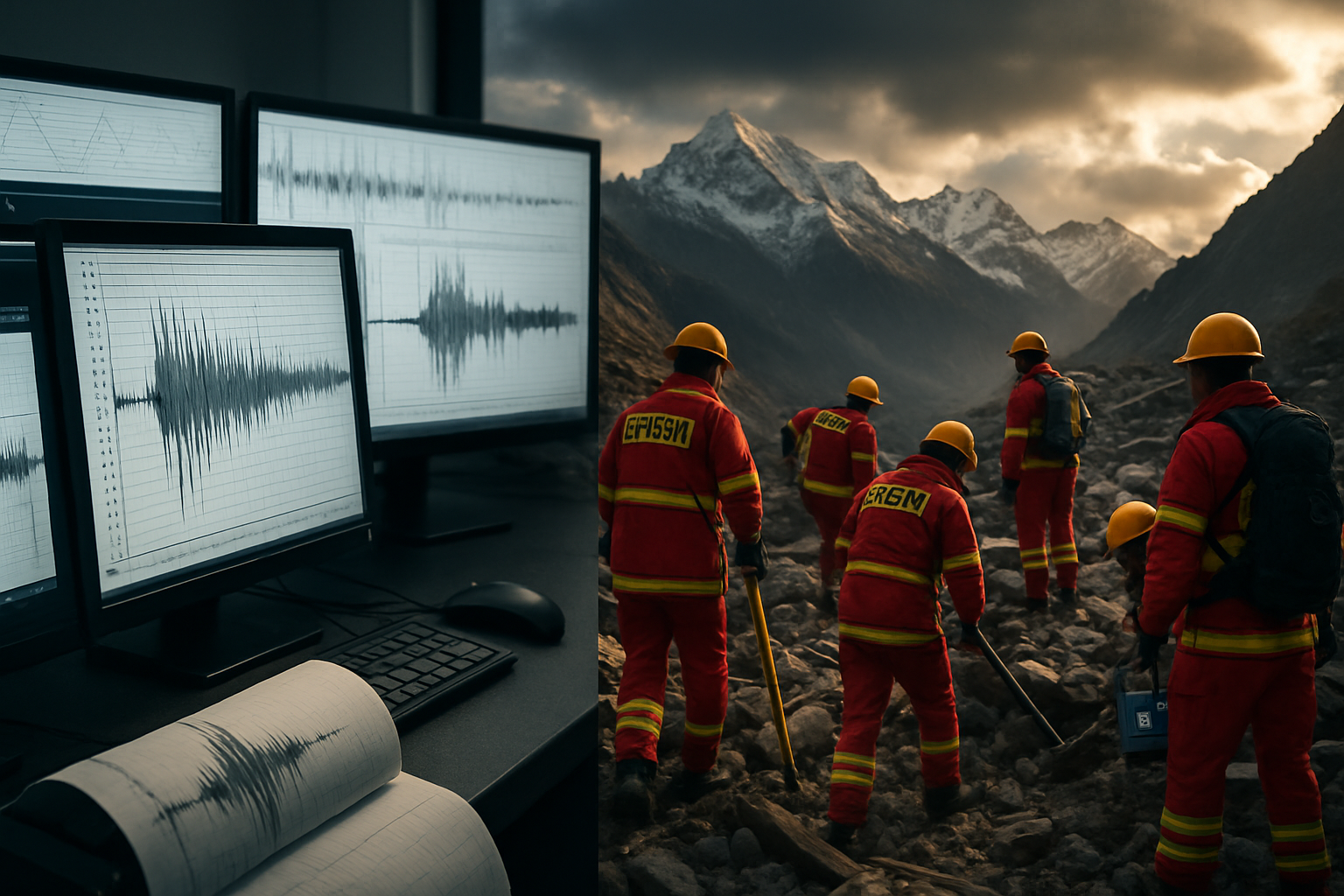
A magnitude 5.8 earthquake struck Afghanistan's Hindu Kush region Friday evening, killing at least eight people and injuring others when a house collapsed on the outskirts of Kabul, according to the spokesperson for the capital's governor.
The earthquake, which occurred at approximately 23:08 local time, had its epicenter in the mountainous Hindu Kush range, about 150 kilometers east of the Afghan city of Kunduz, according to data from the European-Mediterranean Seismological Centre (EMSC). The tremors were felt across a wide area, including parts of Pakistan and northern India.
Immediate Impact and Casualties
Hafizullah Basharat, spokesperson for Kabul's governor, confirmed that eight members of one family died when their house collapsed in a peripheral area of the Afghan capital. At least one child was reported injured in the incident, highlighting the deadly potential of even moderate-magnitude earthquakes in regions with vulnerable housing infrastructure.
The earthquake's effects extended beyond Afghanistan's borders, with tremors reported in Islamabad, Pakistan, and New Delhi, India. The widespread impact demonstrates the seismic vulnerability of the entire South Asian region, where the interaction between the Eurasian and Indian tectonic plates creates ongoing geological instability.
"Afghanistan averages 560 earthquake deaths annually due to its tectonic position where the Eurasian and Indian plates interact."
— Seismological Survey Data, 2026
Regional Seismic Pattern and Historical Context
This latest earthquake continues a troubling pattern of seismic activity that has plagued the region throughout 2026. The Hindu Kush mountain range, where Friday's earthquake originated, sits at the intersection of major tectonic plates, making it one of the world's most seismically active areas.
The region has experienced multiple significant earthquakes in recent months, including a magnitude 6.3 earthquake in November 2025 that killed 27 people and destroyed hundreds of houses. Earlier in February 2026, another earthquake struck the same Hindu Kush region, demonstrating the ongoing geological instability that threatens millions of lives across South Asia.
According to geological surveys, Afghanistan's position at the convergence of the Eurasian and Indian tectonic plates makes it particularly susceptible to seismic activity. The country faces an average of 560 earthquake-related deaths annually, a staggering figure that underscores the urgent need for improved disaster preparedness and building standards.
Humanitarian Crisis Context
Friday's earthquake strikes Afghanistan at a particularly vulnerable moment, as the country faces what experts describe as the worst humanitarian crisis in 25 years. The disaster adds another layer of complexity to an already overwhelming situation affecting millions of Afghan civilians.
The impact is particularly severe given that an estimated 25,000 children are still living in temporary tents from the devastating August 2025 Kunar Province earthquake, which killed more than 2,000 people and destroyed 8,000 homes. Six months after that disaster, reconstruction has barely begun in the mountainous region, with some villages potentially never to be rebuilt.
The emergency response is further complicated by ongoing restrictions on international aid operations under the current Taliban administration, limiting the effectiveness of disaster relief efforts and long-term recovery planning.
Infrastructure Vulnerabilities Exposed
The collapse of housing in Friday's earthquake highlights critical infrastructure vulnerabilities that plague earthquake-prone regions across South Asia. Traditional building methods and materials, while culturally appropriate, often lack the engineering standards necessary to withstand seismic forces.
Emergency response capabilities remain limited, with the National Disaster Management Authority coordinating relief efforts under challenging circumstances. The mountainous terrain of the affected regions makes rescue operations particularly difficult, often requiring specialized equipment and expertise that may not be readily available.

Regional and International Response
The earthquake's cross-border impact, with tremors felt in Pakistan and India, demonstrates how natural disasters transcend political boundaries and require coordinated international response mechanisms. Regional cooperation in earthquake monitoring and response has improved in recent years, but significant gaps remain in preparedness and rapid response capabilities.
Seismological monitoring systems, including those operated by the German Research Centre for Geosciences (GFZ) and the United States Geological Survey (USGS), provide crucial early detection and assessment capabilities. However, translating this scientific data into effective ground-level disaster response remains a significant challenge, particularly in remote mountainous areas.
The international community's ability to provide assistance is complicated by ongoing geopolitical tensions in the region, including the current border crisis between Afghanistan and Pakistan, which has already displaced over 16,000 families and severely disrupted traditional aid corridors.
Climate Change and Seismic Activity Intersection
Friday's earthquake occurs during a period of unprecedented global climate instability, with 2026 marking the 22nd consecutive month of temperatures exceeding 1.5°C above pre-industrial levels. While seismic activity is primarily driven by tectonic forces, researchers are increasingly studying potential connections between climate change and geological instability.
The combination of natural disasters - from earthquakes to extreme weather events - is creating what disaster management experts term "compound disasters," where multiple emergency types occur simultaneously, overwhelming traditional response capabilities designed for sequential rather than concurrent crises.
Long-term Recovery Challenges
The path to recovery from Friday's earthquake faces numerous obstacles that extend far beyond immediate rescue operations. Afghanistan's economic challenges, exacerbated by international sanctions and limited access to global financial systems, severely constrain reconstruction capabilities.
The country's health system, already under severe strain with only 23 hospitals having access to emergency medical oxygen according to the World Health Organization, faces additional pressure from earthquake casualties. Hundreds of health centers have been forced to close due to funding and security concerns.
"Recovery involves not just physical reconstruction but restored lives, communities, and confidence."
— International Disaster Recovery Assessment, 2026
Building Resilient Communities
The recurring pattern of earthquake disasters in the Hindu Kush region underscores the urgent need for comprehensive disaster risk reduction strategies. This includes not only improved building codes and construction practices but also community-based early warning systems and emergency preparedness education.
Traditional knowledge and practices, when combined with modern seismic engineering, can create more resilient communities capable of withstanding future earthquakes. However, implementing such changes requires sustained investment and technical expertise that may be challenging to secure in the current political and economic environment.
Looking Forward: Lessons for Global Disaster Preparedness
Friday's earthquake in Afghanistan serves as a stark reminder of the ongoing seismic threats facing vulnerable populations across South Asia and beyond. The disaster highlights critical gaps in preparedness, response capabilities, and international cooperation mechanisms that must be addressed to prevent future tragedies.
The intersection of natural disasters with humanitarian crises, political instability, and climate change creates complex challenges that require innovative solutions and sustained international commitment. As the frequency and intensity of extreme events continue to increase globally, the lessons learned from Afghanistan's earthquake experience become increasingly relevant for disaster-prone regions worldwide.
The immediate focus must remain on rescue operations and providing assistance to earthquake survivors. However, the longer-term imperative is clear: building more resilient communities and response systems that can better protect vulnerable populations from the inevitable geological forces that shape our planet.
As rescue operations continue and the full extent of Friday's earthquake damage becomes clear, the international community faces a critical test of its ability to provide effective humanitarian assistance while addressing the underlying vulnerabilities that turn natural hazards into human disasters.