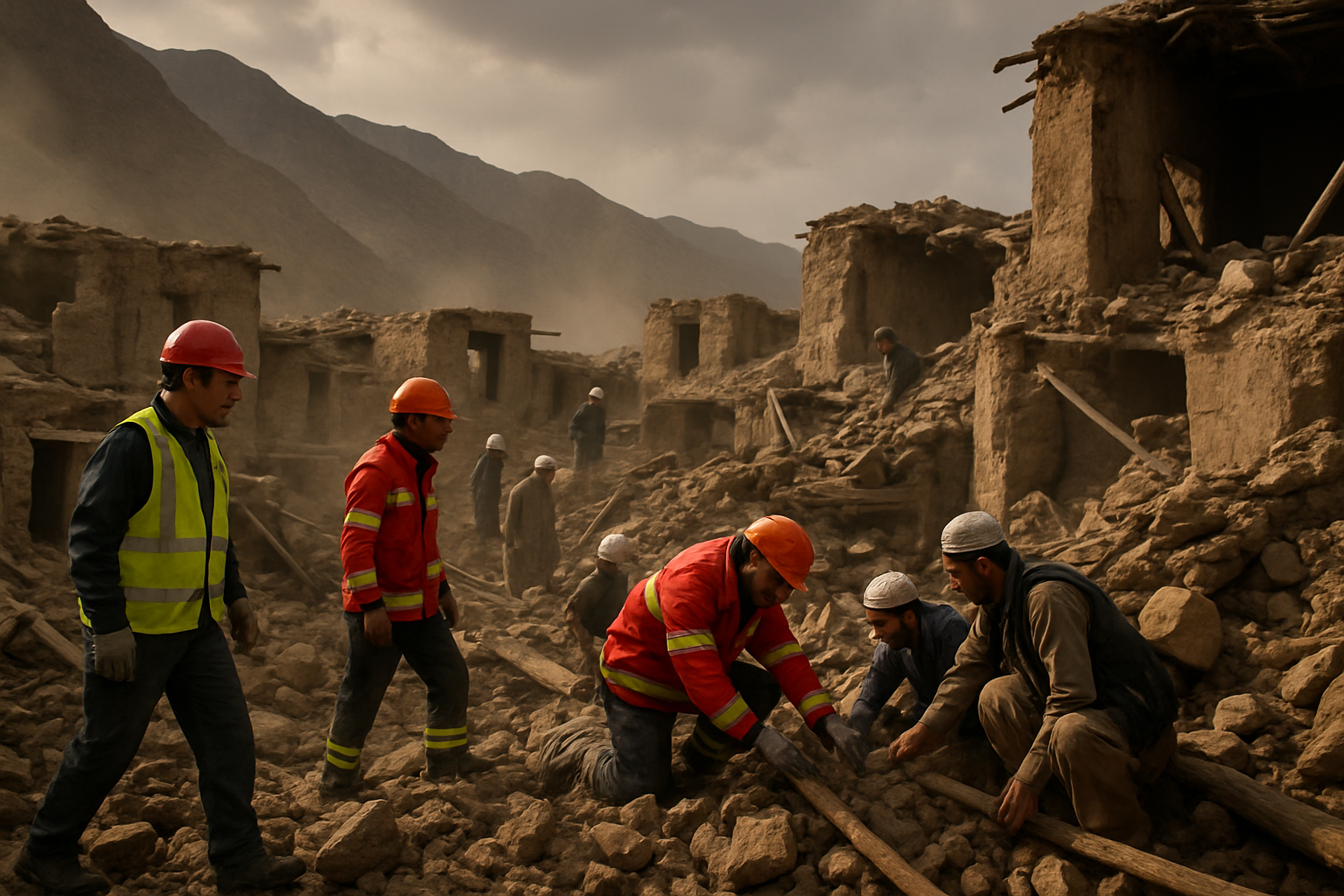
A deadly magnitude 5.8 earthquake struck Afghanistan's Hindu Kush region Friday night, killing 12 people including eight members of a refugee family who had recently returned from neighboring Iran, highlighting the country's vulnerability to both natural disasters and humanitarian crises.
The earthquake hit at 8:42 PM local time (1612 GMT) on Friday at a depth of 186 kilometers in northeastern Badakhshan province, according to the German Research Centre for Geosciences. The tremors were felt across the region, reaching Pakistan's capital Islamabad and India's New Delhi, demonstrating the significant cross-border impact of seismic activity in the tectonically active Hindu Kush mountain range.
Tragic Loss of Refugee Family
The most devastating casualties occurred on the outskirts of Kabul, where eight members of a single family perished when their home collapsed. A neighbor who participated in rescue efforts confirmed that the victims were refugees who had recently returned from Iran, adding a tragic dimension to Afghanistan's ongoing displacement crisis.
According to the Afghan Red Crescent Society and government officials, the family's death underscores the vulnerabilities faced by displaced populations who often live in substandard housing that cannot withstand seismic forces. Traditional mud brick and stone construction, common in Afghanistan, is particularly susceptible to earthquake damage.
Geological Context and Regional Impact
The earthquake's epicenter in Badakhshan province places it within one of the world's most seismically active regions, where the Eurasian and Indian tectonic plates interact. Afghanistan averages approximately 560 earthquake-related deaths annually due to its position at this geological intersection.
The tremors were widely felt across South Asia, with reports from Pakistan's Islamabad and India's New Delhi confirming the earthquake's regional reach. This cross-border impact demonstrates the need for enhanced regional cooperation in earthquake monitoring and emergency response systems.
Mounting Climate and Natural Disaster Challenges
This latest earthquake adds to Afghanistan's growing catalog of natural disasters during a period of unprecedented climate volatility. The country is experiencing its 22nd consecutive month of global temperatures exceeding 1.5°C above pre-industrial levels, creating conditions that exacerbate both immediate disaster response challenges and long-term recovery efforts.
Afghanistan's National Disaster Management Authority faces enormous challenges coordinating emergency response amid the worst humanitarian crisis in 25 years. The country's infrastructure vulnerabilities are exposed repeatedly by seismic forces, with traditional housing construction proving inadequate against geological threats.
Humanitarian Crisis Context
The earthquake strikes a population already overwhelmed by multiple crises. According to recent UN assessments, 88% of female-headed households in Afghanistan cannot meet minimum living requirements, compared to 75% of the general population. The systematic exclusion of women from the workforce has created structural economic damage affecting the entire population's disaster resilience.
Healthcare infrastructure remains severely compromised, with the World Health Organization reporting that only 23 hospitals across Afghanistan have access to emergency medical oxygen. Hundreds of health centers have been forced to close due to international aid cuts, creating acute shortages of medical professionals precisely when earthquake response demands immediate trauma care.
Historical Pattern of Seismic Activity
This earthquake follows a disturbing pattern of seismic events that have repeatedly struck Afghanistan in recent months. Previous earthquakes in the Hindu Kush region have demonstrated the ongoing geological instability that requires sustained disaster preparedness investment and international cooperation.
The August 2025 Kunar Province earthquake killed over 2,000 people and destroyed 8,000 homes, leaving 25,000 children still living in temporary tents six months later. The slow pace of reconstruction has meant that some villages may never be rebuilt due to geographical constraints, seismic risks, and limited resources.
International Response and Regional Cooperation
The cross-border nature of Friday's earthquake highlights the critical importance of international seismic monitoring and response coordination. The German Research Centre for Geosciences and the US Geological Survey provided rapid detection and analysis, enabling swift assessment of the earthquake's magnitude and potential impact.
Regional cooperation becomes essential when geological events transcend national boundaries. The fact that tremors reached Pakistan and India demonstrates how earthquake preparedness and response must be viewed as a shared regional challenge rather than isolated national concerns.
Recovery Challenges Ahead
Recovery prospects remain uncertain given Afghanistan's complex political situation, economic sanctions, and severely strained healthcare system. The combination of natural disaster vulnerability with ongoing humanitarian emergencies creates what experts term "compound disasters" – multiple emergency types occurring simultaneously and overwhelming traditional sequential response capabilities.
The refugee family's tragic death serves as a stark reminder that Afghanistan's most vulnerable populations – including those displaced by conflict and economic hardship – often face the greatest risks when natural disasters strike. Their recent return from Iran likely meant they were living in temporary or inadequate housing that provided little protection against seismic forces.
Looking Forward
As Afghanistan grapples with this latest natural disaster, the international community faces mounting pressure to balance humanitarian needs with political concerns. The earthquake demonstrates that natural disasters do not recognize political boundaries or diplomatic disputes – they affect civilian populations regardless of governance structures.
The ongoing seismic activity in the Hindu Kush region requires continued monitoring and preparedness efforts. With Afghanistan's position at the intersection of major tectonic plates, future earthquakes are inevitable, making investment in disaster-resilient infrastructure and emergency response capabilities not just beneficial but essential for protecting vulnerable populations.
The death of 12 people, including an entire refugee family seeking safety after fleeing Iran, underscores the urgent need for comprehensive approaches to disaster preparedness that account for Afghanistan's complex humanitarian landscape and geological realities.