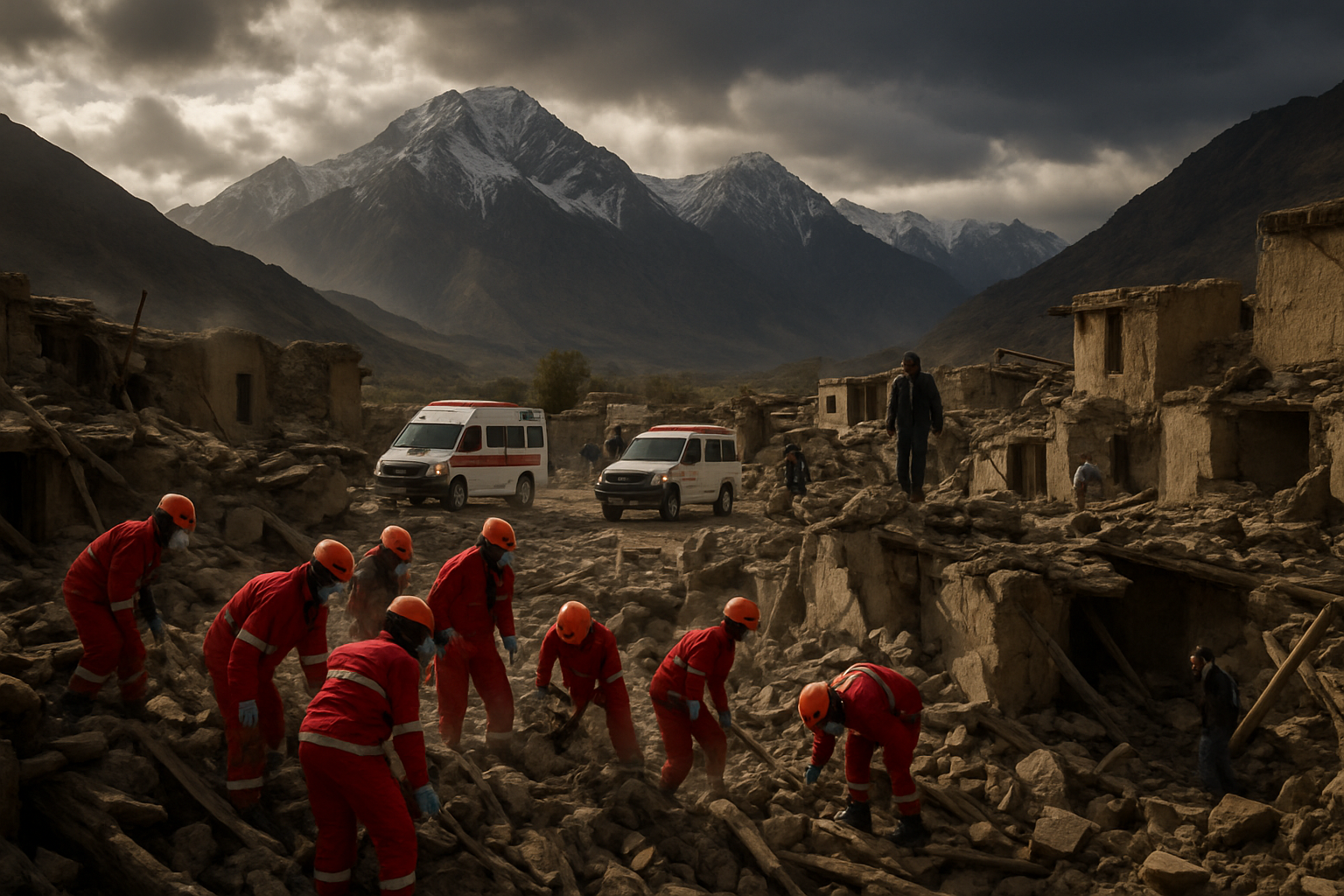
A powerful 5.8-magnitude earthquake struck Afghanistan's Hindu Kush region on Friday evening, killing at least eight people and injuring one child when a house collapsed in Kabul, according to the National Disaster Management Authority.
The earthquake, which occurred in the tectonically active Hindu Kush region, was felt across multiple countries including Pakistan's capital Islamabad, Afghanistan's capital Kabul, and India's New Delhi, according to Reuters witnesses. The tremor reached a depth of 177 kilometers (110 miles), as reported by the German Research Centre for Geosciences (GFZ).
Casualties and Immediate Impact
The National Disaster Management Authority confirmed that eight people died and one child was injured when a house collapsed in Kabul following the seismic event. The earthquake's epicenter was located in the Jurm district of Badakhshan province, approximately 186 kilometers deep, according to the United States Geological Survey (USGS).
Strong tremors were felt across the wider region, with reports from witnesses in Islamabad, Kabul, and New Delhi describing the intensity of the shaking. Despite the significant magnitude, there were no immediate reports of major structural damage beyond the fatal house collapse in the capital.
Afghanistan's Seismic Vulnerability
Afghanistan sits at the convergence of major tectonic plates, making it particularly susceptible to seismic activity. The country, hemmed in by rugged mountains, is prone to a range of natural disasters, with earthquakes being among the deadliest, killing approximately 560 people on average each year.
The Hindu Kush mountain range, where Friday's earthquake occurred, is part of a broader seismically active zone where the Eurasian and Indian tectonic plates interact. This geological setting has resulted in numerous devastating earthquakes throughout Afghanistan's history.
"Afghanistan's mountainous terrain and geological position make it one of the most earthquake-prone regions in the world, with communities particularly vulnerable due to infrastructure limitations and challenging terrain."
— Regional Seismology Expert
Recent Earthquake History
Friday's earthquake adds to Afghanistan's troubling recent history of seismic disasters. In November 2025, a powerful 6.3-magnitude earthquake left at least 27 dead and destroyed hundreds of houses. The country has experienced multiple significant earthquakes in recent years, each highlighting the ongoing vulnerability of communities to natural disasters.
Most recently, in February 2026, Afghanistan experienced another earthquake in the Hindu Kush region with a magnitude of 5.8. That earlier event prompted concerns about the increasing frequency of seismic activity in the region, particularly as climate change may be affecting geological stress patterns in mountainous areas.
Humanitarian Context
The earthquake strikes Afghanistan as the country grapples with its worst humanitarian crisis in 25 years. According to recent UN reports, millions of Afghans face food insecurity, with international aid organizations struggling to meet basic needs amid funding shortfalls and operational challenges.
The Save the Children organization recently reported that 25,000 children are still living in temporary tents six months after a devastating August 2025 earthquake that killed over 2,000 people and destroyed 8,000 homes in Kunar Province. Reconstruction efforts have been severely hampered by limited resources and challenging geographical conditions.
Emergency Response and International Support
Afghan emergency services mobilized quickly to respond to Friday's earthquake, with rescue teams dispatched to affected areas despite the challenging mountainous terrain. The National Disaster Management Authority activated standard earthquake response protocols, though the country's limited emergency infrastructure continues to strain under repeated natural disasters.
International humanitarian organizations present in Afghanistan have expressed readiness to provide assistance if needed, though the Taliban administration's restrictions on aid operations continue to complicate relief efforts. The earthquake response will test the coordination between local authorities and international aid agencies operating under current constraints.
Regional Seismic Monitoring
The earthquake was detected and analyzed by multiple international seismological centers, demonstrating the importance of regional cooperation in earthquake monitoring. The USGS, German Research Centre for Geosciences, and other institutions provided rapid assessment of the event's magnitude, depth, and potential impact.
Modern seismic monitoring networks have enabled quicker response times and more accurate assessments of earthquake impacts, though Afghanistan's remote mountainous regions continue to present challenges for comprehensive damage assessment and emergency response coordination.
Looking Forward
As Afghanistan continues to face the compound challenges of natural disasters, economic hardship, and humanitarian crisis, Friday's earthquake underscores the urgent need for enhanced disaster preparedness and international support. The country's vulnerable population, already struggling with food insecurity and limited healthcare access, faces additional risks from recurring seismic events.
The earthquake also highlights the broader regional vulnerability to natural disasters as climate change potentially affects geological stability and extreme weather patterns. Enhanced international cooperation in disaster response, seismic monitoring, and long-term resilience building remains crucial for protecting vulnerable populations across the Hindu Kush region.