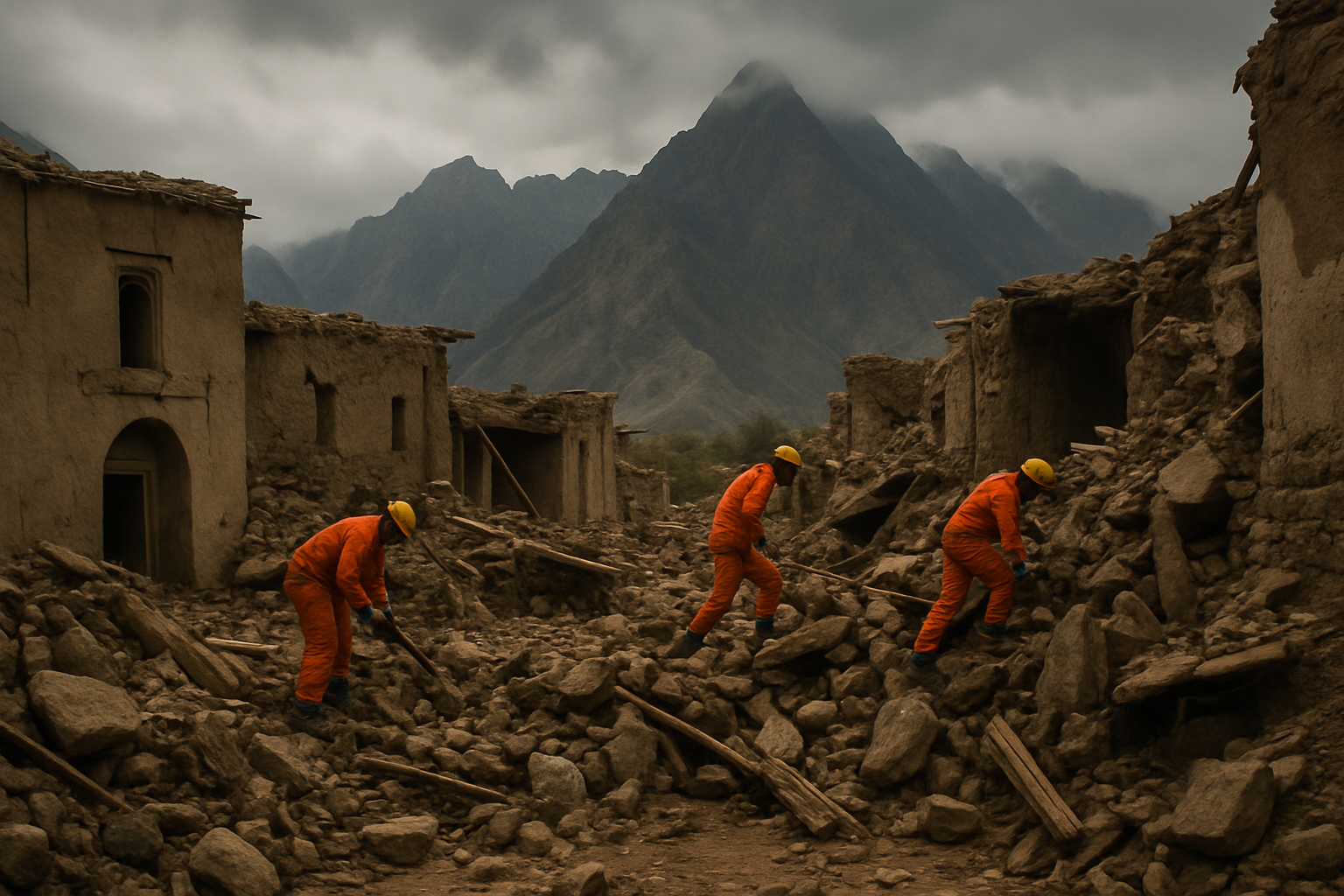
A devastating 5.8-magnitude earthquake struck Afghanistan's Hindu Kush region on Friday evening, killing at least eight people when a house collapsed in Kabul. The victims were all members of the same family, including parents and six children, with one child surviving the tragedy with injuries.
The earthquake, which occurred at approximately 11:08 PM local time, originated in the mountainous Hindu Kush region at a depth of 177 kilometers according to the German Research Centre for Geosciences (GFZ). The tremor's epicenter was located in Jurm district, Badakhshan province, but its impact was felt across a vast geographical area spanning multiple countries.
Hafiz Basharat, spokesperson for the Kabul Governor, confirmed the tragic casualties occurred in the Bagrami district of Kabul. The family members who perished included a father, mother, four daughters, and two sons. Emergency responders managed to rescue one child from the debris, who was subsequently hospitalized with injuries.
Regional Impact and International Response
The earthquake's effects extended far beyond Afghanistan's borders, with tremors strongly felt in Pakistan's capital Islamabad and India's capital New Delhi. This cross-border impact demonstrates the significant strength of the seismic event and highlights the geological instability of the Hindu Kush mountain range, where the Eurasian and Indian tectonic plates interact.
Pakistan's National Disaster Management Authority quickly activated monitoring protocols, while authorities in both Pakistan and India reported no immediate casualties in their respective territories. The wide geographical reach of the tremors underscores the importance of regional cooperation in earthquake monitoring and emergency response systems.
"The earthquake originated in the Hindu Kush region of Afghanistan and struck at a depth of approximately 177 kilometers. Tremors were felt across a wide area, including Kabul, Pakistan's capital Islamabad, and India's capital New Delhi."
— German Research Centre for Geosciences
Afghanistan's Ongoing Seismic Vulnerability
This latest earthquake adds to Afghanistan's troubling pattern of seismic disasters in 2026. The country has experienced multiple significant earthquakes this year, including a magnitude 6.3 earthquake in November 2025 that claimed 27 lives and destroyed hundreds of houses, and various tremors throughout the Hindu Kush region in recent months.
Afghanistan averages approximately 560 earthquake-related deaths annually due to its precarious position where the Eurasian and Indian tectonic plates converge. The Hindu Kush mountain range, extending through Afghanistan and Pakistan, represents one of the world's most seismically active regions, making the area particularly vulnerable to devastating earthquakes.
The country's traditional housing construction methods, often using mud brick and stone without modern earthquake-resistant engineering, significantly increase the risk of fatal collapses during seismic events. Rural and urban areas alike face heightened vulnerability due to aging infrastructure and limited resources for earthquake-proofing buildings.
Humanitarian Crisis Context
The earthquake struck Afghanistan as the country grapples with one of the world's most severe humanitarian crises. According to United Nations reports, 88% of female-headed households are unable to meet minimum living requirements, while the broader population faces widespread food insecurity and limited access to healthcare services.
The World Health Organization (WHO) recently delivered emergency medical oxygen to only 23 hospitals across the entire country, while hundreds of health centers have been forced to close due to funding cuts and security concerns. This severely limited healthcare infrastructure complicates emergency response efforts when natural disasters strike.
The timing of this earthquake is particularly challenging given Afghanistan's ongoing recovery from previous seismic events. Approximately 25,000 children remain living in temporary tents following the devastating August 2025 Kunar Province earthquake that killed over 2,000 people and destroyed 8,000 homes.
Emergency Response and International Monitoring
Afghanistan's National Disaster Management Authority has coordinated the immediate emergency response, though their capabilities remain severely constrained by limited resources and ongoing political complexities. Local authorities have appealed for caution regarding building stability and potential aftershocks in the affected areas.
International seismological networks, including the German Research Centre for Geosciences and the United States Geological Survey (USGS), provided rapid earthquake detection and analysis despite the challenging terrain in Afghanistan's remote mountainous regions. This international monitoring capability proves essential for understanding seismic patterns and providing early warning systems.
The earthquake occurred during a period of significant climate volatility, marking the 22nd consecutive month that global temperatures have exceeded 1.5°C above pre-industrial levels. While the relationship between climate change and seismic activity remains a subject of scientific study, the convergence of multiple environmental stresses creates additional challenges for disaster-prone regions like Afghanistan.
Looking Forward: Recovery and Preparedness Challenges
Recovery prospects for the affected family and broader community remain uncertain given Afghanistan's current political and economic situation. International aid operations face significant restrictions, while local resources are stretched thin by ongoing humanitarian needs and previous disaster recovery efforts.
The tragedy underscores the urgent need for enhanced earthquake preparedness and building standards in seismically active regions. However, implementing such measures requires sustained international cooperation, financial investment, and political stability—all of which remain in short supply in Afghanistan's current environment.
As aftershock monitoring continues and emergency responders work to ensure no additional victims remain trapped, this latest earthquake serves as a stark reminder of the intersection between natural disasters and humanitarian crises. The loss of an entire family highlights the human cost of living in one of the world's most geologically unstable regions while facing severe socioeconomic challenges.
The international community's response to this latest disaster will test existing frameworks for humanitarian assistance in politically complex environments, while demonstrating the ongoing need for regional cooperation in earthquake monitoring and emergency response across South Asia's seismically active mountain ranges.