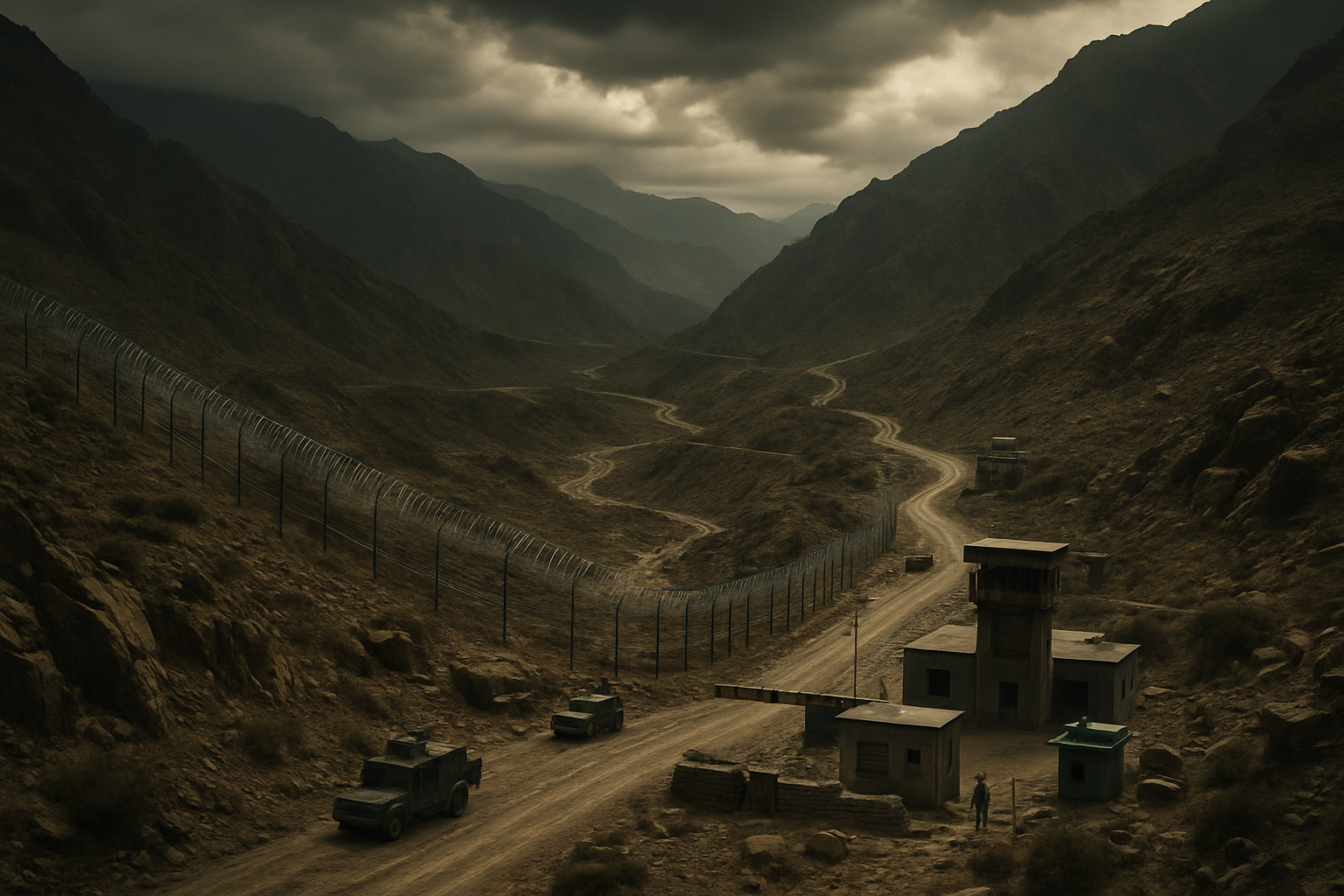
Afghanistan has filed a formal complaint with the UN Security Council condemning Pakistani airstrikes that killed at least 18 civilians including women and children, marking the most serious escalation in Pakistan-Afghanistan border tensions in recent months as both nations defend their positions on cross-border security operations.
The diplomatic crisis erupted following Pakistani airstrikes conducted early Sunday morning on Afghanistan's eastern provinces of Nangarhar and Paktika, which Pakistan claims targeted seven terrorist camps housing militants responsible for deadly attacks on Pakistani soil. Afghanistan's acting permanent representative to the UN, Naseer Ahmad Faiq, announced Monday that a formal complaint had been submitted regarding the strikes, calling for "the immediate cessation of such actions, a thorough and impartial review, full respect for Afghanistan's territorial integrity, and strict adherence to the Charter of the United Nations and international law."
Civilian Casualties Mount as Military Operations Intensify
According to Afghanistan's Defense Ministry, the Saturday night strikes targeted "various civilian areas" including a religious school and residential homes in Nangarhar and Paktika provinces. At least 18 people were confirmed killed, with several others injured in what Afghan officials describe as indiscriminate attacks on civilian infrastructure.
Pakistan's Parliamentary Secretary for Information and Broadcasting, Barrister Danyal Chaudhry, defended the operations as necessary for national security, stating that "Pakistan has always chosen the path of dialogue and peaceful coexistence. But when Afghan soil continues to be used for proxy attacks, we have no choice but to defend our homeland. National security is non-negotiable."
Pakistani military sources claim the strikes killed over 80 terrorists operating from camps along the border, describing the operations as "intelligence-based selective targeting" against TTP (Tehreek-e-Taliban Pakistan) and ISIS-K hideouts. The strikes came in direct response to the February 16 Bajaur district attack that killed 11 Pakistani soldiers in a coordinated assault using a vehicle-borne improvised explosive device.
Taliban Government Threatens Measured Retaliation
Afghanistan's Taliban-controlled government issued strong condemnation of what it characterized as violations of Afghan airspace, sovereignty, and international law. The Defense Ministry in Kabul stated that "various civilian areas" were hit and warned of a "measured and appropriate response at suitable time," representing a significant escalation in diplomatic rhetoric.
"We hold the Pakistani military responsible for targeting civilians and religious sites. This constitutes a breach of international law and the principles of good neighborliness."
— Afghanistan Defense Ministry Statement
The threats of retaliation come despite previous diplomatic efforts, including a Saudi Arabia-mediated prisoner exchange in February 2026 that saw the Taliban release three Pakistani soldiers captured during October 2025 border clashes. These confidence-building measures have proven insufficient to address the underlying security challenges that continue to plague the Afghanistan-Pakistan border region.
Pattern of Cross-Border Terrorism Escalates
The latest crisis represents the culmination of mounting tensions following a series of deadly terrorist attacks on Pakistani soil. The February 16 Bajaur assault was part of a broader pattern of cross-border terrorism that has included the devastating February 6 Islamabad mosque bombing, which killed 31 people and wounded 169 others during Friday prayers. ISIS-K claimed responsibility for the mosque attack, which specifically targeted Shia Muslims in Pakistan's heavily secured capital.
Pakistan has conducted extensive counter-terrorism operations throughout February 2026, including major campaigns in Balochistan province that resulted in over 400 militant casualties. Defense Minister Khawaja Asif had previously threatened airstrikes against Afghanistan if cross-border attacks continued, arguing that diplomatic solutions had failed to prevent terrorist incidents originating from Afghan territory.
Intelligence assessments suggest that TTP leadership operates "with impunity from Afghan soil" despite repeated Taliban assurances of controlling militant groups. The sophisticated attack tactics demonstrated in recent incidents, including coordinated assaults and vehicle-borne improvised explosive devices, indicate that militant organizations retain significant operational capabilities despite sustained military pressure.
Regional and International Implications
The border conflict occurs against the backdrop of broader regional security challenges and evolving diplomatic relationships. Chinese officials have warned the UN Security Council about the presence of ISIS-K, al-Qaeda, and the East Turkestan Islamic Movement (ETIM) in Afghanistan, contradicting Taliban claims of having "defeated terrorism" within their borders.
The crisis also highlights Pakistan's acknowledgment of diminished regional influence in Afghanistan compared to wealthier powers including Turkey, the UAE, Qatar, Saudi Arabia, and China. This reduced diplomatic leverage has increased Pakistan's reliance on military solutions when cross-border attacks threaten national security.
International observers are closely monitoring the situation given its implications for regional stability and the broader South Asian security architecture. The escalation occurs during a period when multiple mediation efforts, including Saudi Arabian diplomatic initiatives, have attempted to maintain functional relationships between the two neighbors despite political differences.
Humanitarian Concerns and Legal Questions
The targeting of civilian areas, including religious institutions and residential buildings, raises serious questions under international humanitarian law. Afghanistan's Foreign Ministry has summoned the Pakistani ambassador to deliver a formal protest note condemning what it describes as "repeated violations of Afghanistan's airspace and bombing of civilian areas."
Medical facilities in the affected regions are reportedly overwhelmed treating the wounded, with rescue operations continuing for civilians believed trapped under rubble. The attacks during the holy month of Ramadan carry additional significance, as terrorists have historically exploited religious periods for maximum psychological impact.
Looking Forward: Diplomatic Solutions vs. Military Escalation
The current crisis represents a critical test of both Taliban governance capabilities and Pakistan's resolve in addressing cross-border terrorism through military means. The success or failure of diplomatic interventions in de-escalating tensions will likely influence future approaches to similar regional challenges where territorial sovereignty intersects with transnational terrorism concerns.
Pakistan maintains that it has the right to defend its territory and citizens from terrorist attacks, while Afghanistan insists on its sovereign right to be free from foreign military intervention. The fundamental challenge lies in developing effective mechanisms to address legitimate security concerns while respecting international law and territorial integrity.
As both nations navigate this escalating crisis, the international community faces pressure to develop effective conflict prevention mechanisms before the situation spirals into a broader military confrontation with potentially devastating regional implications. The resolution of this border conflict may well serve as a template for managing similar 21st-century challenges where traditional diplomatic frameworks must adapt to address complex security threats in an interconnected world.