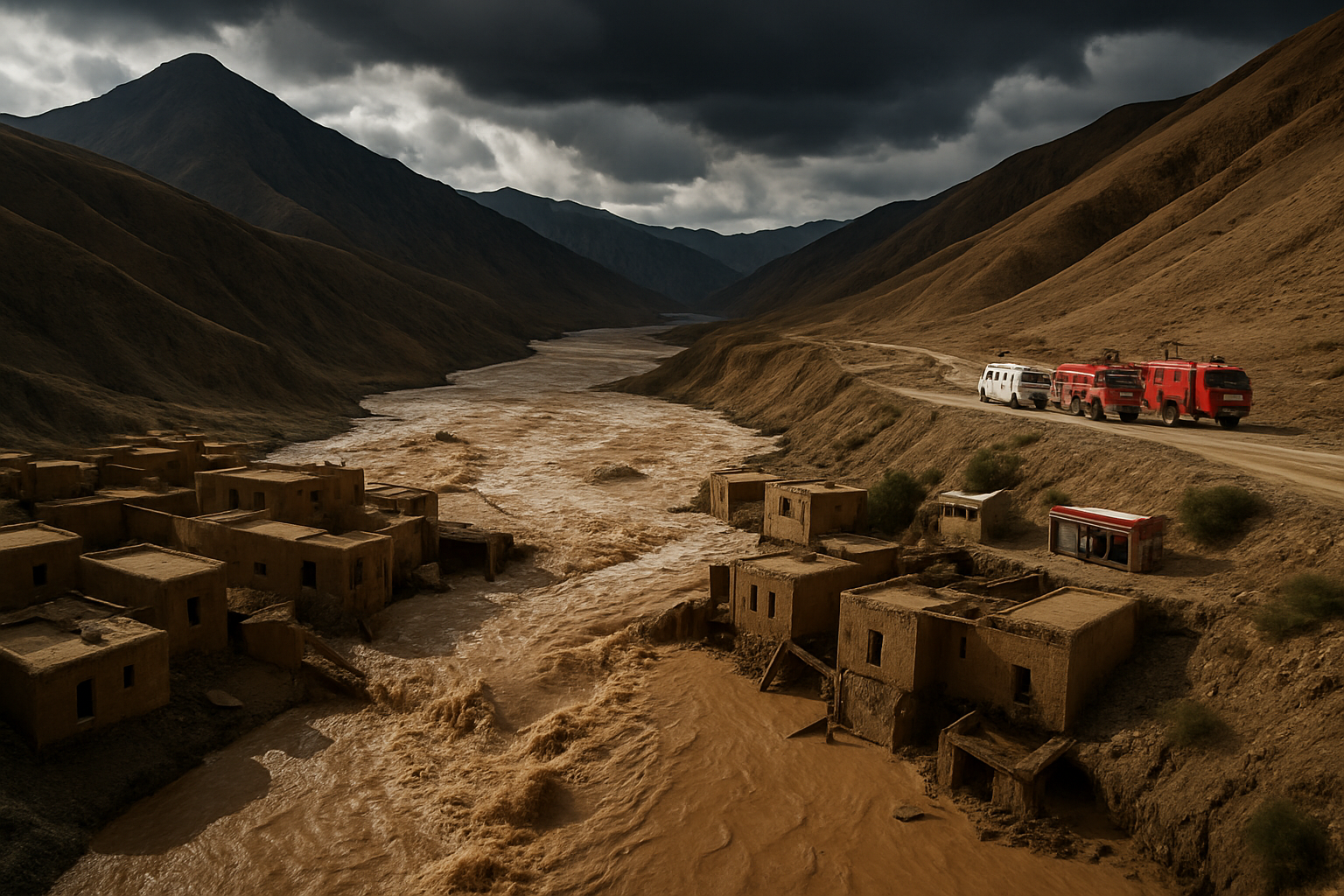
Flash floods and natural disasters across Afghanistan have killed at least 61 people and injured 116 others, while affecting more than 31,000 people nationwide, highlighting the country's growing vulnerability to climate-related emergencies amid an unprecedented global warming streak.
According to Zabihullah Mujahid, Taliban spokesperson, the deadly weather events have swept through several provinces, with authorities reporting four people remain missing as search and rescue operations continue. The devastating impact comes as the United Nations Human Settlements Programme warned Sunday that Afghanistan faces increasing exposure to climate-related disasters.
Unprecedented Scale of Destruction
The flash floods represent part of a broader pattern of extreme weather that has overwhelmed the landlocked nation's limited emergency response capabilities. The UN agency highlighted Afghanistan's growing exposure to extreme weather events and stressed the urgent need for disaster-resilient infrastructure development.
Recent heavy rainfall and natural disasters have caused significant losses across the country, with the emergency affecting both urban areas and remote rural communities where traditional building methods prove inadequate against increasingly intense weather patterns.
"The country is increasingly vulnerable to climate-related disasters."
— United Nations Human Settlements Programme
Global Climate Context
These devastating floods occur during an unprecedented period of global climate volatility. The world has now experienced 22 consecutive months of temperatures exceeding 1.5°C above pre-industrial levels—the longest sustained extreme warming streak in recorded human history. January 2026 remains the hottest month ever recorded, with human-induced climate change fundamentally overriding natural cooling mechanisms.
Afghanistan's crisis fits within a broader pattern of simultaneous extreme weather disasters affecting multiple continents. Emergency services globally are operating at or beyond capacity limits, while traditional mutual aid mechanisms prove inadequate when multiple countries face concurrent rather than sequential disasters.
Compound Humanitarian Crisis
The flooding disaster compounds Afghanistan's existing humanitarian challenges. The country was recently ranked as the world's unhappiest nation for the third consecutive year, while facing the worst hunger crisis on record. The World Food Programme has been forced to turn away three out of four hungry children due to severe budget shortfalls, with 4 million children at risk of malnutrition—the highest level in the country's history.
Two-thirds of Afghanistan's population currently faces food insecurity, creating a dangerous intersection of climate disasters with existing vulnerabilities. The natural disaster has occurred amid multiple compound challenges, including trade disruptions, border tensions, and international isolation following the Taliban's return to power in August 2021.
Infrastructure Vulnerabilities
The scale of destruction exposes critical gaps in Afghanistan's infrastructure and emergency preparedness systems. Traditional building methods and drainage systems, designed for historical climate patterns, prove inadequate against the intensity of current extreme weather events.
Emergency response has been hampered by limited resources, poor infrastructure, and international funding constraints. The crisis demonstrates how climate change disproportionately affects vulnerable nations lacking the resources for comprehensive disaster preparedness and climate-resilient infrastructure.
International Response and Adaptation
The UN agency is working with the Special Trust Fund for Afghanistan to help communities strengthen their ability to withstand future environmental shocks. However, the scale of need far exceeds current response capabilities, highlighting the urgent requirement for enhanced international cooperation.
The International Federation of Red Cross and Red Crescent Societies (IFRC) has demonstrated successful models for delivering health services to over 2 million people in 2025 through 128+ healthcare centers, despite political challenges. This approach offers lessons for scaling humanitarian assistance while building local resilience.
Climate Adaptation Imperatives
Scientists warn that current conditions represent a preview of routine circumstances expected in the 2030s without significant climate adaptation investment. The "climate volatility paradox" enables sustained global warming to coincide with devastating regional extremes through disrupted atmospheric circulation patterns.
Afghanistan's experience serves as a case study for the challenges facing vulnerable nations as extreme weather frequency and intensity increase beyond current response capabilities. The crisis underscores how environmental protection has become essential infrastructure for national survival and planetary sustainability.
"This demonstrates compound crisis intersection of climate change, political instability, economic collapse creating unprecedented humanitarian suffering."
— Climate Analysis Report, April 2026
Building Resilience in Uncertain Times
Recovery from the current flooding will require a "building back better" approach that prioritizes climate-resilient infrastructure over traditional reconstruction methods. This includes improved early warning systems, enhanced drainage capabilities, and construction techniques designed to withstand increasingly extreme weather patterns.
The window for effective climate action continues to narrow as ecological systems approach critical thresholds that could trigger irreversible changes affecting global food security, climate stability, and human settlements. Afghanistan's crisis demonstrates the human cost of delayed adaptation and the urgent need for international cooperation in addressing climate vulnerabilities.
As extreme weather events become more frequent and severe, the international community faces a choice between reactive crisis management and transformative climate resilience strategies. The tools, knowledge, and cooperation frameworks exist for comprehensive environmental protection, but success depends on unprecedented speed of coordination and sustained international commitment to treating environmental protection as essential infrastructure for human prosperity and planetary sustainability.