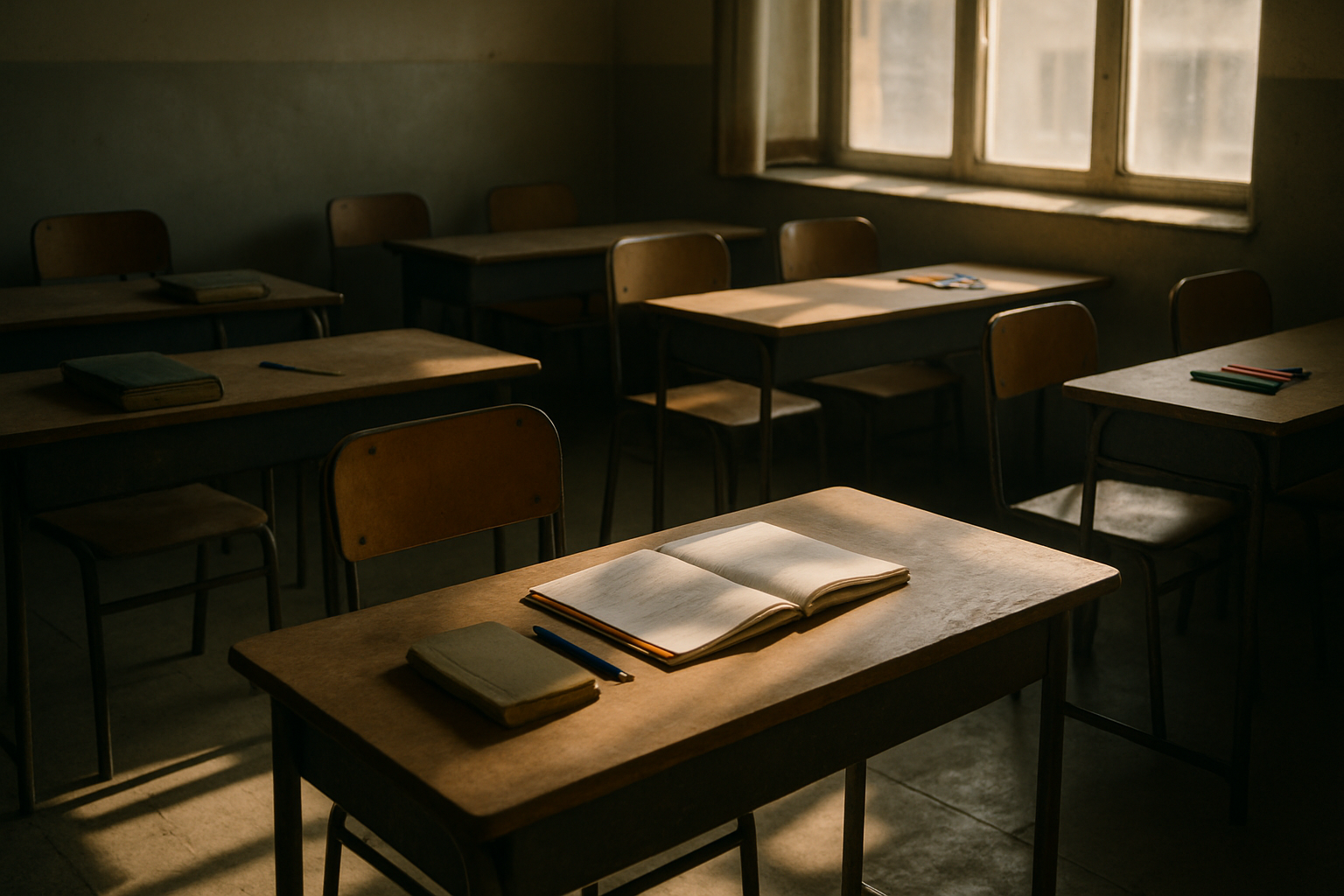
The United Nations is mounting unprecedented pressure on Afghanistan's Taliban authorities to reopen schools and universities for girls, as the international community marks over two and a half years since the systematic exclusion of women from education began following the Taliban's return to power in August 2021.
UN Special Rapporteur on human rights in Afghanistan, Richard Bennett, issued a stark warning during his Nowruz greeting on March 22, emphasizing the continued denial of education for girls beyond grade six as Afghanistan enters the new year. His statement comes as the country faces mounting international pressure over what experts are calling "gender apartheid" – the most severe rollback of women's rights in modern history.
The Scale of Educational Exclusion
Afghanistan now stands alone as the only country in the world that prohibits girls from attending secondary school and universities. The Taliban's education restrictions have created an unprecedented educational emergency affecting an entire generation of young women and girls. According to UN assessments, millions of Afghan girls have been systematically excluded from formal education since the Taliban's return to power.
Bennett emphasized that not only schoolgirls but also female university students, teachers, and professors have been barred from educational institutions. This comprehensive exclusion has devastated Afghanistan's educational system and violated the fundamental right to education enshrined in international law.
"The continued denial of education for girls beyond grade six represents a catastrophic violation of human rights that affects not just individual lives, but the future of an entire nation."
— Richard Bennett, UN Special Rapporteur on Afghanistan
International Rankings Reflect Crisis Severity
The devastating impact of these restrictions is reflected in Afghanistan's position in international assessments. The Georgetown Institute for Women, Peace and Security has ranked Afghanistan 181st out of 181 countries in its Women, Peace and Security Index – marking the country as having the worst conditions for women globally.
This bottom ranking underscores the systematic nature of the restrictions, which extend far beyond education to encompass employment, healthcare access, and basic freedoms of movement and expression. The ranking represents a dramatic fall from Afghanistan's previous positions and highlights the comprehensive nature of the current crisis.
Economic and Social Consequences
The exclusion of women from education and employment has created severe economic hardships across Afghanistan. UN Development Programme data reveals that 88% of female-headed households are unable to meet minimum living requirements, compared to 75% of the general population. This represents the systematic exclusion of approximately half of Afghanistan's potential workforce from economic participation.
The structural economic damage extends beyond individual households to affect the entire population. With women prohibited from most forms of employment except limited healthcare roles, Afghanistan has essentially removed half of its human capital from contributing to economic recovery and development.
Healthcare System Under Strain
The crisis has created particular challenges in healthcare, where cultural and religious norms require female patients to be treated by female medical professionals. Bennett has warned of an acute shortage of female medical professionals due to the systematic restrictions on women's participation in education and employment.
The World Health Organization delivered medical oxygen to only 23 hospitals across Afghanistan in February 2026, while hundreds of health centers have been forced to close due to international aid cuts. This healthcare emergency occurs during what WHO has described as the worst humanitarian crisis in 25 years.
The International Federation of Red Cross and Red Crescent Societies (IFRC) served over 2 million people in 2025, supporting more than 128 healthcare centers, while the World Food Programme provided school meals to 880,000 children. However, girls remain excluded from secondary education despite these humanitarian efforts.
Regional and International Response
The international community continues to grapple with how to address Afghanistan's humanitarian needs while maintaining pressure for policy changes on women's rights. The UN Security Council approved only a three-month extension of the UN Assistance Mission in Afghanistan (UNAMA) mandate in March 2026, rather than the usual annual renewal, reflecting international frustration with the lack of progress on human rights issues.
China's warnings about the presence of ISIS-K, al-Qaeda, and the East Turkestan Islamic Movement (ETIM) contradict Taliban claims of having defeated terrorism, adding regional security concerns to the humanitarian crisis. The complex intersection of security, humanitarian, and human rights issues complicates international engagement strategies.
Spanish Perspective on Healthcare Impact
Recent reporting from Spanish media has highlighted the devastating impact of Taliban edicts on women's health and safety. The case of Mariam, a midwife who completed her studies in 2021 but was never allowed to graduate or practice despite Afghanistan's acute need for maternal healthcare providers, illustrates the human cost of these restrictions.
The restrictions limiting women's access to healthcare and employment in the medical sector have created what international observers describe as unnecessary suffering, illness, and deaths that could constitute a form of systematic harm to the female population.
Looking Forward: Calls for Action
Bennett is expected to present comprehensive documentation to the 61st UN Human Rights Council session in Geneva, providing detailed recommendations for international action to protect the fundamental rights of systematically excluded Afghan women and girls.
The upcoming presentation will likely address the interconnected challenges of education access restrictions, maternal and child health impacts, and provide concrete recommendations for the international community's response to protecting fundamental human rights in Afghanistan.
Economic Arguments for Change
International experts argue that Afghanistan's economic recovery is impossible without the full participation of women in education and the workforce. The systematic exclusion represents not only a human rights violation but also an economic policy that undermines the country's potential for stability and growth.
The current restrictions violate both international human rights law and what many global Islamic scholars argue are authentic Islamic principles regarding education and women's participation in society.
The Path Forward
As Afghanistan faces continued international isolation and mounting humanitarian challenges, the education crisis remains at the center of international concerns. The Taliban's education policies have become a defining issue in international relations with Afghanistan, affecting diplomatic recognition, aid distribution, and regional cooperation.
The international community faces the complex challenge of addressing immediate humanitarian needs while maintaining pressure for fundamental policy changes that would restore basic rights to Afghan women and girls. The coming months will be crucial in determining whether sustained international pressure and humanitarian engagement can create space for Afghan women and girls to reclaim their fundamental right to education and full participation in society.
With Afghanistan representing what experts describe as the most severe rollback of women's rights in modern history, the stakes extend far beyond national boundaries. The crisis has become a global challenge to fundamental principles of human dignity and equality, requiring sustained international attention and innovative approaches to protect the rights of millions of Afghan women and girls who continue to be systematically excluded from education and full participation in their society.