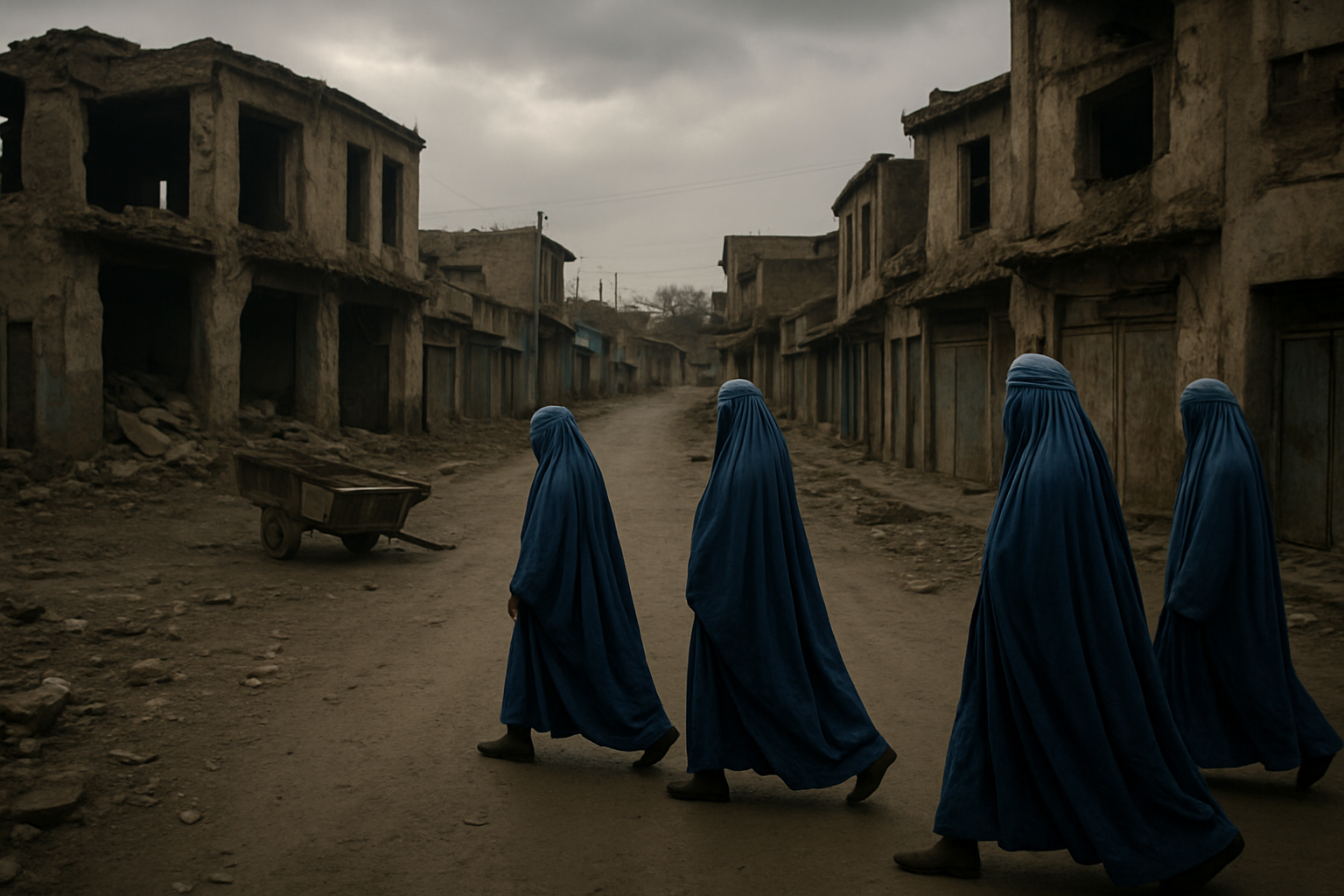
Afghanistan has once again claimed the unenviable position of the world's least happy country, scoring just 1.4 out of 10 in the latest World Happiness Report 2026, marking its third consecutive year at the bottom of the global rankings amid ongoing Taliban restrictions and a deepening humanitarian crisis.
The comprehensive report, conducted by the University of Oxford's Wellbeing Research Centre across 147 countries, measures overall life satisfaction based on factors including income levels, social support, freedom to make life choices, perceptions of corruption, and quality of life. Afghanistan's dismal ranking reflects a nation grappling with systematic exclusion of women from public life, economic collapse, and international isolation since the Taliban's return to power in August 2021.
Nordic Dominance Continues
In stark contrast to Afghanistan's struggles, Nordic countries once again dominated the happiness rankings. Finland secured the top position for an unprecedented ninth consecutive year with a score of 7.7, followed by Iceland and Denmark. This Nordic success demonstrates what the report calls "organizing societies around human flourishing" through comprehensive social safety nets, educational excellence, and prevention-first mental health strategies.
Costa Rica achieved a historic breakthrough by climbing to fourth place, marking the highest ranking ever recorded for a Latin American country. The achievement challenges traditional geographic assumptions about well-being distribution and demonstrates that happiness can transcend economic constraints when supported by appropriate social policies and cultural values.
The Afghanistan Crisis in Context
Afghanistan's bottom ranking is reinforced by devastating statistics from international organizations. According to the Georgetown Institute for Women, Peace and Security, Afghanistan ranks 181st out of 181 countries in their Women, Peace and Security Index, with 88% of female-headed households unable to meet minimum living requirements compared to 75% of the general population.
"Afghanistan represents the most severe rollback of women's rights in modern history, creating what experts describe as a 'gender apartheid' system that affects not just women but the entire society's wellbeing."
— UN Special Rapporteur Richard Bennett
The systematic exclusion of women from employment, education, and public life has created structural economic damage affecting the entire population. With approximately half of Afghanistan's potential workforce barred from economic participation, the country faces what the UN describes as the worst humanitarian crisis in 25 years.
Healthcare and Social Infrastructure Collapse
The happiness index reflects the broader collapse of Afghanistan's social infrastructure. The World Health Organization has been forced to deliver emergency medical oxygen to only 23 hospitals, while hundreds of health centers have closed due to international aid cuts and Taliban restrictions on female medical professionals.
Cultural and religious norms in Afghanistan require female patients to be treated by female healthcare providers, but the Taliban's systematic exclusion of women from professional roles has created acute shortages of medical staff. This healthcare crisis particularly affects maternal and child health services, compounding the nation's suffering.
Educational opportunities have also been devastated. The Taliban's ban on girls' secondary and higher education has created what experts call an "unprecedented educational emergency" affecting an entire generation. The World Food Programme provided school meals to 880,000 children in 2025, but girls remain excluded from secondary education systems.
Economic Devastation and International Response
Afghanistan's economic situation has deteriorated dramatically since 2021. The country's traditional trade relationships have been severely disrupted, with bilateral trade between Afghanistan and Pakistan collapsing by 59% – from $550 million to $228 million in exports over seven months. The closure of traditional trade routes through Chaman-Spin Boldak and Torkham has affected border communities already struggling with the humanitarian crisis.
The international community continues providing humanitarian assistance despite political constraints. The International Federation of Red Cross and Red Crescent Societies served over 2 million people in 2025, supporting more than 128 healthcare centers. However, these efforts cannot compensate for the systematic policy changes that have isolated Afghanistan from global economic and social systems.
Regional Security Challenges
Afghanistan's happiness crisis occurs amid broader regional security challenges that further compound the population's suffering. The ongoing border tensions with Pakistan, which escalated into "open war" declarations in early 2026, have resulted in civilian casualties and further disrupted essential services.
The United Nations has documented 185 civilian casualties between February and March 2026, with 16,370 families displaced across 10 provinces due to cross-border violence. These security challenges add another layer to Afghanistan's complex crisis, making recovery even more difficult.
Despite Taliban claims of having "defeated terrorism," Chinese warnings to the UN about the presence of ISIS-K, al-Qaeda, and other terrorist groups contradict these security assurances, raising concerns about Afghanistan's role in regional stability.
Global Happiness Trends and Lessons
While Afghanistan struggles at the bottom of the happiness index, the 2026 report reveals important global trends. The research exposes a devastating youth mental health crisis, particularly in developed countries, with 96% of children aged 10-15 using social media and 70% experiencing harmful content exposure.
The contrast between Afghanistan's systematic oppression and the success of Nordic models provides crucial insights for international policy. Countries implementing comprehensive prevention programs report superior outcomes through decreased crisis costs, improved educational results, and enhanced community resilience.
Looking Forward: Challenges and Opportunities
Afghanistan's position at the bottom of global happiness rankings reflects not just national tragedy but a worldwide challenge to fundamental principles of human dignity and equality. The country's situation serves as a stark reminder that progress on women's rights and human development can be rapidly reversed without strong institutional protections.
International experts argue that Afghanistan's restrictions violate fundamental human rights and potentially constitute crimes under international law. The 61st UN Human Rights Council session in Geneva is expected to present comprehensive documentation with recommendations for international action to protect the systematically excluded rights of Afghan women and girls.
The upcoming months remain crucial for determining whether international pressure and humanitarian engagement can create space for Afghan women and girls to reclaim their fundamental rights to education, work, and full societal participation. The success or failure of these efforts will likely influence Afghanistan's position in future happiness rankings and, more importantly, the wellbeing of millions of Afghan citizens.
As the international community grapples with how to address humanitarian needs while maintaining pressure for policy changes, Afghanistan's last-place ranking in the happiness index serves as a sobering reminder of the human cost of systematic oppression and the importance of protecting democratic institutions and human rights worldwide.