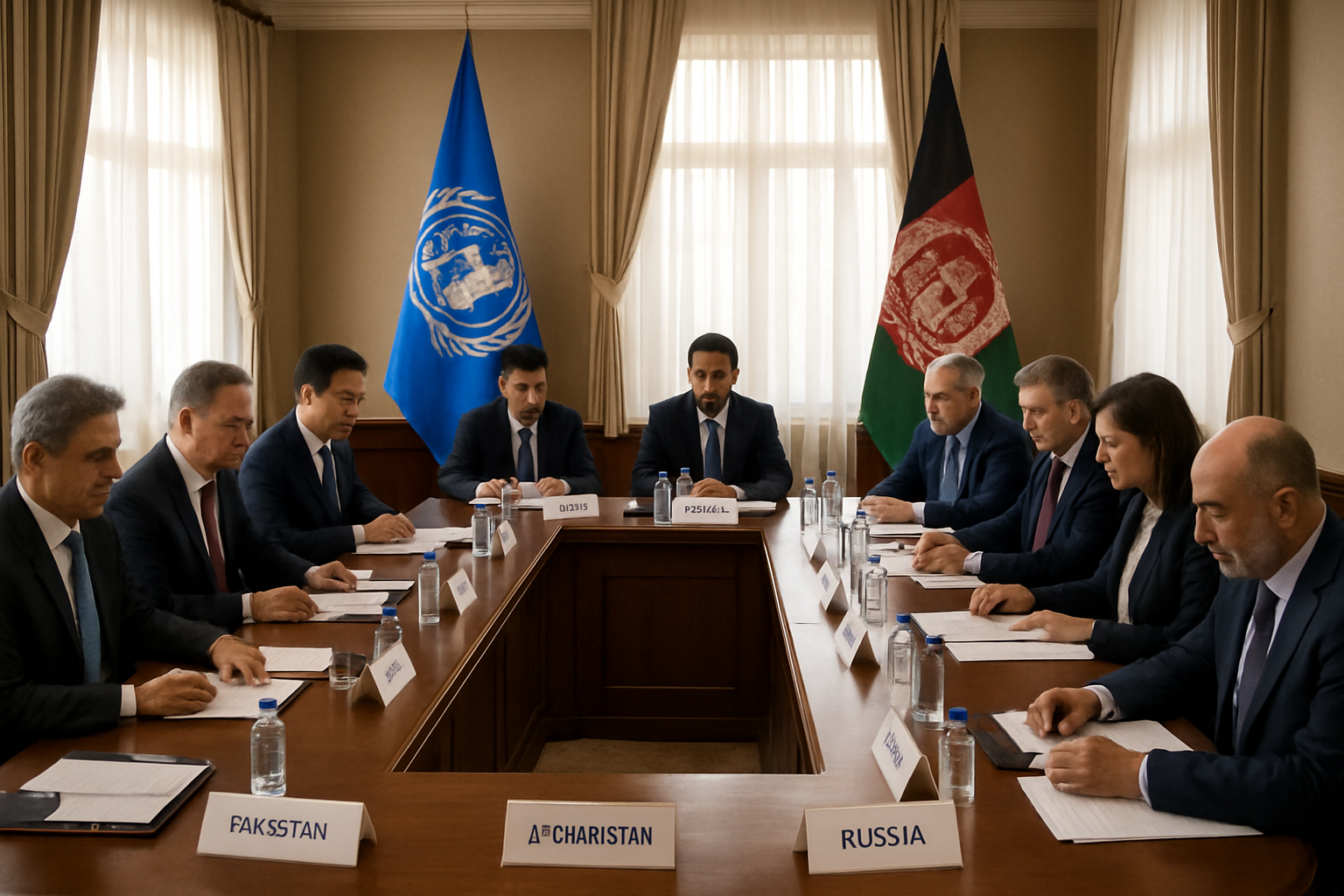
Afghanistan hosted the fourth Counter-Narcotics Working Group meeting under the Doha Process on Tuesday at the Kabul Grand Hotel, bringing together UN officials, international representatives, and Afghan authorities to discuss significant progress in reducing opium cultivation and strengthening regional counter-narcotics cooperation.
The meeting, hosted by the United Nations Assistance Mission in Afghanistan (UNAMA), featured both in-person and online participation from a broad coalition of stakeholders committed to combating drug trafficking and production in the region. According to Hafiz Zia Ahmad Takal, head of public relations at Afghanistan's Ministry of Foreign Affairs, the session marked a significant milestone in international cooperation efforts.
Comprehensive International Participation
The gathering brought together representatives from multiple Afghan ministries, including Foreign Affairs, Interior, Agriculture, Irrigation and Livestock, and Public Health, alongside UN agencies, international and regional organizations, the European Union, and the Organization of Islamic Cooperation. Diplomats and technical experts also participated in the discussions, demonstrating the broad international interest in Afghanistan's counter-narcotics efforts.
The diverse participation underscores the global nature of the drug trafficking challenge and the recognition that effective solutions require coordinated international action. The meeting format, combining in-person and virtual attendance, enabled broader participation despite logistical challenges in the region.
Historic Reduction in Opium Cultivation
Afghan officials reported during the meeting that opium cultivation has been reduced to near-zero levels following a decree by the Supreme Leader. This dramatic reduction represents one of the most significant achievements in global counter-narcotics efforts in recent years, according to international observers present at the meeting.
The scale of this achievement cannot be understated, given Afghanistan's historical role as the world's largest producer of illicit opium. The country previously accounted for approximately 80% of global opium production, making this reduction a development with worldwide implications for drug trafficking networks and addiction treatment programs.
UNAMA officials, UN agencies, international organizations, and diplomats present at the meeting praised the Islamic Emirate's efforts, describing the sharp reduction in opium cultivation as a historic achievement with far-reaching implications for regional and global security.
Implementation and Enforcement Challenges
While the reduction figures are remarkable, the implementation has not been without challenges. The shift away from opium cultivation has significant implications for rural Afghan communities that previously depended on poppy farming for their livelihoods. International observers noted the need for sustained support to provide alternative economic opportunities for affected farmers.
The enforcement of the opium ban has been comprehensive, with reports indicating that cultivation areas have been systematically reduced across traditional poppy-growing regions. This enforcement represents a significant policy shift that has garnered international attention and cautious optimism from the global counter-narcotics community.
Regional Cooperation Initiatives
The Doha Process meeting coincided with separate bilateral discussions aimed at strengthening regional counter-narcotics cooperation. Abdul Rahman Munir, Afghanistan's Deputy Minister for Counter-Narcotics, met with officials from the Central Asian Regional Information and Coordination Center (CARICC) to discuss expanding joint efforts in combating drug trafficking.
During his meeting with Mahmoud Khadimov, Head of CARICC, and Azizbek Arkaboyev, the center's adviser, Munir emphasized the Islamic Emirate's commitment to comprehensive cooperation with neighboring and Central Asian countries. He called for further strengthening of these regional partnerships, recognizing that drug trafficking networks operate across borders and require coordinated responses.
CARICC officials assured their Afghan counterparts of their commitment to improving coordination and developing more effective collaboration in counter-narcotics initiatives. This commitment represents a pragmatic approach to regional security challenges, focusing on shared threats rather than political differences.
Strategic Importance of Central Asian Cooperation
The emphasis on Central Asian cooperation reflects the geographic reality of drug trafficking routes that have traditionally moved through the region toward European and Russian markets. Strengthening these partnerships is seen as crucial for maintaining pressure on trafficking networks and preventing the establishment of alternative routes.
The cooperation framework being developed includes intelligence sharing, coordinated enforcement operations, and technical assistance programs. These initiatives aim to create a comprehensive regional approach that can adapt to changing trafficking patterns and methods.
Evolving Drug Consumption Patterns
The meeting addressed not only production and trafficking issues but also emerging challenges related to changing drug consumption patterns within Afghanistan. The United Nations Office on Drugs and Crime (UNODC) has reported a shift in consumption patterns, noting growing concerns about synthetic drugs and other substances that may be filling the gap left by reduced opium availability.
This evolution in consumption patterns presents new challenges for public health authorities and law enforcement agencies. The international community is working with Afghan authorities to develop comprehensive responses that address both traditional opium-related issues and emerging synthetic drug threats.
International Recognition and Cautious Optimism
The international community's response to Afghanistan's opium reduction efforts has been characterized by cautious optimism and recognition of the achievement's significance. While political differences remain regarding broader governance issues, the counter-narcotics progress has created a foundation for practical cooperation on shared security concerns.
UN officials present at the meeting emphasized that sustained international support will be crucial for maintaining these gains and addressing the socio-economic challenges associated with the transition away from opium cultivation. The focus on technical cooperation and capacity building reflects a pragmatic approach to maintaining progress while addressing ongoing challenges.
Future Monitoring and Verification
The international community has established monitoring mechanisms to verify and track the continuation of opium reduction efforts. These systems involve satellite monitoring, field verification, and regular reporting processes that provide ongoing assessment of cultivation levels and enforcement effectiveness.
The verification processes are designed to provide transparent and credible information to the international community while supporting Afghan authorities in maintaining their counter-narcotics achievements. This approach balances the need for accountability with the practical requirements of sustained cooperation.
Implications for Global Counter-Narcotics Efforts
Afghanistan's dramatic reduction in opium cultivation has implications that extend far beyond the country's borders. The achievement demonstrates that significant changes in global drug production patterns are possible with sustained political commitment and effective enforcement measures.
However, experts caution that the reduction in Afghan opium production may lead to increased cultivation in other regions or greater reliance on synthetic alternatives. The international community is working to anticipate and address these potential developments through enhanced global monitoring and cooperation mechanisms.
The Doha Process framework provides a model for sustained international engagement on counter-narcotics issues, even in challenging political environments. The focus on technical cooperation and shared security interests offers a pathway for maintaining progress while addressing broader political challenges through separate diplomatic channels.