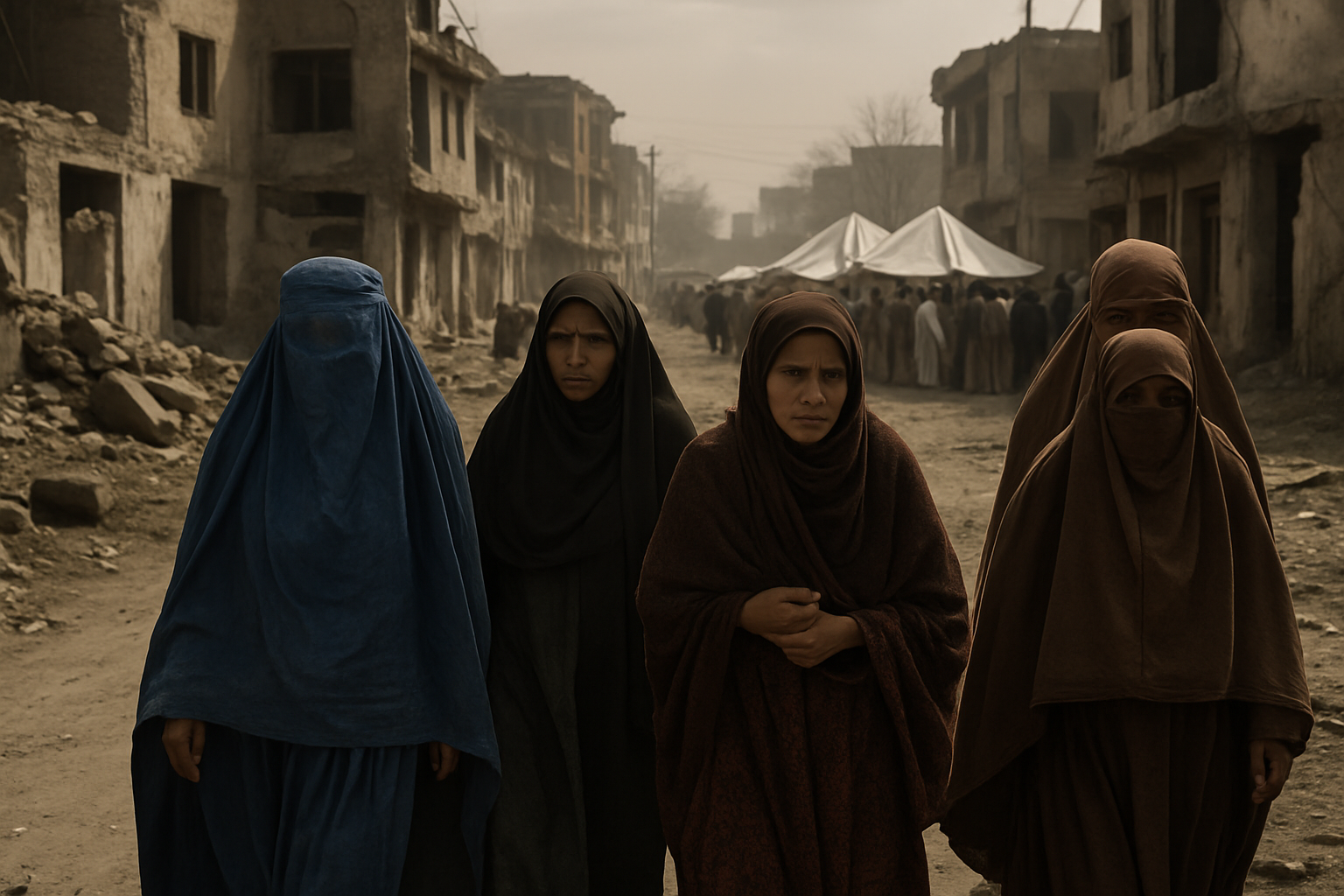
The Office of the United Nations High Commissioner for Human Rights (OHCHR) has issued a devastating assessment of Afghanistan's human rights situation, warning that life for ordinary Afghans, particularly women and girls, has deteriorated sharply under Taliban rule since their return to power in August 2021.
The comprehensive report, covering the period from August 2025 to January 2026, was presented at the latest session of the Human Rights Council in Geneva and paints a picture of systematic oppression that has created what experts describe as "gender apartheid" on an unprecedented scale.
Systematic Exclusion of Women from Public Life
UN Human Rights Chief Volker Türk delivered a scathing indictment of the Taliban's policies, stating that "the de facto authorities have, in effect, criminalized the presence of women and girls in public life." The report documents how Taliban-imposed policies and decrees have severely restricted women's access to education, employment, healthcare, and public participation.
"Discrimination affects their healthcare, their access to civic space, and their freedom of movement and expression."
— Volker Türk, UN High Commissioner for Human Rights
According to the Georgetown Institute for Women, Peace and Security, Afghanistan now ranks dead last—181st out of 181 countries—in their Women, Peace and Security Index, marking the most severe rollback of women's rights in modern history. The statistics are staggering: 88% of female-headed households are unable to meet minimum living requirements, compared to 75% of the general population struggling with basic needs.
Healthcare Crisis Reaches Breaking Point
The humanitarian emergency has reached critical proportions, with the World Health Organization (WHO) delivering medical oxygen to only 23 hospitals across the country in February 2026—12 in Kabul and 11 in the provinces. Hundreds of health centers have been forced to close due to international aid cuts and Taliban restrictions on female healthcare workers.
UN Special Rapporteur Richard Bennett has repeatedly warned of an acute shortage of female medical professionals, which is particularly devastating given cultural and religious norms that require female patients to be treated by female healthcare providers. This crisis has created a healthcare emergency where women and girls are effectively denied medical care.
The International Federation of Red Cross and Red Crescent Societies (IFRC) managed to serve over 2 million people in 2025, supporting more than 128 healthcare centers, but organizations report that the exclusion of female staff severely hampers their ability to reach vulnerable populations.
Educational Apartheid Continues
The Taliban's ban on girls' education beyond primary school has created what UNICEF calls an "unprecedented educational emergency." The World Food Programme (WFP) provided school meals to 880,000 children in 2025, but girls remain excluded from secondary education, representing a generational catastrophe that will have long-lasting effects on Afghanistan's development.
Former President Hamid Karzai has warned that continued restrictions could "seriously damage Afghanistan's stability and future progress," describing education as a "basic pillar" of development. However, the Taliban Education Ministry has shown no signs of reversing these policies, with the 1405 academic year opening with girls above grade six again excluded from classrooms.
Economic Devastation and Trade Collapse
The systematic exclusion of women from the workforce has created structural economic damage affecting the entire population. With women representing approximately half of Afghanistan's potential labor force, their removal from economic participation has contributed to a catastrophic decline in living standards.
The economic situation has been exacerbated by deteriorating relations with neighboring Pakistan. Bilateral trade between the two countries has collapsed by 59%, with Pakistani exports dropping from $550 million to $228 million over seven months. Traditional border crossings at Chaman-Spin Boldak and Torkham have been repeatedly closed due to ongoing military confrontations.
Regional Security Concerns
The Taliban's claims of having defeated terrorism are contradicted by Chinese warnings at the UN about the presence of ISIS-K, al-Qaeda, and the East Turkestan Islamic Movement (ETIM) in Afghanistan. This has contributed to the most serious Pakistan-Afghanistan border crisis in decades, with 289 civilian casualties and over 115,000 people displaced since late February 2026.
The ongoing conflict has further complicated humanitarian access, with aid organizations struggling to operate in an environment of military confrontation and systematic restrictions on their female staff members.
International Response and Diplomatic Isolation
The international community faces a complex challenge in addressing Afghanistan's humanitarian needs while maintaining pressure for policy changes. The UN Security Council approved only a three-month extension of UNAMA's mandate instead of the usual annual renewal, reflecting international frustration with the lack of progress on human rights issues.
Taliban Order No. 12, which banned women from working with national and international civil society organizations, has been condemned by UN Women as a "serious violation of human rights" that deepens gender-based violence and worsens humanitarian conditions. This has severely limited the ability of aid organizations to reach the most vulnerable populations.
Health and Malnutrition Crisis
UNICEF reports treating 610,000 severely malnourished children in the past year, highlighting the intersection of gender-based restrictions, economic collapse, and health system failure. The crisis represents what WHO describes as the worst humanitarian emergency in 25 years.
The convergence of these factors has created a perfect storm where basic human needs cannot be met, and the systematic exclusion of women from healthcare, education, and economic participation threatens the survival and dignity of millions of Afghans.
International Law Violations
International legal experts argue that the Taliban's restrictions violate fundamental human rights and may constitute crimes under international law. The systematic nature of the discrimination against women and girls has led some to characterize it as "gender persecution" that could fall under the definition of crimes against humanity.
French representatives at the UN have stated that the restrictions could constitute gender persecution requiring international accountability. The comprehensive nature of the violations—affecting education, healthcare, employment, and freedom of movement—represents what many experts describe as the most systematic assault on women's rights in contemporary history.
Looking Forward: Uncertain Path to Recovery
As the Taliban leadership issued Eid al-Fitr messages calling for non-interference in Afghanistan's internal affairs, the international community continues to grapple with how to address the humanitarian crisis while pushing for policy changes. The Supreme Leader's emphasis on sovereignty and independence suggests little willingness to modify the restrictions that have created this emergency.
The situation in Afghanistan represents more than a national tragedy—it has become a global test of the international community's commitment to gender equality and human rights in the 21st century. With nearly five years having passed since the Taliban's return to power, the systematic exclusion of women and girls from public life continues without meaningful change, creating a humanitarian emergency that demands sustained international attention and innovative approaches to protection and accountability.
The coming months will be crucial in determining whether international pressure and humanitarian engagement can create space for Afghan women and girls to reclaim their fundamental rights to education, work, and full participation in society, or whether the world will witness the continued deepening of what has already become the most severe rollback of women's rights in modern history.