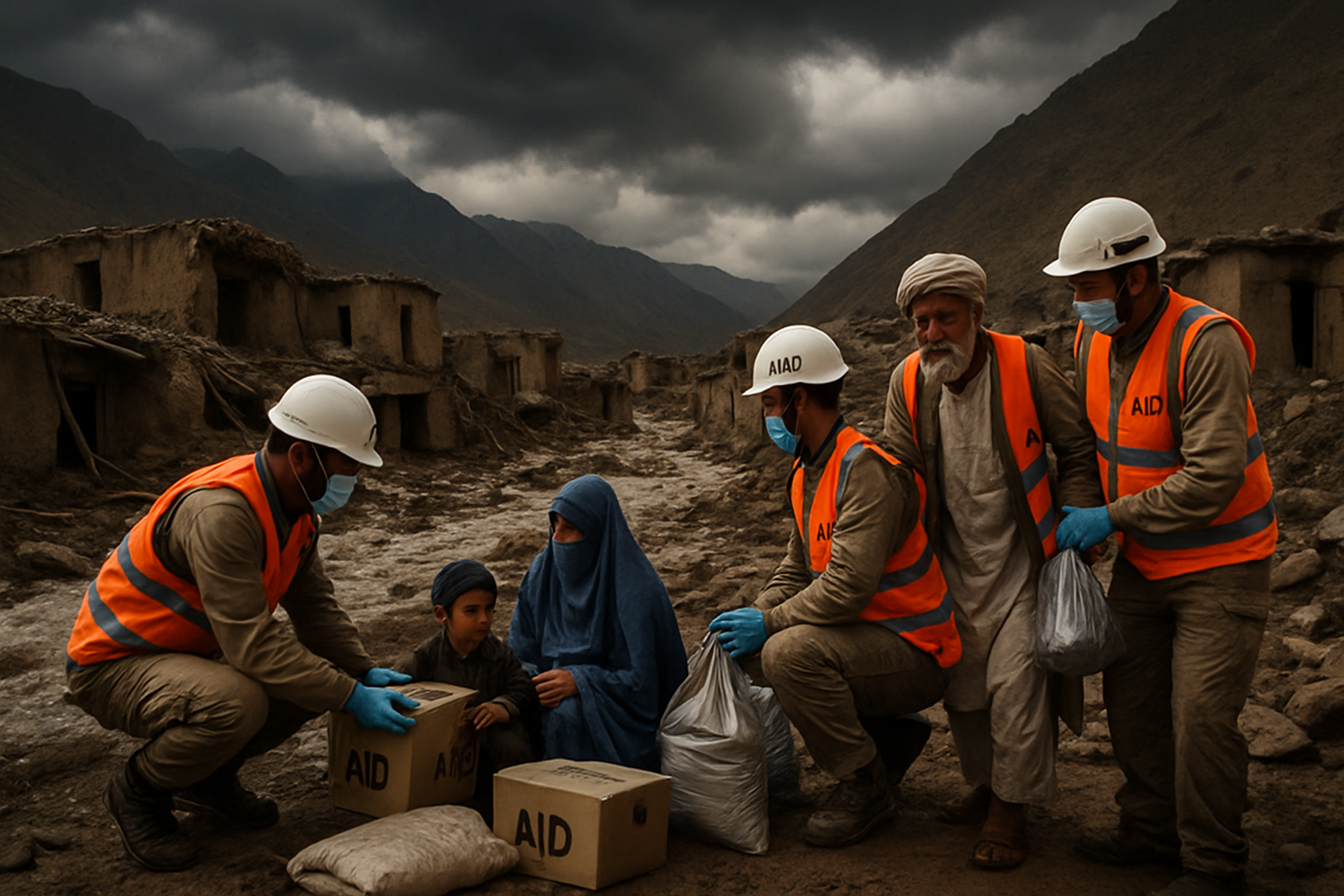
Afghanistan faces a catastrophic convergence of natural disasters and humanitarian emergencies as deadly floods have killed at least 110 people over the past 12 days, while 100,000 residents in remote Nuristan Province remain cut off from critical aid, deepening what the United Nations describes as the country's worst humanitarian crisis in 25 years.
The extreme weather has battered much of Afghanistan with heavy rain, flash floods, landslides, lightning strikes and house collapses, injuring 160 others according to officials. Seven people remain missing as fresh rainfall warnings raise fears that the death toll could climb further in a nation already struggling with compounding crises.
Nuristan Province Isolated from Aid
In a particularly concerning development, the U.N. Office for the Coordination of Humanitarian Affairs reported that approximately 100,000 people in the Nuristan districts of Barg-e-Matal and Kamdesh have been completely cut off from humanitarian assistance. This isolation persists despite a relative drop in fighting between Pakistan and Afghanistan, highlighting how even reduced violence along the frontier continues to disrupt civilian access to essential services.
The warning underscores the precarious situation facing remote communities who depend on cross-border trade routes for basic supplies. Traditional supply lines have been repeatedly disrupted due to ongoing tensions along the disputed Durand Line, the 2,640-kilometer colonial-era border that has never been formally recognized by Afghan governments.
Women's Health Crisis Intensifies
Compounding the flood emergency, the United Nations has issued urgent warnings about the deteriorating health situation for pregnant women in Afghanistan. The U.N. Population Fund emphasized Monday that pregnant women must have uninterrupted access to health services, describing maternal care as "life-saving necessity" in a country with one of the world's highest maternal mortality rates.
"Ensuring pregnant women in Afghanistan have access to essential health services is critical amid contraceptive restrictions."
— UN Population Fund Statement
The healthcare crisis has reached alarming proportions with the World Health Organization confirming that medical oxygen is available at only 23 hospitals across the entire country—12 in Kabul and 11 in the provinces. Hundreds of health centers have closed due to international aid cuts, creating a healthcare vacuum precisely when emergency medical services are most needed.
Systematic Healthcare Collapse
UN Special Rapporteur Richard Bennett has warned of an acute shortage of female medical professionals at a time when cultural and religious norms require female patients to be treated by female healthcare providers. This systematic exclusion of women from most employment sectors since August 2021 has created a devastating impact on healthcare delivery.
According to UN Development Programme assessments, 88 percent of female-headed households are unable to meet minimum living requirements, compared to 75 percent of the general population. This systematic workforce exclusion affects approximately half of Afghanistan's potential labor force, creating structural economic damage that affects the entire population.
Regional Security Complications
The humanitarian emergency unfolds against a backdrop of heightened regional tensions. Pakistan-Afghanistan border violence has resulted in 289 civilian casualties and displaced more than 115,000 people since late February, according to UN monitoring. The crisis has severely disrupted traditional trade routes between the two countries, with bilateral trade collapsing by 59 percent over seven months.
Pakistan exports to Afghanistan dropped from $550 million to $228 million, affecting border communities who depend on cross-border commerce for essential goods. The repeated closure of key crossing points at Chaman-Spin Boldak and Torkham has compounded supply chain disruptions just as communities need access to emergency relief supplies.
International Response Under Strain
The international humanitarian response faces unprecedented challenges. The World Food Programme has been forced to turn away three out of four hungry and malnourished children due to budget shortfalls, representing what observers call a fundamental failure of the global humanitarian architecture when organizations must choose which children to help based on funding rather than need.
Despite these constraints, the International Federation of Red Cross and Red Crescent Societies demonstrated that effective humanitarian work remains possible, serving more than 2 million people in 2025 through support for 128 healthcare centers. However, the systematic exclusion of female humanitarian workers has severely hampered the ability to reach vulnerable populations.
Climate Change Amplifies Vulnerability
The deadly floods occur during what scientists have confirmed as the 22nd consecutive month of global temperatures exceeding 1.5°C above pre-industrial levels—the longest sustained warming streak in recorded human history. This unprecedented climate volatility is fundamentally altering traditional weather patterns that Afghan communities have relied upon for generations.
Afghanistan's traditional mud-brick and stone construction proves increasingly inadequate for the intensified precipitation and extreme weather events that climate change has made more frequent and severe. The country's limited infrastructure and emergency response capabilities are overwhelmed by these compound disasters occurring simultaneously rather than sequentially.
Economic Devastation Deepens Crisis
The humanitarian emergency intersects with a broader economic collapse that has left the country's banking system cut off from international networks. International legal experts argue that current restrictions violate fundamental human rights and potentially constitute crimes under international law, while contradicting authentic Islamic principles according to global Islamic scholars.
The UN Security Council's decision to approve only a three-month extension of the UN Assistance Mission in Afghanistan (UNAMA) mandate, rather than the usual annual renewal, reflects international frustration with the lack of progress on human rights issues. This shorter mandate timeline adds uncertainty to humanitarian programming at a critical moment.
Urgent International Action Needed
Former President Hamid Karzai has warned that continued restrictions on women and girls could "seriously damage Afghanistan's stability and future progress," describing education as a "basic pillar" of development. The international community faces the complex challenge of maintaining humanitarian assistance while addressing systematic human rights violations.
The crisis represents what experts describe as a global test of international commitment to gender equality and human rights in the 21st century. The convergence of natural disasters, economic collapse, and systematic restrictions creates a humanitarian emergency that extends far beyond Afghanistan's borders, affecting regional stability and testing international frameworks for crisis response.
Looking Ahead
As emergency responders work to reach flood victims across Afghanistan's mountainous terrain, the broader humanitarian crisis continues to deepen. The isolation of 100,000 people in Nuristan Province serves as a stark reminder that even areas not directly affected by flooding face severe challenges accessing basic services.
The international community's response in the coming weeks will determine whether this crisis marks a turning point toward more effective humanitarian engagement or represents a further deterioration in the conditions facing Afghanistan's most vulnerable populations. With winter approaching in mountainous regions and continued threats of severe weather, the urgency for coordinated international action has never been greater.