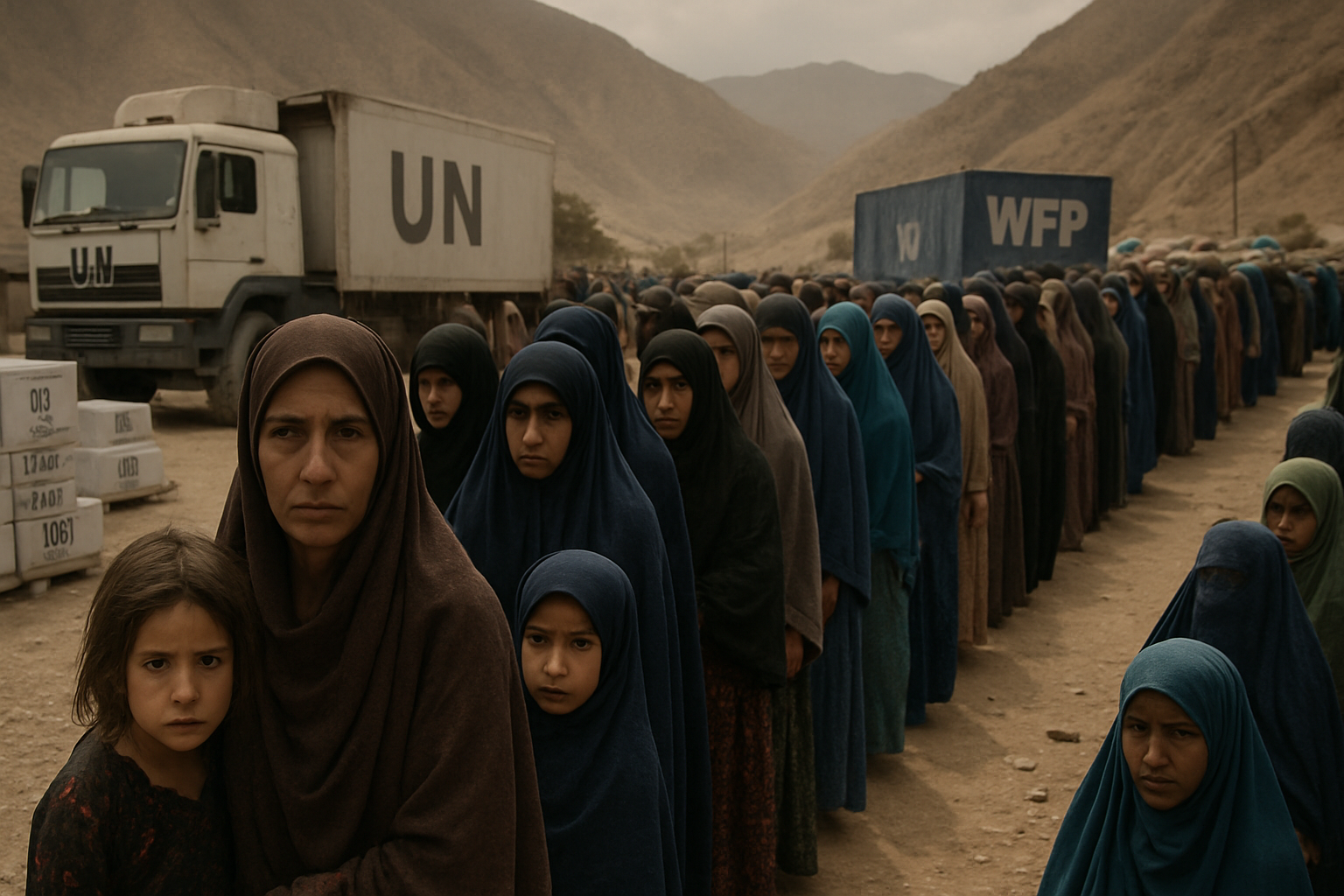
Afghanistan stands on the brink of widespread famine as the United Nations reports that 90% of female-headed households lack adequate access to food, marking what experts describe as one of the world's most severe humanitarian crises in 25 years.
The alarming statistics emerged as the international community marked International Women's Day on March 8, highlighting the devastating intersection of gender-based restrictions and economic collapse that has pushed millions of Afghan families to the edge of survival. According to UN Women, women who lead households face the largest barriers in meeting their families' basic needs under the current Taliban administration.
Escalating Crisis Threatens Millions
The humanitarian emergency has reached critical levels, with traders warning that Afghanistan risks widespread famine if current pressures on the commercial sector continue. Khan Jan Alokozay, a board member of the Afghanistan Chamber of Commerce and Investment, revealed that Taliban authorities are pressuring traders to sell essential food items at artificially low prices despite rising import costs.
"The situation is becoming unsustainable," Alokozay stated, warning that continued interference in market mechanisms could lead to supply chain breakdowns that would devastate the country's already fragile food security.
"We are witnessing a systematic collapse of Afghanistan's food security infrastructure amid international funding constraints and domestic policy failures."
— UN Development Programme Report
The crisis has been compounded by a dramatic 59% collapse in bilateral trade between Pakistan and Afghanistan, with Pakistani exports dropping from $550 million to $228 million over the past seven months. This economic deterioration has severely affected border communities that depend on cross-border commerce for survival.
Women Bear Disproportionate Burden
The European Union's representative in Afghanistan, Veronika Boskovic Pohar, emphasized that empowering women economically is not only a matter of rights but essential for the country's economic resilience. However, systematic restrictions on women's participation in the workforce since August 2021 have created what experts describe as structural economic damage affecting the entire population.
UN Development Programme data reveals that 88% of female-headed households are unable to meet minimum living requirements, compared to 75% of the general population. This disparity affects approximately half of Afghanistan's potential workforce, creating unprecedented challenges for family survival.

Healthcare System Under Severe Strain
The humanitarian crisis extends beyond food security to encompass a systematic breakdown of healthcare services. The World Health Organization delivered emergency medical oxygen to only 23 hospitals across the country in February 2026, while hundreds of health centers have been forced to close due to funding cuts and security concerns.
UN Special Rapporteur Richard Bennett has warned of an acute shortage of female medical professionals, creating particular challenges in a society where cultural and religious norms require female patients to be treated by female healthcare providers. This shortage has been exacerbated by systematic restrictions on women's participation in professional roles.
International Response and Border Tensions
The humanitarian emergency unfolds against a backdrop of escalating regional tensions. The UN Security Council was scheduled to hold a critical meeting on Afghanistan on Monday evening, amid growing international concern about the country's political, security, and human rights situation.
Recent border clashes with Pakistan have further complicated aid delivery, with Deputy Special Representative Georgette Gagnon expected to brief the Council on political, humanitarian, and human rights developments. Between February 26 and March 5, these conflicts resulted in 185 civilian casualties and significant displacement of families already struggling with food insecurity.
Economic Pressures and Trade Disruptions
The economic dimension of the crisis has been particularly severe, with rising regional tensions threatening to push Afghanistan toward complete food system collapse. Traditional trade routes through Chaman-Spin Boldak and Torkham have faced repeated closures, disrupting the flow of essential goods and driving up prices for basic commodities.
The Afghanistan Chamber of Commerce has documented how pressure on traders to maintain artificially low prices, combined with increasing import costs, creates an unsustainable economic environment that threatens long-term food security.
"If you neglect the system at this critical stage, you lose the future harvest. This applies both to agricultural systems and to the policies that must nurture them through sustained commitment."
— Regional Agricultural Expert
International Community Faces Difficult Choices
The crisis has forced international organizations to make impossible choices about resource allocation. The World Food Programme has been compelled to turn away three out of four hungry and malnourished children due to budget shortfalls, representing what experts call a fundamental failure of the international humanitarian system.
When organizations must choose which children to help based on budget constraints rather than need, the global food security architecture requires immediate reassessment and strengthening, according to humanitarian policy analysts.
Regional Implications and Security Concerns
The humanitarian crisis intersects with broader regional security challenges, as documented by Chinese warnings to the UN Security Council about the continued presence of ISIS-K, al-Qaeda, and ETIM terrorist groups in Afghanistan. These security concerns complicate international aid delivery while adding to the pressures faced by ordinary Afghan families.
New Security Council members including Bahrain, Colombia, Democratic Republic of Congo, Latvia, and Liberia are expected to present their first assessments of the Afghanistan situation, potentially influencing future international engagement strategies.
Looking Ahead: Critical Decisions Required
As Afghanistan faces what could become one of the most severe famines in its modern history, the international community confronts difficult decisions about humanitarian engagement. The crisis requires balancing immediate life-saving assistance with longer-term concerns about governance and human rights.
Experts warn that without immediate intervention to address both the humanitarian emergency and underlying economic factors, Afghanistan could see catastrophic levels of malnutrition and famine that would affect millions of vulnerable people, particularly women and children who already face the greatest barriers to accessing basic services.
The coming weeks will be critical in determining whether the international community can develop effective responses to prevent a complete humanitarian collapse while addressing the complex political and security challenges that have contributed to this unprecedented crisis.