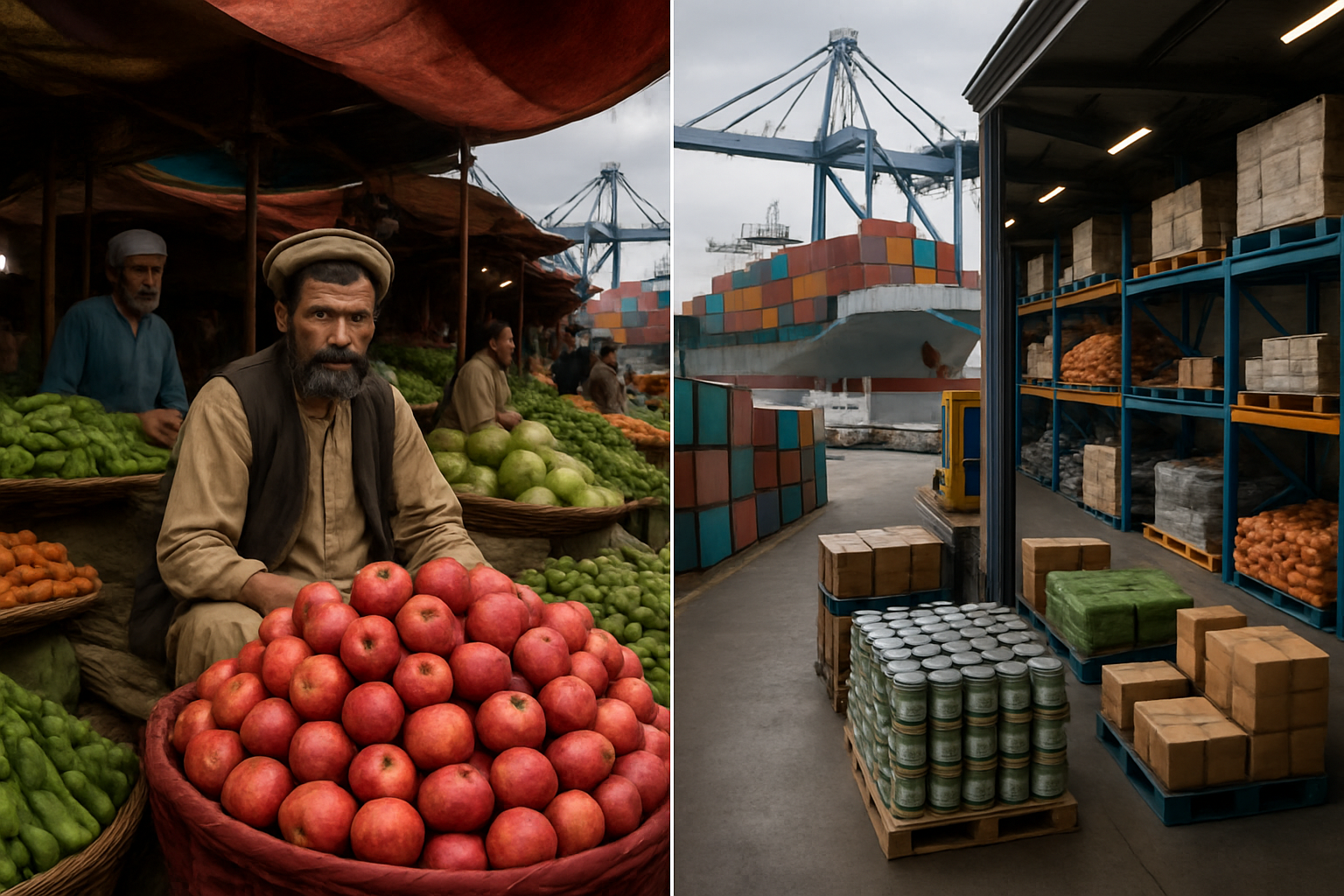
Global food supply chains face unprecedented disruption as Iran indefinitely suspends all agricultural exports to prioritize domestic food security, forcing Afghanistan to step in as an alternative supplier to Russia, while UK food policy experts warn Britain must begin stockpiling food to prepare for climate-driven crises and potential conflicts.
The convergence of these developments highlights the fragility of international food distribution networks during a period of sustained climate stress, with January 2026 marking the hottest month on record and the 19th consecutive month of global temperatures exceeding 1.5°C above pre-industrial levels.
Iran's Export Ban Reshapes Regional Trade
On March 3, 2026, the Iranian government announced an indefinite suspension of all food and agricultural exports, redirecting goods previously destined for international markets to domestic state reserves. The decision comes as Iran faces mounting regional tensions and seeks to ensure food security for its 84 million citizens amid ongoing sanctions and geopolitical instability.
The export ban affects a wide range of agricultural products including fruits, vegetables, nuts, and processed foods that Iran has traditionally supplied to regional markets, particularly Russia and neighboring countries in Central Asia and the Caucasus.
According to Rustam Khabibullin, head of the Russian Business Center in Afghanistan, the sudden supply disruption has created immediate shortages in Russian retail markets, forcing buyers to seek alternative sources rapidly.
Afghanistan Fills the Supply Gap
In response to Russia's urgent need for agricultural imports, Afghanistan has quickly mobilized to fill the void left by Iran's export suspension. The country has already dispatched its first major shipment of 100 tons of apples to Russian markets, with additional shipments of peppers, dried fruits, nuts, celery, zucchini, eggplant, citrus fruits, berries, herbs, and melons being prepared for delivery in the coming weeks.
"Demand from Russia is growing, and Afghan exporters aim to meet the rising requests to prevent shortages and stabilize prices for consumers," Khabibullin stated, highlighting how geopolitical disruptions can rapidly reshape agricultural trade flows.
"Afghan producers are demonstrating remarkable agility in scaling up exports to meet Russian demand, but this rapid expansion also underscores how vulnerable global food systems have become to sudden supply disruptions."
— Agricultural trade analyst familiar with Central Asian markets
The development represents both an opportunity and a challenge for Afghanistan's agricultural sector. While increased export revenue could benefit Afghan farmers and the broader economy, the sudden demand surge also raises questions about sustainable production capacity and the long-term stability of these new trade relationships.
UK Experts Sound Food Security Alarm
As supply chain disruptions unfold globally, Professor Tim Lang of City St George's, University of London, has issued stark warnings about Britain's food security vulnerabilities. The leading food policy expert argues that the UK government should be actively stockpiling food supplies to prepare for climate shocks and potential conflicts that could leave the population facing severe shortages.
Professor Lang's concerns center on Britain's heavy dependence on food imports and the concentration of supply chains among a few large companies. As a small island nation that produces far less food than needed to feed its 67 million residents, the UK is particularly vulnerable to global supply disruptions.
"The UK produces far less food than it needs to feed itself, and as a small island that relied on a few large companies to feed its giant population, it is particularly vulnerable to shocks," Professor Lang explained, emphasizing how recent global events have exposed dangerous weaknesses in British food security planning.
Climate Change Amplifies Food System Stress
The current food security challenges unfold against the backdrop of accelerating climate change impacts on global agriculture. With January 2026 recording the highest temperatures in human history and marking the 19th consecutive month above the critical 1.5°C threshold, agricultural systems worldwide are experiencing unprecedented stress.
These sustained temperature increases are disrupting traditional growing seasons, altering precipitation patterns, and creating conditions that favor agricultural pests and diseases. The combination of extreme weather events, shifting climate zones, and unstable growing conditions is forcing agricultural systems to adapt rapidly while maintaining food production for a growing global population.
Recent disruptions including Storm Leonardo's devastating impact on Spanish agriculture, prolonged droughts in East Africa, and extreme heat affecting crop yields in multiple regions demonstrate how climate volatility is becoming the new normal for global food systems.
Energy Crisis Compounds Food Security Risks
The ongoing Middle East energy crisis, triggered by Iran's closure of the Strait of Hormuz and affecting 40% of global oil transit, has created additional pressures on food systems through increased transportation and fertilizer costs. Natural gas prices have surged 24% in Europe and 78% in the United States, directly impacting agricultural production costs and food distribution networks.
These energy price increases affect every aspect of the food supply chain, from fertilizer production and farm equipment operation to food processing, refrigeration, and transportation. The interconnected nature of energy and food systems means that disruptions in one sector quickly cascade through the other.
Emerging Patterns in Global Food Trade
The Iran-Afghanistan-Russia supply chain disruption reflects broader shifts in international agricultural trade as countries adapt to climate change, geopolitical tensions, and economic pressures. Traditional trading relationships are being restructured as nations prioritize food security and supply chain resilience over cost efficiency.
Similar patterns are emerging globally, with countries increasingly viewing food security as a matter of national security rather than simply an economic concern. This shift is driving investments in domestic agricultural capacity, strategic food reserves, and more diversified import sources.
The Need for Strategic Food Stockpiling
Professor Lang's call for British food stockpiling represents a growing recognition among experts that advanced economies must prepare for supply chain disruptions that could affect food availability. The concept of strategic food reserves, long associated with developing countries or wartime preparations, is gaining renewed relevance in an era of climate volatility and geopolitical instability.
Strategic stockpiling involves more than simply accumulating emergency supplies. It requires sophisticated logistics networks, proper storage facilities, inventory rotation systems, and coordination with both domestic agricultural production and international trade relationships.
"Food security can no longer be taken for granted by wealthy nations. The convergence of climate change, geopolitical tensions, and supply chain vulnerabilities requires a fundamental rethinking of how countries prepare for food system disruptions."
— Professor Tim Lang, City St George's, University of London
International Cooperation and Supply Chain Resilience
The current crisis highlights both the vulnerabilities and the adaptive capacity of global food systems. While Iran's export suspension created immediate challenges, the rapid response from Afghan suppliers demonstrates how international trade networks can adjust to new circumstances.
However, these ad hoc adjustments cannot substitute for systematic approaches to supply chain resilience. Building robust food systems requires enhanced international cooperation, investment in agricultural infrastructure, and policy frameworks that balance efficiency with security.
The African Continental Free Trade Agreement and emerging South-South cooperation initiatives offer models for how regions can build more resilient food systems through diversified partnerships and shared agricultural development.
Technology and Traditional Knowledge Integration
Successful adaptation to current food security challenges requires sophisticated integration of modern technology with traditional agricultural knowledge. Countries and regions that effectively combine precision agriculture, advanced logistics, and data analytics with local farming expertise and community-based management systems are proving most resilient to disruptions.
Afghanistan's agricultural sector, while facing significant challenges, maintains strong traditional knowledge systems that, when combined with appropriate technology and market access, can support both domestic food security and export capacity.
Looking Forward: Policy Implications
The unfolding food security crisis demands immediate policy responses from governments worldwide. These include:
- Development of national food security strategies that account for climate change impacts
- Investment in strategic food reserves and storage infrastructure
- Diversification of food import sources to reduce dependency risks
- Support for domestic agricultural capacity and climate adaptation
- Enhanced international cooperation on food security issues
- Integration of food security considerations into climate and foreign policy planning
The Human Dimension
Behind the statistics and policy discussions lie millions of farmers, food workers, and vulnerable communities who depend on stable and fair global food systems. The choices made in 2026 regarding food security policies, international cooperation, and climate adaptation will have lasting consequences for global nutrition, economic stability, and social development.
As Professor Lang and other experts emphasize, food security represents a fundamental global public good that requires unprecedented levels of international cooperation and strategic planning. The window for building resilient, equitable food systems is narrowing rapidly as climate change accelerates and geopolitical tensions increase.
The current crisis, while challenging, also presents opportunities for innovation, cooperation, and the development of more sustainable food systems. Whether the international community can seize these opportunities while managing immediate risks will largely determine the trajectory of global food security in the decades ahead.