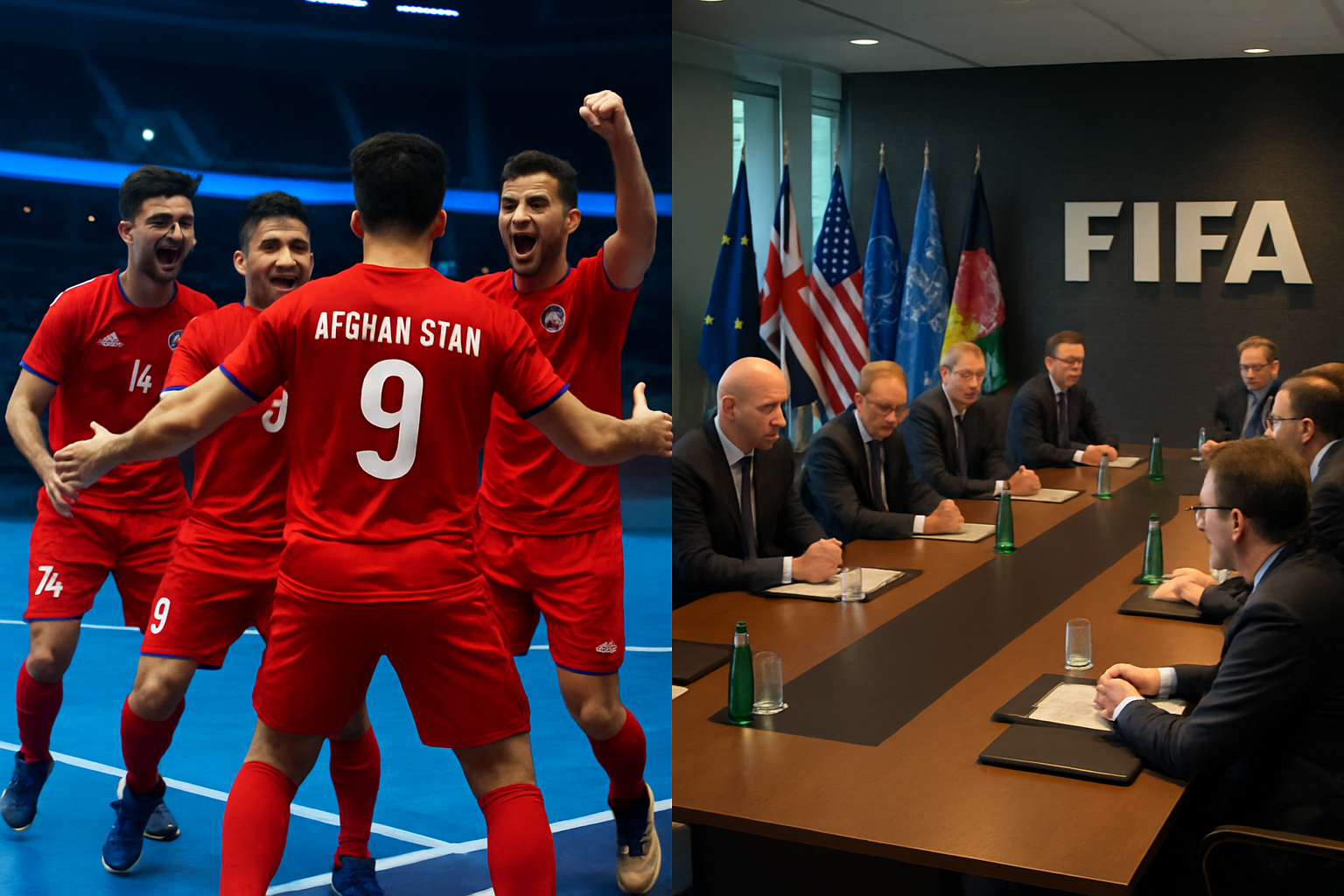
Afghanistan's national futsal team prepares for a decisive showdown against Japan in the AFC Futsal Championship semifinals, while FIFA President Gianni Infantino faces international condemnation for suggesting Russia's sports ban should be lifted despite the ongoing Ukraine conflict.
The convergence of these two sports stories on February 3, 2026, highlights the complex intersection of athletic competition and global politics, as Afghanistan seeks sporting glory while international football governance faces its most controversial diplomatic challenge since Russia's invasion of Ukraine.
Afghanistan's Historic Futsal Campaign
Afghanistan's national futsal team takes the field against Japan at Jakarta's Velodrome Stadium on Tuesday, February 3, in what represents the most significant match in the nation's futsal history. The winner secures a direct path to the semifinals of the 2026 AFC Futsal Championship, marking a potential breakthrough for Afghan sports on the international stage.
The Afghan squad has delivered stunning performances throughout the tournament, demonstrating remarkable resilience and tactical discipline against traditionally stronger opponents. Their victories over Saudi Arabia and Malaysia have captured global attention, showcasing the team's determination to succeed despite the challenging circumstances facing their homeland.
This futsal campaign occurs against the backdrop of Afghanistan's complex international standing. While the country faces various diplomatic and humanitarian challenges, its athletes continue to compete under the AFC banner, representing the power of sport to transcend political boundaries.
FIFA's Controversial Russia Position
Meanwhile, FIFA President Gianni Infantino has reignited international controversy with his latest comments regarding Russia's ban from international football competitions. Speaking on February 3, Infantino suggested that the prohibition keeping Russian national teams and clubs out of FIFA competitions should be reconsidered, despite the ongoing conflict in Ukraine.
FIFA barred Russia from competition when its invasion of Ukraine began in February 2022, implementing sanctions as part of broader international efforts to isolate Moscow diplomatically and economically. The decision was widely supported by European football federations and aligned with similar measures across international sports.
Ukraine's sports minister has condemned Infantino's comments as "irresponsible," particularly given the timing just days before crucial peace talks scheduled for February 5-6 in Abu Dhabi between Ukraine, Russia, and the United States. The criticism reflects broader European skepticism about premature normalization of sporting relationships with Russia.
"The four-year ban has not achieved anything, it has just created more frustration and hatred."
— Gianni Infantino, FIFA President
Historical Context and Ongoing Tensions
According to documented diplomatic developments, Infantino previously argued in February 2026 that FIFA should lift the prohibition, claiming the ban had failed to achieve its intended goals. These statements drew criticism from Ukrainian and European sources, particularly given the escalating attacks on Ukrainian civilian infrastructure.
Recent memory records show Russia launched over 10,000 drones and bombs against Ukraine in January 2026 alone, including attacks that killed 15 Ukrainian energy workers in early February. The massive February 3 assault with 521 missiles and drones targeting energy infrastructure during extreme winter conditions further complicated Infantino's diplomatic timing.
The FIFA president's position also extends to other conflict zones, as he has opposed excluding Israel from competitions despite the Gaza conflict, suggesting a broader philosophical approach to sports and politics that prioritizes inclusion over sanctions.
Regional Sports Diplomacy
The Afghanistan-Japan futsal match represents a different model of international sports engagement, where competition continues despite complex regional relationships. Japan, as a developed football nation, faces an Afghan team that has emerged as a symbol of sporting perseverance.
Japan's own sporting landscape has been marked by unprecedented challenges in February 2026, with record snowfall killing at least 30 people and disrupting infrastructure nationwide. The contrast between Afghanistan's pursuit of futsal glory and Japan's weather crisis underscores the varied challenges facing international sport.
Regional diplomatic dynamics also influence sporting relationships across Asia. Afghanistan's participation in AFC competitions occurs while the broader region navigates complex security challenges, including ongoing discussions about regional stability and international cooperation.
The Politics of International Competition
The simultaneous developments in Jakarta and FIFA headquarters illuminate fundamental questions about sport's relationship with geopolitics. Afghanistan's futsal team competes for national pride and international recognition, while FIFA grapples with balancing sporting inclusion against political accountability.
European football federations have consistently supported maintaining Russia's ban, citing ongoing civilian casualties and infrastructure attacks as evidence that conditions for readmission have not been met. The recent massive assault on Ukrainian energy facilities just days before peace talks reinforces these positions.
The timing of Infantino's comments, coinciding with Afghanistan's historic sporting moment, highlights how international sports governance must navigate multiple complex regional situations simultaneously. While Afghanistan seeks sporting achievement through competition, Russia faces continued isolation due to military aggression.
Looking Forward
As Afghanistan and Japan prepare for their crucial futsal encounter, the broader sports world watches how FIFA will handle the Russia controversy in coming months. The outcome of both the Abu Dhabi peace talks and the AFC Futsal Championship could influence future decisions about international sports participation and political sanctions.
Afghanistan's futsal campaign, regardless of Tuesday's result against Japan, has already demonstrated the positive power of international sport to provide hope and national pride. This stands in stark contrast to the diplomatic tensions surrounding Russia's potential return to FIFA competitions.
The February 3 developments underscore sport's dual nature as both a unifying force for nations like Afghanistan seeking international recognition and a battleground for geopolitical disputes involving major powers like Russia and ongoing conflicts affecting global stability.