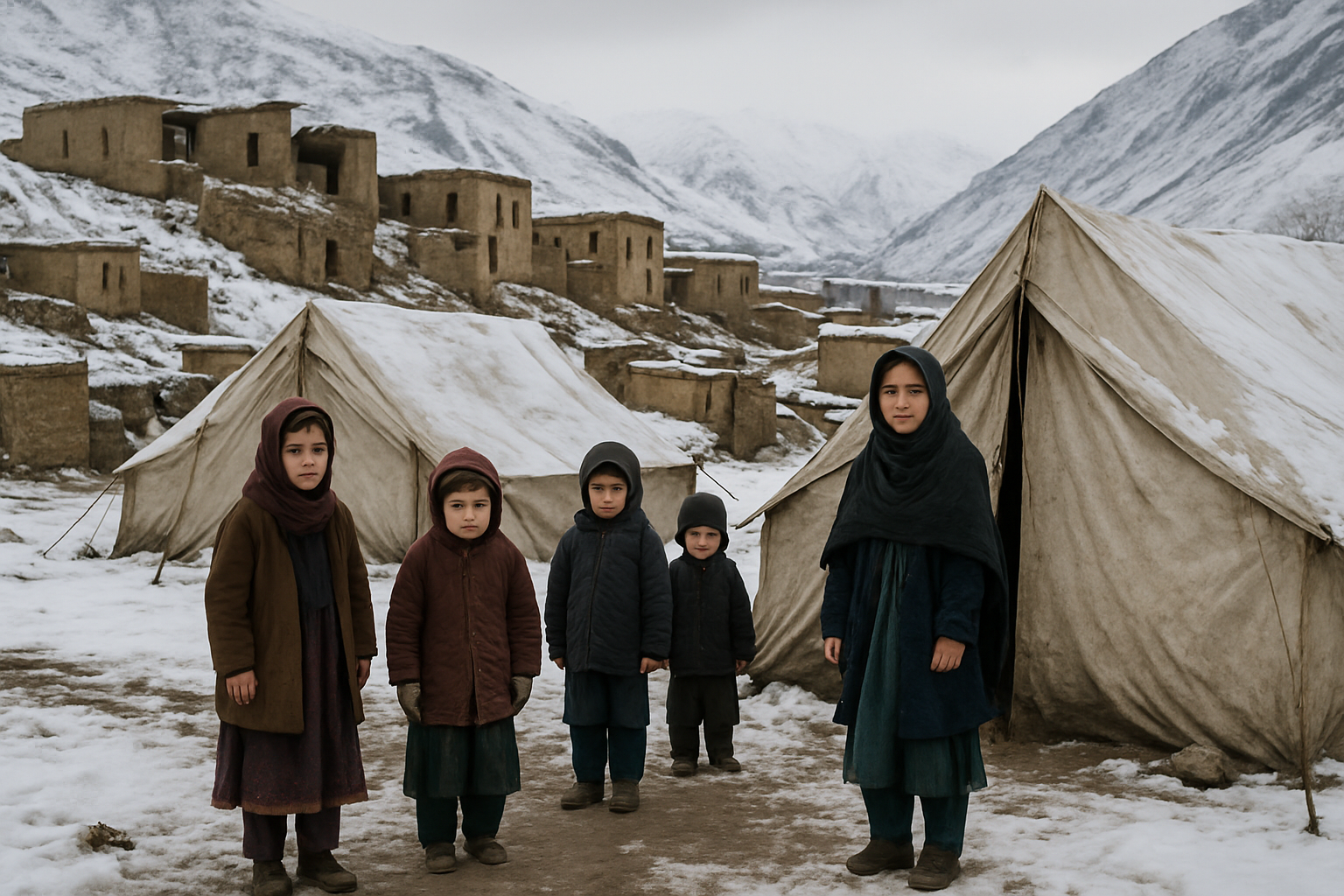
Six months after a devastating earthquake claimed more than 2,000 lives in Afghanistan's Kunar province, approximately 25,000 children remain trapped in a cycle of displacement, living in deteriorating temporary shelters with no clear timeline for reconstruction or return to normal life.
The August 31, 2025 earthquake—one of the deadliest to strike Afghanistan in recent history—has left families in makeshift accommodations that have since been battered by harsh winter conditions, according to a new report from Save the Children released Thursday. The aid organization warns that reconstruction in the mountainous region has barely begun, with some villages potentially never to be rebuilt.
A Crisis Deepening by the Day
The scale of devastation remains staggering. More than 8,000 homes were damaged or completely destroyed, forcing entire communities into temporary shelters that were meant to last weeks, not months. Recent heavy snowfall has damaged many of the tents, creating additional hardships for families already struggling with limited resources and dwindling hope.
The educational impact has been equally severe. More than half of the nearly 1,300 assessed classrooms were destroyed or heavily damaged in the earthquake. Construction on replacement schools has yet to begin, forcing approximately 17,000 students to attend lessons in temporary learning spaces that provide little protection from Afghanistan's harsh winter conditions.
"These are not just statistics—these are children whose futures hang in the balance. Every day that passes without proper shelter, without proper schools, is another day stolen from their childhood and their opportunities."
— Save the Children spokesperson
Economic Devastation Compounds Humanitarian Crisis
The earthquake's impact extends far beyond physical destruction. More than 6,000 displaced families continue to rely entirely on humanitarian support after losing not only their homes but also their sources of income. Before the disaster, families in the region averaged between $75 and $120 monthly—modest earnings that nonetheless provided basic stability in one of the world's poorest countries.
The loss of these incomes has created a cascading effect throughout local communities. Small businesses have closed, agricultural activities have been disrupted, and the informal economy that many families depended upon has virtually collapsed in the most affected areas.
This economic catastrophe is unfolding against the backdrop of Afghanistan's broader humanitarian crisis, identified by international observers as the worst in 25 years. The UN Development Programme reports that 88% of female-headed households cannot meet minimum living requirements, compared to 75% of the general population—statistics that predate the Kunar earthquake and have likely worsened in the affected region.
International Aid Strained by Global Crises
The reconstruction delays reflect broader challenges facing international humanitarian operations in Afghanistan. Aid cuts have forced hundreds of health center closures across the country, creating a healthcare vacuum precisely when vulnerable populations need support most.
Despite these constraints, some international assistance continues. The World Health Organization delivered medical oxygen to 23 hospitals across Afghanistan in February 2026, including 12 facilities in Kabul and 11 in provincial areas. The International Federation of Red Cross and Red Crescent Societies provided health services to over 2 million people during 2025, supporting more than 128 healthcare centers.
However, these efforts remain insufficient to address the scale of need in earthquake-affected areas, where damaged infrastructure and difficult mountain terrain complicate aid delivery.
Regional Security Concerns Hinder Recovery
The earthquake recovery is taking place amid heightened regional tensions that further complicate reconstruction efforts. Recent cross-border incidents, including February 2026 Pakistani airstrikes that reportedly killed civilians in Nangarhar and Paktika provinces, have strained relationships between Afghanistan and neighboring countries that could provide crucial assistance.
These security concerns affect not only direct aid delivery but also the broader economic cooperation that could support long-term recovery. While some regional partnerships continue—including recent trade agreements between Afghanistan and Uzbekistan worth $300 million—the volatile security environment limits the scope of reconstruction planning.
Climate Change Amplifies Vulnerability
The Kunar earthquake occurred during what scientists have confirmed as an unprecedented period of global warming. January 2026 marked the 18th consecutive month of temperatures exceeding 1.5°C above pre-industrial levels, creating additional environmental stresses that compound disaster recovery challenges.
For earthquake survivors, these climatic conditions translate into practical hardships: increased heating needs for damaged shelters, water supply disruptions from extreme weather, and agricultural challenges that affect local food security. Families living in temporary accommodations are particularly vulnerable to these environmental pressures.
Children Bear the Greatest Burden
Among the 25,000 children still living in temporary accommodations, many have never known life outside displacement camps. The psychological impact of prolonged uncertainty, combined with disrupted education and limited recreational opportunities, creates lasting developmental challenges that extend far beyond immediate physical needs.
Save the Children's assessment reveals that numerous students have missed months of schooling, potentially affecting their educational trajectories permanently. For many families, sending children to temporary learning spaces means difficult choices about safety, warmth, and basic necessities during Afghanistan's harsh winter months.
The organization emphasizes that immediate action is needed not just for humanitarian reasons, but to prevent a "lost generation" of Afghan children whose development has been stunted by multiple overlapping crises.
The Path Forward Remains Uncertain
Six months after the earthquake, the reconstruction timeline remains unclear. Save the Children warns that some of the affected villages may never be rebuilt due to geographical constraints, ongoing seismic risks, and limited resources for large-scale reconstruction in Afghanistan's current economic environment.
This reality forces difficult questions about permanent relocation for some communities, integration of displaced families into other regions, and long-term support for populations who may never return to their original homes. Such decisions require careful planning that accounts for cultural traditions, economic opportunities, and community cohesion—planning that has yet to begin in earnest.
The international community faces a complex challenge: providing immediate humanitarian assistance while developing sustainable solutions for communities whose lives have been fundamentally altered by natural disaster and ongoing conflict. For the 25,000 children still living in tents, each passing day represents not just continued hardship, but diminished prospects for recovery and normal development.
As Afghanistan grapples with multiple overlapping crises—from economic collapse to healthcare system strain—the earthquake survivors of Kunar province represent a particularly vulnerable population whose needs risk being overshadowed by more visible emergencies. Their situation serves as a stark reminder that disaster recovery requires sustained international attention and resources, even when global attention shifts to newer crises.