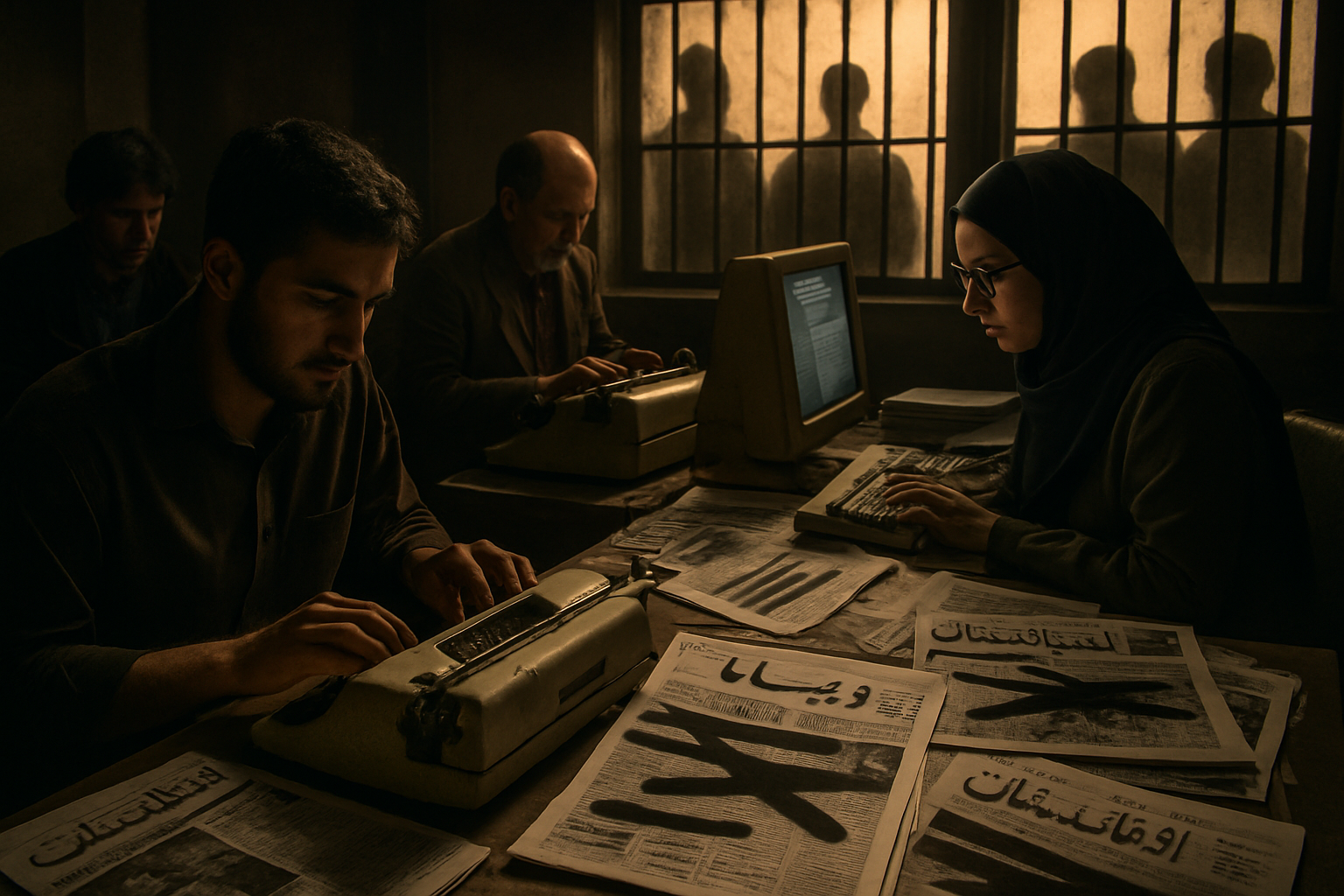
Afghanistan's media landscape faced its darkest hour as National Journalist Day on March 18, 2026, was marked by the jailing of a journalist and the release of devastating reports documenting over 200 media freedom violations and massive job losses in the sector over the past year.
In a symbolic display of the country's deteriorating press freedom, a journalist was transferred to Bagram prison after being sentenced to three years imprisonment by Taliban authorities on the very day meant to celebrate journalism. The timing underscored the increasingly perilous environment for media workers in Afghanistan since the Taliban's return to power in August 2021.
Systematic Suppression of Press Freedom
The Afghanistan Journalists Center released a comprehensive report documenting at least 207 cases of media freedom violations and violence against journalists during the past year. The report, strategically released on National Journalist Day, painted a grim picture of systematic pressure on Afghanistan's media sector.
These violations include arbitrary detentions, censorship, restrictions on coverage, and direct threats to journalists attempting to report on the country's deteriorating humanitarian and political situation. The scale of documented cases represents only a fraction of actual incidents, as many violations go unreported due to fear of reprisal.
Simultaneously, the Afghanistan Free Journalists Union reported that 228 journalists and media employees have lost their jobs over the past year, representing a catastrophic decline in the country's media workforce. This figure highlights not only direct targeting of journalists but also the broader economic pressures and restrictions that have made independent journalism virtually impossible in many parts of the country.
The Human Cost of Media Restrictions
The imprisonment of the journalist on National Journalist Day serves as a stark reminder of the personal risks faced by those attempting to practice journalism in Afghanistan. Sources confirmed that the three-year sentence was handed down by Taliban courts, though specific details about the charges remain unclear due to the secretive nature of the proceedings.
"The development comes as concerns over press freedom continue to grow across Afghanistan, with journalists facing unprecedented challenges in carrying out their professional duties."
— Local Media Sources
The targeting has been particularly severe for female journalists, who face additional restrictions under Taliban policies that have systematically excluded women from most aspects of public life. Many female media workers have been forced to flee the country or cease their professional activities entirely.
Economic Warfare Against Independent Media
Beyond direct persecution, Afghanistan's media sector faces devastating economic pressures that serve as effective tools of control. The loss of 228 media jobs represents not just individual hardships but the systematic dismantling of institutional knowledge and professional networks that took decades to build.
Independent media outlets have struggled with funding cuts, restricted access to information, and the departure of international organizations that previously supported Afghan journalism. Many publications have been forced to close, while others operate under severe self-censorship to avoid direct confrontation with authorities.
The economic dimension of the crisis reflects a broader pattern observed globally, where financial pressure can be as effective as direct censorship in controlling media narratives. Without sustainable funding models or advertising revenue, Afghan media outlets find themselves increasingly vulnerable to closure.
Historical Context and Global Implications
Afghanistan's media crisis represents the most severe rollback of press freedom in the country's modern history. The systematic nature of restrictions goes beyond individual cases to encompass institutional changes that fundamentally alter the media landscape.
According to historical data, Afghanistan has consistently ranked at or near the bottom of international press freedom indices. The country currently ranks 181st out of 181 countries in the Georgetown Institute Women, Peace and Security Index, with 88% of female-headed households unable to meet minimum living requirements under current restrictions.
The crisis in Afghanistan reflects broader global challenges to press freedom documented by international organizations. The Committee to Protect Journalists reported 129 journalists killed globally in 2025, marking one of the deadliest years for press freedom in recent history.
International Response and Solidarity
The deteriorating situation in Afghanistan has prompted international concern and solidarity efforts from press freedom organizations worldwide. However, the effectiveness of international pressure remains limited given the Taliban's control over the country and lack of formal diplomatic recognition by most governments.
European Union officials have expressed concern about the Afghanistan model potentially influencing other authoritarian approaches to media control. The systematic nature of restrictions, combined with the use of economic pressure, creates a template that could be adopted elsewhere.
Press freedom organizations continue to document violations and provide support to Afghan journalists, though their ability to operate within the country remains severely constrained. Many have focused on supporting Afghan media workers who have fled to neighboring countries or seeking asylum elsewhere.
Technology and Information Control
The media crackdown in Afghanistan occurs alongside broader global trends in information control and digital sovereignty. Authorities have used both traditional censorship methods and modern digital tools to restrict information flow and monitor communications.
The challenge facing Afghan journalists reflects broader questions about maintaining independent media in environments where traditional press freedom protections have been dismantled. The combination of legal restrictions, economic pressure, and technological surveillance creates multiple layers of control that are difficult to circumvent.
The Future of Afghan Journalism
As Afghanistan marks National Journalist Day with a journalist behind bars and hundreds unemployed, the future of independent media in the country appears increasingly uncertain. The systematic nature of current restrictions suggests a long-term strategy to eliminate independent journalism rather than simply control it.
The brain drain of experienced journalists, combined with the closure of training institutions and the elimination of press freedom protections, means that rebuilding Afghanistan's media sector will require years of sustained effort even under changed political circumstances.
However, some Afghan journalists continue to work despite the risks, often operating from exile or using digital platforms to maintain connections with audiences inside the country. These efforts represent both the resilience of Afghan journalism and the continuing demand for independent information.
Implications for Regional and Global Press Freedom
Afghanistan's media crisis has implications that extend far beyond the country's borders. The systematic approach to dismantling press freedom provides a case study for how modern authoritarian movements can effectively eliminate independent media without necessarily resorting to mass violence.
Regional neighbors and international observers are closely monitoring the situation as a potential model for other contexts. The combination of legal restrictions, economic pressure, and social control mechanisms represents an evolved approach to information control that could be adapted to other political systems.
For the international press freedom community, Afghanistan represents both a tragic loss and a warning about the fragility of democratic institutions. The speed and effectiveness of the media crackdown demonstrate how quickly decades of progress can be reversed without strong institutional protections.
As the world observes National Journalist Day 2026, Afghanistan serves as a sobering reminder of the ongoing struggles for press freedom globally. The 200+ documented violations and hundreds of lost jobs represent not just statistics, but the silencing of voices that sought to serve their communities through independent journalism.
The international community faces the challenge of supporting Afghan journalists while also learning from this crisis to strengthen press freedom protections elsewhere. The stakes extend beyond Afghanistan to encompass broader questions about the future of independent media in an increasingly polarized and authoritarian world.