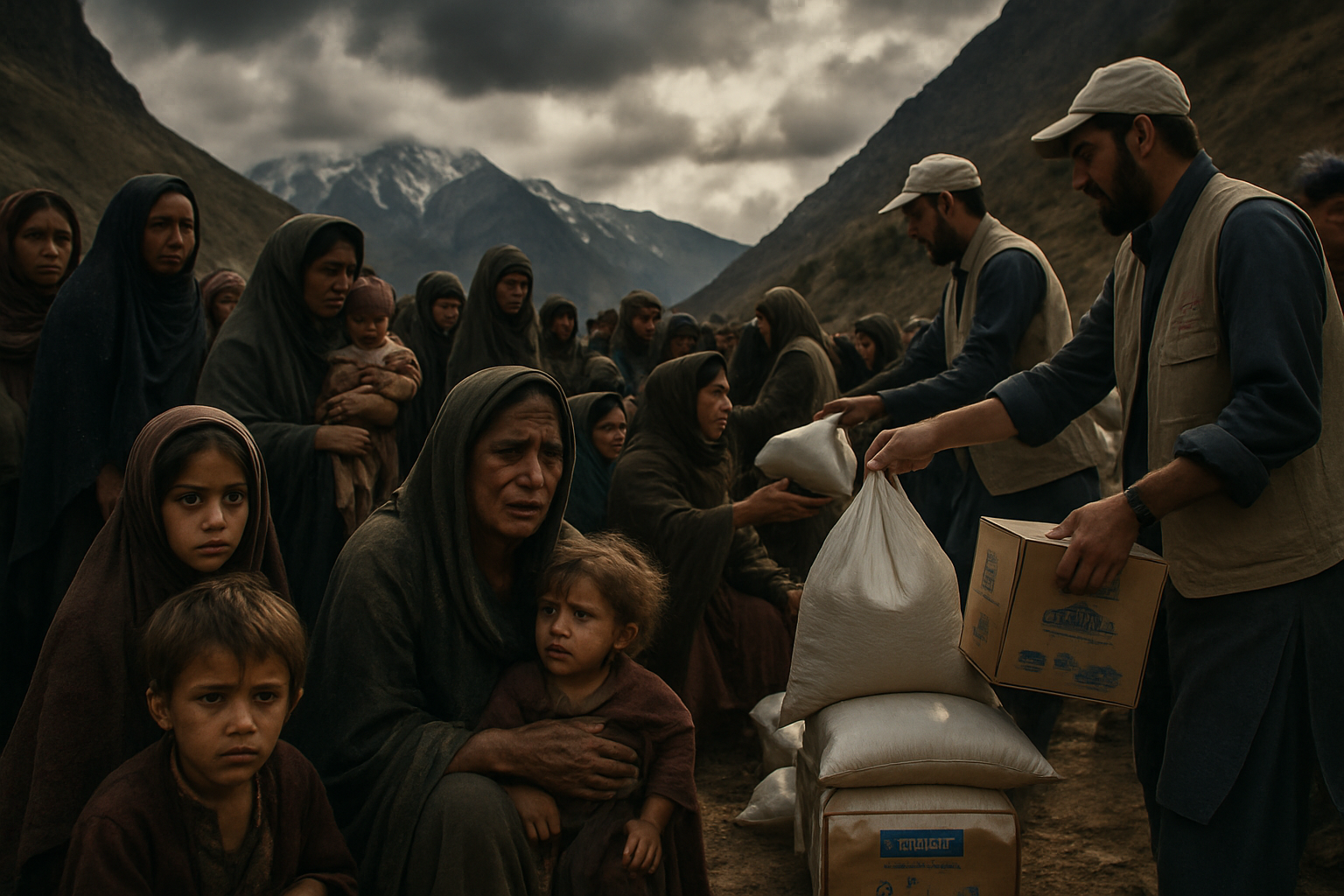
The International Committee of the Red Cross (ICRC), Afghan Red Crescent, and World Food Programme have delivered urgent assistance to 136,000 people in Afghanistan's remote Nuristan Province after weeks of cross-border fighting cut off access to essential food, healthcare, and basic supplies.
The humanitarian crisis in the districts of Kamdesh and Barg-e-Matal represents the latest manifestation of Afghanistan's devastating food security emergency, which has been compounded by months of Pakistan-Afghanistan border clashes that have disrupted traditional supply routes through the mountainous region.
Border Conflict Blocks Critical Supply Routes
The humanitarian emergency in Nuristan emerged as an unintended consequence of sustained military confrontations along the disputed Durand Line that began in February 2026. The crisis started with a February 16 TTP (Tehrik-i-Taliban Pakistan) attack that killed 11 Pakistani soldiers in Bajaur district, followed by Pakistani retaliatory airstrikes on February 22 targeting alleged terrorist camps in Afghanistan.
The escalation reached its peak when Pakistani Defense Minister Khawaja Asif declared "open war" on February 27, launching Operation Ghazab-ul-Haq with sustained military campaigns affecting multiple Afghan provinces. These operations severely disrupted transportation networks that communities in Afghanistan's remote mountainous regions depend upon for essential goods, medical supplies, and humanitarian aid.
"The people of Nuristan have faced severe shortages of food, healthcare and basic needs after weeks of clashes between Taliban forces and Pakistani military units,"
— ICRC Spokesman, confirming delivery of assistance
Access to Nuristan was restored following sustained diplomatic engagement between humanitarian organizations and all parties to the Pakistan-Taliban border conflict, allowing aid deliveries to resume to the affected population of approximately 17,000 families.
Afghanistan's Broader Humanitarian Catastrophe
The Nuristan crisis unfolds against the backdrop of Afghanistan facing what the United Nations describes as the worst humanitarian crisis in 25 years. According to UN data, 88% of female-headed households are unable to meet minimum living requirements compared to 75% of the general population, representing one of the most severe humanitarian emergencies in recorded history.
The systematic exclusion of women from the workforce since the Taliban's August 2021 return has affected approximately half of Afghanistan's potential labor force, creating structural economic damage that impacts the entire population. The World Health Organization confirms that emergency medical oxygen is available at only 23 hospitals (12 in Kabul, 11 in provinces), with hundreds of health centers closed due to international aid cuts and funding constraints.
Economic Warfare Through Trade Disruption
The Pakistan-Afghanistan border violence has created an economic warfare dimension that severely affects civilian populations. Bilateral trade has collapsed by 59% over seven months, with Pakistani exports to Afghanistan dropping from $550 million to $228 million. This dramatic decline affects border communities dependent on cross-border commerce for essential goods.
Traditional trade routes through Chaman-Spin Boldak and Torkham crossings have faced repeated closures during the military confrontations, creating supply chain disruptions that compound Afghanistan's humanitarian crisis. Remote mountainous regions like Nuristan are particularly vulnerable to such disruptions due to their dependence on cross-border trade networks for survival.
Regional Security Crisis and Civilian Impact
The United Nations Office for the Coordination of Humanitarian Affairs (OCHA) reports that 16,370 families have been newly displaced across 10 Afghan provinces since the border crisis began. The UN Assistance Mission in Afghanistan (UNAMA) has documented 289 civilian casualties (76 killed, 213 injured), with the majority being women and children caught in the crossfire of military operations.
The disputed 2,640-kilometer Durand Line, established by British colonial authorities in 1893, has never been recognized by Afghan governments and remains a core source of tension. Pakistan maintains that TTP operates "with impunity from Afghan soil," while the Taliban categorically denies providing sanctuary to militants or allowing Afghan territory to be used for cross-border attacks.
"The humanitarian situation continues to deteriorate as communities struggle with the convergence of multiple crises - economic collapse, natural disasters, and now supply route disruptions from military operations,"
— International Humanitarian Official, speaking on condition of anonymity
Climate and Natural Disaster Compound Challenges
The humanitarian emergency occurs during a period of extreme climate volatility, with March 2026 marking the 23rd consecutive month that global temperatures exceeded 1.5°C above pre-industrial levels - the longest sustained warming period in recorded history. Afghanistan has experienced devastating floods that killed 110 people over a 12-day period in April, with traditional construction proving inadequate against intensified weather patterns.
These compound disasters - occurring simultaneously rather than sequentially - overwhelm emergency response capabilities and create unprecedented challenges for humanitarian organizations. The convergence of natural disasters, economic collapse, and conflict-related supply disruptions represents a new category of humanitarian emergency that may become routine in the 2030s without significant adaptation measures.
International Mediation and Diplomatic Efforts
Multiple international mediation efforts have attempted to address the Pakistan-Afghanistan crisis that contributed to the Nuristan emergency. Chinese Foreign Minister Wang Yi deployed special envoys for trilateral talks in Urumqi, representing Beijing's most significant diplomatic intervention in South Asian affairs driven by concerns over China-Pakistan Economic Corridor (CPEC) investments and regional stability.
Previous diplomatic initiatives included Saudi-mediated prisoner exchanges, Turkish Foreign Minister Hakan Fidan's shuttle diplomacy, and Iranian mediation offers. Religious scholars issued Ramadan ceasefire fatwas, and a temporary Eid al-Fitr ceasefire was achieved through Saudi-Qatar-Turkey coordination in March, but was immediately violated, highlighting the fragility of diplomatic solutions.
Healthcare System on the Brink
The systematic exclusion of women from healthcare work has created an acute shortage of female medical professionals when cultural and religious norms require female providers to treat female patients. The International Federation of Red Cross and Red Crescent Societies (IFRC) served over 2 million people in 2025 through 128+ healthcare centers, but female staff restrictions severely hamper access to vulnerable populations.
The World Food Programme has been forced to turn away three out of four hungry and malnourished children due to budget shortfalls, representing what experts describe as a fundamental failure of global humanitarian architecture when organizations must choose which children to help based on funding rather than need.
Looking Forward: Sustainable Solutions Needed
The successful resumption of aid deliveries to Nuristan demonstrates that humanitarian access is possible even during active conflict when sustained diplomatic engagement addresses the concerns of all parties. However, the underlying challenges that created this crisis - disputed territorial sovereignty, cross-border terrorism concerns, and economic warfare through trade disruption - require comprehensive solutions that go beyond immediate humanitarian relief.
The Nuristan emergency serves as a microcosm of Afghanistan's broader challenges and highlights the urgent need for innovative diplomatic frameworks that can balance legitimate security concerns with territorial integrity, civilian protection, and international law compliance. The stakes extend far beyond bilateral relations, affecting regional stability mechanisms and international conflict resolution approaches globally.
As winter approaches the mountainous regions of Afghanistan, the international community faces pressure to develop effective frameworks that address the root causes of humanitarian crises while maintaining essential services for millions of Afghan civilians caught in the crossfire of contemporary security challenges.