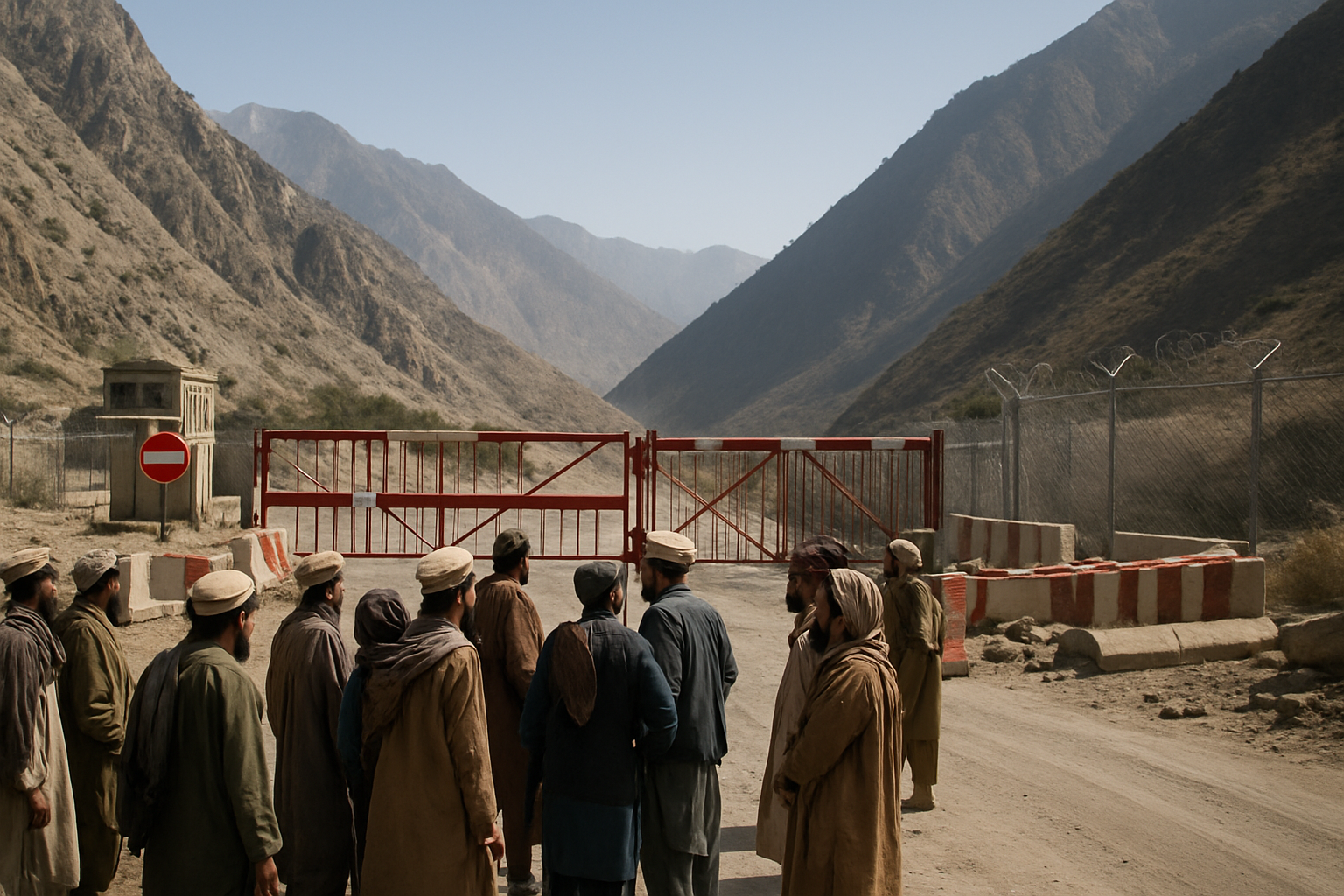
Residents and tribal elders from Afghanistan's mountainous Nuristan province are urgently calling on Taliban officials to intervene with Pakistan to reopen blocked transportation routes, as cross-border tensions continue to strangle vital supply lines to remote border communities.
The appeals from Kamdesh and Barg-e-Matal districts highlight the deepening humanitarian impact of the months-long Pakistan-Afghanistan border crisis, which has evolved from military confrontation into economic warfare affecting millions of civilians dependent on cross-border trade.
Critical Supply Routes Severed
The road blockages have created severe shortages of essential goods in Nuristan's remote districts, which rely heavily on cross-border trade with Pakistan for basic necessities. The province's rugged mountainous terrain makes alternative supply routes extremely difficult, leaving communities increasingly isolated.
"The situation has become critical for families who depend on these trade routes for their daily needs," said local sources familiar with the meetings between residents and Taliban officials. The blockages affect not only commercial goods but also medical supplies and humanitarian aid delivery to some of Afghanistan's most remote communities.
Broader Context of Border Crisis
The current transportation crisis stems from the broader Pakistan-Afghanistan military confrontation that began in February 2026. What started with a February 16 TTP attack in Bajaur district that killed 11 Pakistani soldiers has escalated into sustained cross-border operations, fundamentally altering bilateral relations.
The conflict reached its peak when Pakistani Defense Minister Khawaja Asif declared "open war" against the Taliban government on February 27, 2026, following a series of retaliatory strikes and counter-strikes. Although a temporary Eid al-Fitr ceasefire in March provided brief respite, underlying tensions remain unresolved.
"The path of talks remains open. We seek mutual understanding and respect for sovereignty."
— Taliban spokesman, regarding diplomatic solutions
Economic Devastation at the Border
The impact on bilateral trade has been catastrophic. According to State Bank of Pakistan data, exports to Afghanistan have plummeted by 59% over seven months, dropping from $550 million to just $228 million. This collapse particularly affects border communities in provinces like Nuristan, where cross-border commerce forms the economic lifeline.
Traditional trade routes through Chaman-Spin Boldak and Torkham have faced repeated closures, creating ripple effects throughout Afghanistan's already fragile economy. The disruption comes at a time when 88% of female-headed households in Afghanistan are unable to meet minimum living requirements, according to UN data.
Humanitarian Crisis Deepening
The road blockages compound Afghanistan's existing humanitarian emergency. The World Health Organization has been forced to deliver emergency medical oxygen to only 23 hospitals nationwide, while hundreds of health centers have closed due to funding cuts and security concerns.
In conflict-affected areas, the UN Office for the Coordination of Humanitarian Affairs (OCHA) reports that 16,370 families have been newly displaced across 10 provinces since the crisis began. The isolation of communities in Nuristan due to blocked roads adds another layer to this unfolding humanitarian catastrophe.
The Disputed Durand Line
At the heart of the border dispute lies the 2,640-kilometer Durand Line, the colonial-era boundary established in 1893 that has never been recognized by any Afghan government. This disputed border runs directly through Pashtun tribal areas, including regions of Nuristan province, creating complex sovereignty and administrative challenges.
Pakistan maintains that militant groups like the Tehreek-e-Taliban Pakistan (TTP) operate "with impunity from Afghan soil," using the porous mountainous terrain for sanctuary. The Taliban categorically denies providing sanctuary to militant groups or allowing Afghan territory to be used for attacks against neighboring countries.
International Mediation Efforts
Multiple international actors have attempted to mediate the crisis, with varying degrees of success. Saudi Arabia, Qatar, and Turkey achieved a temporary Eid ceasefire through faith-based diplomacy, while China's Foreign Minister Wang Yi has been actively shuttling between capitals promoting dialogue.
However, the underlying issues remain unresolved. Pakistan acknowledges its diminished influence in Afghanistan compared to wealthier regional powers like Turkey, the UAE, Qatar, Saudi Arabia, and China, which has led to increased reliance on military solutions.
Regional Security Implications
The crisis represents the most serious Pakistan-Afghanistan confrontation since the Taliban's return to power in August 2021. It tests the post-2021 South Asian security architecture and has implications extending far beyond bilateral relations.
Chinese warnings about the presence of ISIS-K, al-Qaeda, and ETIM in Afghanistan contradict Taliban claims of having defeated terrorism. This has added complexity to international mediation efforts and raised concerns about regional stability.
Path Forward Uncertain
While the Taliban maintains that diplomatic channels remain open, Pakistan has indicated there is "no rush" to end military operations without concrete measures against militant groups. The residents of Nuristan find themselves caught in the middle of this geopolitical standoff, with their daily lives increasingly constrained by forces beyond their control.
The calls from Nuristan residents for road reopening represent more than just a plea for economic relief – they highlight the human cost of unresolved territorial and security disputes in the 21st century. As winter approaches in the mountainous province, the urgency of finding diplomatic solutions becomes ever more pressing.
The success or failure of efforts to address the Nuristan road blockages may serve as a template for managing similar challenges where territorial sovereignty intersects with cross-border security concerns, affecting millions of civilians caught between competing national interests.