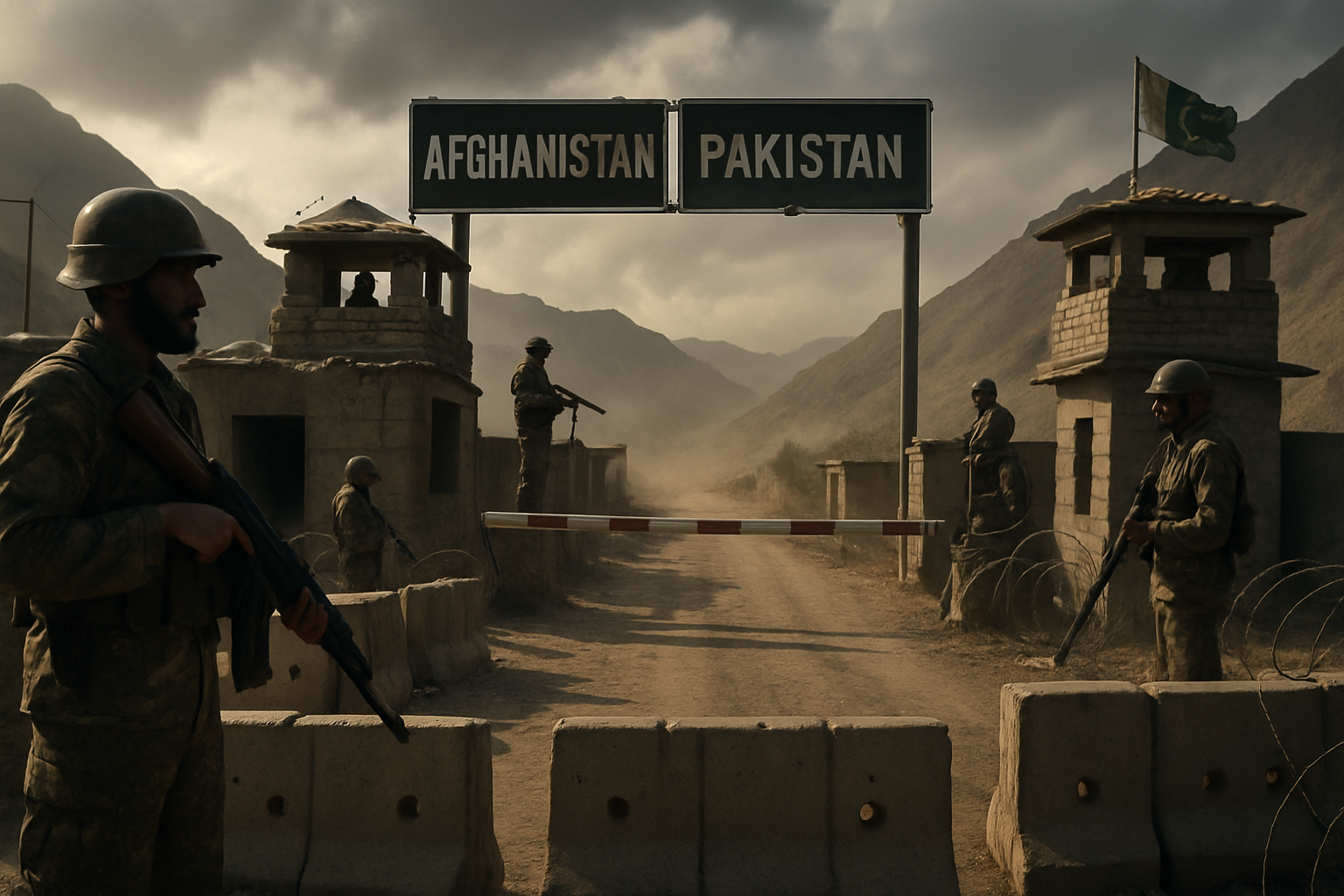
Afghanistan-Pakistan border tensions have reached a dangerous new threshold as Afghan forces reportedly shot down a Pakistani military jet in Jalalabad while arrests of Afghan migrants in Pakistan intensify following deadly cross-border clashes that have prompted urgent international mediation efforts.
The crisis escalated dramatically on February 28, 2026, when Afghan security forces in Nangarhar province's 6th district of Jalalabad successfully shot down a Pakistani military aircraft, capturing the pilot alive according to local police spokesman. This unprecedented development marks the most serious military confrontation between the neighbors since the Taliban's return to power in August 2021.
Military Confrontation Intensifies
The aircraft downing occurred amid an escalating cycle of violence that began with Pakistan's February 22 airstrikes targeting seven terrorist camps in Afghanistan's Nangarhar and Paktika provinces. Those strikes, which Pakistan claimed killed over 80 TTP (Tehreek-e-Taliban Pakistan) and ISIS-K militants, also resulted in significant civilian casualties including 18 deaths, among them eight schoolchildren in Behsud district.
Pakistan's military operations were launched in retaliation for the February 16 Bajaur attack that killed 11 Pakistani soldiers using a vehicle-borne improvised explosive device, part of what officials described as cross-border terrorism emanating from Afghan soil.
"The situation for Afghan nationals in Pakistan has become critical," sources in Islamabad reported, as Pakistani police intensified arrests of Afghan migrants following the recent border clashes with Taliban forces. Reports indicate detentions have occurred even among those possessing valid visas, representing a significant escalation in enforcement measures.
Taliban Calls for Dialogue Amid Military Threats
Despite the unprecedented surge in military confrontations, Taliban officials have emphasized their commitment to resolving disputes through diplomatic channels. Taliban Interior Minister Sirajuddin Haqqani and spokesman Zabihullah Mujahid have stated that "the path of talks remains open," expressing preference for dialogue over military escalation.
"Afghanistan has always preferred to resolve issues based on mutual understanding and respect."
— Foreign Minister Amir Khan Muttaqi, Taliban Government
However, Pakistan has shown little public indication of readiness for formal negotiations, with Defense Minister Khawaja Asif having previously declared what he termed "open war" against Afghanistan's Taliban government following coordinated Pakistani airstrikes across multiple Afghan provinces.
International Community Responds
The escalating crisis has prompted urgent diplomatic intervention from regional and global powers. The United Arab Emirates has expressed grave concern over the clashes, urging both sides to exercise restraint and prevent further escalation through diplomatic channels.
Iran has also called for diplomatic resolution, with officials warning that continued hostilities could have serious implications for broader regional stability. The Islamic Republic has offered to facilitate talks between the two nations.
The European Union issued a statement calling for immediate de-escalation, warning that the continuation of hostilities could destabilize the entire South Asian region. EU officials emphasized that Afghan territory must not be used to threaten neighboring countries while simultaneously calling for respect of Afghanistan's sovereignty.
US Position and Trump Administration Response
The United States has backed Pakistan's "right to defend itself against Taliban attacks," according to a US official statement. President Donald Trump described Pakistan's recent airstrikes as "extraordinary" and voiced strong support for Pakistani leadership, including Prime Minister Shehbaz Sharif and Army Chief General Asim Munir.
Trump has indicated he may intervene in the escalating conflict, though he cited his "fondness for Pakistan" as a factor influencing his approach to potential mediation efforts.
Economic and Humanitarian Impact
The military escalation has coincided with devastating economic consequences for both nations. Bilateral trade has collapsed by 59%, with Pakistan's exports to Afghanistan plummeting from over $550 million to $228 million in the first seven months of the current fiscal year, according to State Bank data.
This economic deterioration compounds Afghanistan's existing humanitarian crisis, where 88% of female-headed households are unable to meet minimum living requirements according to UN assessments. The World Health Organization has been forced to deliver emergency medical oxygen supplies to 23 hospitals across Afghanistan as healthcare infrastructure continues to deteriorate.
Historical Context and Durand Line Disputes
The current crisis stems from long-standing disputes over the 2,640-kilometer Durand Line, the colonial-era border established in 1893 that has never been formally recognized by any Afghan government. The porous, mountainous boundary has provided sanctuary for militant groups, complicating bilateral relations and creating persistent security challenges for both nations.
Pakistan has eliminated over 400 militants in counter-terrorism operations across Balochistan province in February 2026 alone, demonstrating the scale of security challenges faced by Pakistani forces. The government maintains that TTP leadership operates "with impunity from Afghan soil" despite repeated Taliban assurances about preventing territorial use for attacks against neighboring countries.
Regional Security Architecture Under Stress
The crisis represents a critical test of the post-2021 South Asian security architecture. Pakistan has acknowledged diminished regional influence over Afghanistan compared to wealthier powers including Turkey, UAE, Qatar, Saudi Arabia, and China, forcing greater reliance on military solutions when diplomatic engagement proves insufficient.
Chinese officials have warned the UN Security Council about the continued presence of ISIS-K, al-Qaeda, and ETIM terrorist groups in Afghanistan, contradicting Taliban claims of having "defeated terrorism" within their borders. These warnings underscore the complex security dynamics affecting the broader region.
Path Forward Uncertain
The international community faces mounting pressure to develop effective conflict prevention mechanisms before the confrontation escalates into a broader regional war. Qatar and Saudi Arabia are leading diplomatic efforts, with Iran offering mediation services, while the UN, China, Russia, and the UK have all called for immediate ceasefire.
The success or failure of current diplomatic initiatives will likely determine whether this crisis becomes a template for 21st-century conflict resolution or escalates into sustained military confrontation with implications extending far beyond the Afghanistan-Pakistan border.
As military tensions continue to rise alongside humanitarian needs, the coming days will prove critical in determining whether dialogue can prevail over the dangerous cycle of retaliation that has brought two nuclear-armed neighbors closer to open warfare than at any point since the Taliban's return to power.