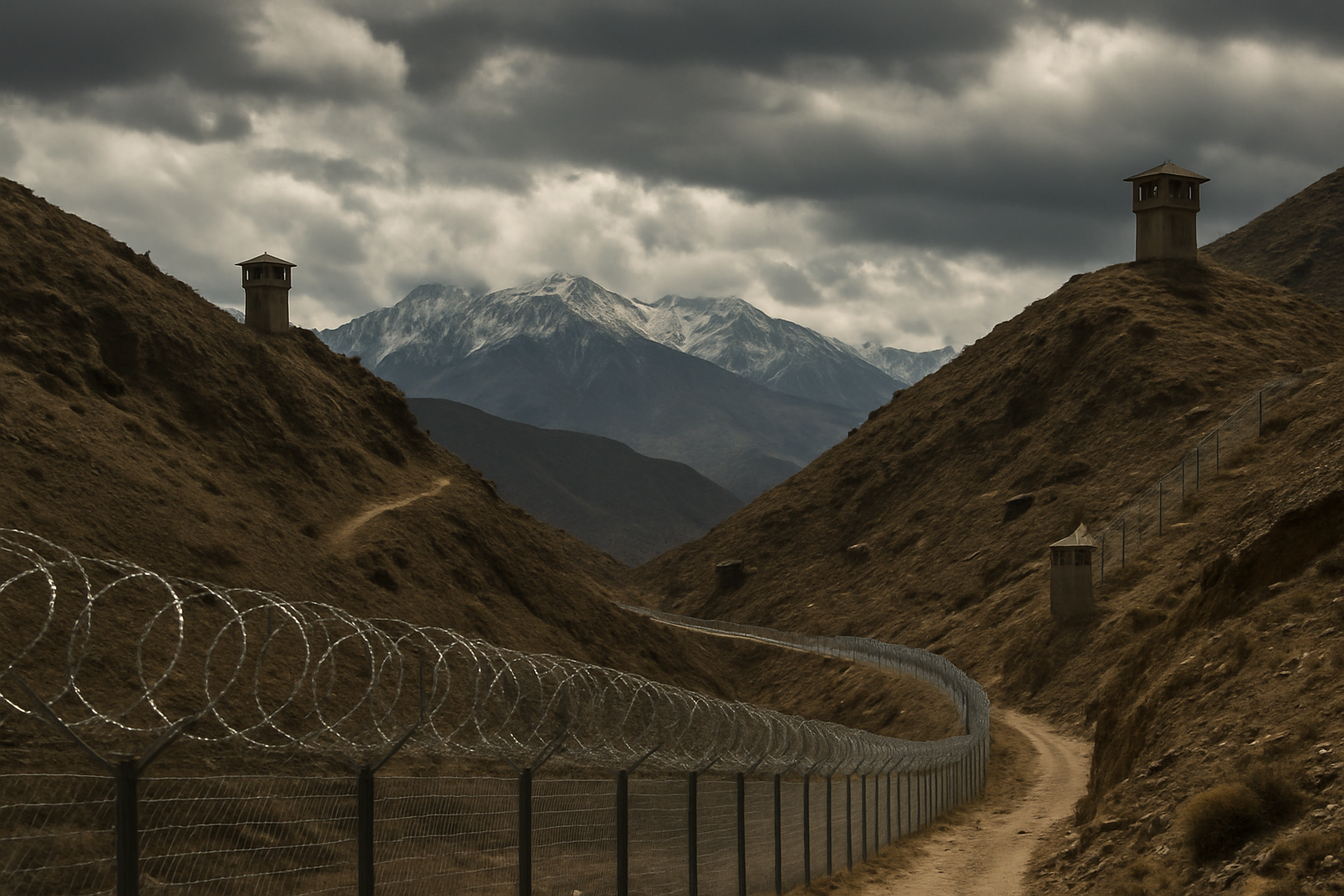
Religious scholars from Afghanistan and Pakistan have issued an urgent joint appeal for extending the temporary ceasefire beyond its scheduled end, as fresh cross-border violence claims civilian lives despite international mediation efforts to resolve the most serious border crisis since the Taliban's 2021 return to power.
At least two civilians were killed and eight others wounded in Pakistani shelling across the disputed Durand Line in Afghanistan's Kunar province on Wednesday, according to local authorities. The attack, which saw Pakistani forces fire approximately 85 rockets targeting residential areas across several districts, represents a continuation of violence despite ongoing diplomatic initiatives.
Religious Intervention Amid Ongoing Violence
Twenty-two prominent clerics from both countries issued a statement on Tuesday calling on authorities to extend the temporary ceasefire, originally announced for Eid al-Fitr, until Eid al-Adha. The religious leaders emphasized their goal of fostering "sustainable peace and resolve ongoing tensions between Islamabad and Kabul."
According to Zia-ur-Rahman Spin Ghar, head of information at Kunar's provincial Directorate of Information and Culture, the heaviest casualties were recorded in Nari district, where one civilian was killed and six others injured. In Sarkano district, another civilian lost their life, while two more people were wounded.
The clerics urged both Pakistani authorities and the Afghan Taliban to extend the ceasefire to allow pilgrims to perform Hajj in a peaceful environment. They added that this "peace movement" goes beyond the ceasefire appeal and includes broader diplomatic and social efforts to resolve longstanding issues between the two countries.
International Calls for De-escalation
The European Union and its member states have called for urgent de-escalation of tensions at the 95th Standing Committee of UNHCR, stressing the need for dialogue and respect for international law. The bloc urged all sides to avoid further escalation, ensure the protection of civilians, and uphold territorial integrity.
"Afghan soil should not be used to threaten or attack other countries. We call on the Islamic Emirate of Afghanistan to take effective action against militant groups operating within or from the country."
— European Union Statement
The EU further expressed concern over the broader humanitarian situation in Afghanistan, highlighting restrictions that continue to affect the work of international organizations and humanitarian partners. A key issue raised was the return of more than four million Afghans from Iran and Pakistan over the past two years, which the EU said has placed additional strain on already limited resources.
Historical Context and Root Causes
The current crisis erupted from a complex web of historical grievances, territorial disputes, and security concerns that have plagued Pakistan-Afghanistan relations for decades. The disputed 2,640-kilometer Durand Line, established by British colonial authorities in 1893, has never been recognized by any Afghan government and remains at the heart of bilateral tensions.
The immediate trigger for the current escalation was the February 16 Bajaur attack that killed 11 Pakistani soldiers, carried out by the banned Tehreek-e-Taliban Pakistan (TTP). Pakistan's subsequent airstrikes on February 22 targeted seven alleged terrorist camps, claiming to kill 80+ militants but also resulting in civilian casualties, including eight schoolchildren.
The situation dramatically escalated on February 27 when Pakistani Defense Minister Khawaja Asif declared "open war" against the Taliban government, marking the most serious military confrontation since the Taliban's return to power. This led to Operation Ghazab lil-Haq, with coordinated military operations expanding from border regions to capitals and strategic installations.
Humanitarian Crisis Deepens
The ongoing conflict has created a severe humanitarian emergency. According to the UN Office for the Coordination of Humanitarian Affairs (OCHA), 16,370 families have been newly displaced across 10 provinces. The UN Assistance Mission in Afghanistan (UNAMA) has documented 185 civilian casualties (56 killed, 129 wounded) since the latest escalation began.
The World Health Organization reports that emergency medical oxygen is available to only 23 hospitals, with hundreds of health centers closed due to funding and security concerns. The crisis compounds Afghanistan's existing humanitarian emergency, where 88% of female-headed households are unable to meet minimum living requirements.
Economic devastation has been equally severe, with bilateral trade collapsing by 59% over seven months. Pakistan's exports to Afghanistan dropped from $550 million to $228 million, affecting border communities dependent on cross-border commerce. Traditional trade routes at Chaman-Spin Boldak and Torkham have faced repeated closures.
Failed Mediation Efforts
Multiple international mediation attempts have proven insufficient to address the underlying security challenges. A Saudi-mediated prisoner exchange in February 2026, which saw the release of three Pakistani soldiers, was intended as a confidence-building measure but failed to prevent the subsequent escalation.
Turkish Foreign Minister Hakan Fidan launched comprehensive mediation initiatives, Iranian officials offered mediation services, and Russian Special Envoy Zamir Kabulov emphasized the need for diplomatic solutions. Chinese Foreign Minister Wang Yi has also been actively shuttling between capitals, promoting dialogue and reconciliation.
Despite these efforts, Pakistan maintains its position that the TTP operates "with impunity from Afghan soil," while the Taliban categorically denies providing sanctuary to militant groups. Pakistan acknowledges having diminished influence in Afghanistan compared to wealthier regional powers including Turkey, UAE, Qatar, Saudi Arabia, and China.
Nuclear Dimensions and Regional Security
The confrontation carries serious implications given Pakistan's nuclear capabilities, making it the most significant crisis involving a nuclear-armed nation since the Taliban's return. Chinese warnings about the presence of ISIS-K, al-Qaeda, and ETIM groups in Afghanistan contradict Taliban claims of having defeated terrorism, adding complexity to the security landscape.
The crisis represents a critical test of the post-2021 South Asian security architecture and has broader implications for how the international community manages the intersection of territorial sovereignty and transnational terrorism in the 21st century.
Current Diplomatic Efforts
The temporary ceasefire, achieved through intensive faith-based diplomacy by Saudi Arabia, Qatar, and Turkey leveraging religious influence during Ramadan, marked the first significant de-escalation since the "open war" declaration. Pakistani Information Minister Attaullah Tarar announced a pause in operations, while Taliban spokesman Zabiullah Mujahid reciprocated by halting defensive operations.
However, reports of continued violations, including the recent civilian casualties in Kunar province, underscore the fragility of the truce. The Taliban maintains that "the path of talks remains open" and seeks "mutual understanding and respect," while Pakistan indicates there is "no rush" to end its campaign without concrete anti-militant measures.
Path Forward
The coming days will be crucial in determining whether the temporary ceasefire can transform into a sustainable peace framework or if the region will return to military confrontation after the Eid celebrations. The success or failure of current diplomatic efforts will provide a template for managing similar territorial sovereignty versus transnational terrorism challenges globally.
The religious scholars' call for an extended ceasefire until Eid al-Adha offers a potential framework for sustained dialogue. Their emphasis on creating conditions for peaceful Hajj pilgrimage adds moral and religious weight to the diplomatic initiative, potentially providing the face-saving opportunity needed for both sides to step back from the brink.
As international pressure mounts and humanitarian concerns deepen, the Afghanistan-Pakistan border crisis stands as a defining test of whether innovative diplomatic frameworks can prevent broader regional confrontation between nuclear-armed neighbors. The stakes extend far beyond bilateral relations, potentially influencing global approaches to conflict resolution in an increasingly multipolar world.