Chinese Foreign Ministry officials announced Wednesday that Taliban and Pakistani representatives have agreed to explore diplomatic solutions to reduce escalating border tensions, as sustained military clashes between Kabul and Islamabad enter their eighth week with devastating humanitarian consequences.
Chinese Foreign Ministry spokesperson Mao Ning confirmed that both sides had committed to avoiding actions that could worsen or complicate the crisis during several days of talks, representing the most significant diplomatic breakthrough since Pakistani Defense Minister Khawaja Mohammad Asif declared "open war" against Afghanistan's Taliban government on February 27.
Humanitarian Catastrophe Deepens
The conflict, which began with a February 16 Tehreek-e-Taliban Pakistan (TTP) attack that killed 11 Pakistani soldiers in Bajaur district, has evolved into the most serious military confrontation between the neighbors since the Taliban's 2021 return to power. United Nations Office for the Coordination of Humanitarian Affairs (UNOCHA) reports that more than 94,000 people have been displaced across eastern Afghan provinces, including Khost, Kunar, Nangarhar, Paktia, and Paktika provinces.
According to the latest UN Assistance Mission in Afghanistan (UNAMA) documentation, civilian casualties have reached several hundred, including children and at least one humanitarian worker. The violence has taken a severe toll on public infrastructure, with critical facilities including hospitals, schools, and telecommunications networks suffering damage from ongoing shelling, airstrikes, and armed clashes.
"The escalating fighting between Pakistan and Afghanistan has triggered a growing humanitarian crisis, with tens of thousands displaced and critical infrastructure damaged."
— UN Office for the Coordination of Humanitarian Affairs
Economic Warfare and Trade Collapse
The border crisis has precipitated a catastrophic 59% collapse in bilateral trade, with Pakistani exports to Afghanistan dropping from $550 million to $228 million over seven months. Traditional trade routes at Chaman-Spin Boldak and Torkham face repeated closures, severely affecting border communities dependent on cross-border commerce.
The World Health Organization has been forced to deliver emergency oxygen to only 23 hospitals, as hundreds of health centers have closed due to security concerns and funding shortages. The crisis compounds Afghanistan's existing humanitarian emergency, where 88% of female-headed households are unable to meet minimum living requirements according to UN data.
Durand Line: The Root of Conflict
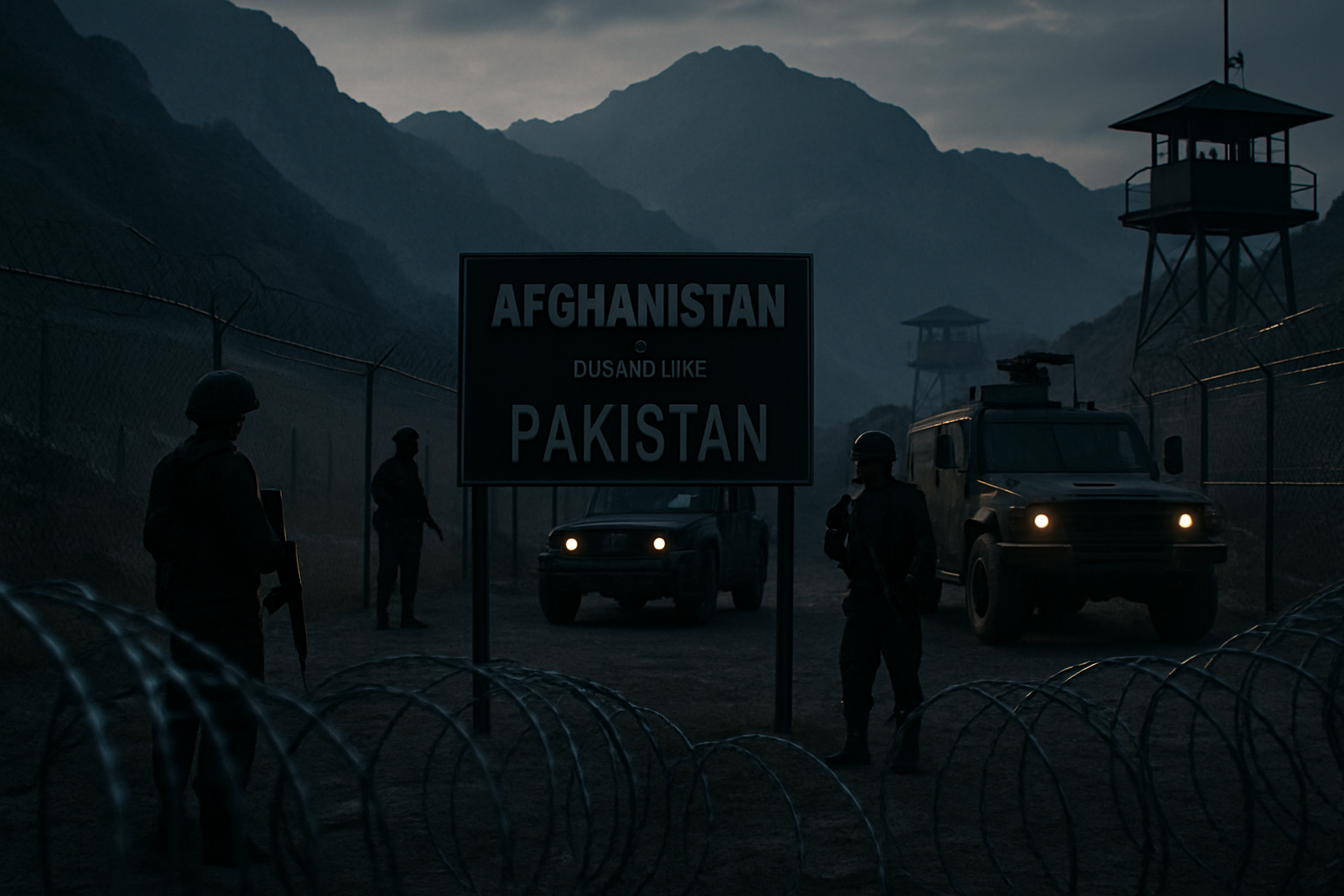
At the heart of the crisis lies the disputed 2,640-kilometer Durand Line, established in 1893 during British colonial rule and never recognized by any Afghan government. The porous mountainous terrain has historically provided sanctuary for militant groups, complicating bilateral security cooperation.
Pakistan maintains that TTP operates "with impunity from Afghan soil," allegations that Taliban authorities categorically deny. The Islamic Emirate insists it does not provide sanctuary to militant groups or allow its territory to be used for cross-border attacks against neighboring countries.
The immediate trigger for the current escalation was the February 16 TTP attack using a vehicle-borne improvised explosive device (VBIED) against a Pakistani security checkpoint. Pakistan's February 22 retaliatory airstrikes targeted seven alleged terrorist camps in Nangarhar and Paktika provinces, claiming to have eliminated 80+ militants but causing civilian casualties including eight schoolchildren.
China's Strategic Mediation Role
China's diplomatic intervention represents Beijing's most direct involvement in managing the crisis, driven by concerns about regional stability and threats to China-Pakistan Economic Corridor (CPEC) investments. Chinese Foreign Minister Wang Yi has dispatched special envoys to shuttle between Kabul and Islamabad, promoting dialogue and reconciliation.
The Chinese mediation comes as previous international efforts by Saudi Arabia, Turkey, Iran, and Russia have proven insufficient. A Saudi-mediated prisoner exchange in February 2026 that secured the release of three Pakistani soldiers, and a temporary Eid al-Fitr ceasefire achieved through faith-based diplomacy in March, both failed to address the underlying structural issues.
Pakistan has acknowledged its diminished regional influence compared to wealthier powers including Turkey, the UAE, Qatar, Saudi Arabia, and China, forcing Islamabad to increasingly rely on military solutions to address security concerns.
Nuclear Dimensions and Regional Security
The involvement of nuclear-armed Pakistan adds a dangerous dimension to the crisis, requiring careful international monitoring to prevent escalation beyond conventional operations. The confrontation represents the most serious test of the post-2021 South Asian security architecture since the Taliban's return to power.
Chinese officials have warned the UN Security Council about the presence of ISIS-K, al-Qaeda, and Eastern Turkistan Islamic Movement (ETIM) operatives in Afghanistan, claims that contradict Taliban assertions of having defeated terrorism within their borders.
"This is a historic moment that requires sustained diplomatic engagement to prevent broader regional confrontation with nuclear implications."
— Regional Security Analyst
Failed International Mediation Attempts
The current Chinese intervention follows a pattern of unsuccessful international mediation efforts. Religious diplomacy leveraging Ramadan and Eid frameworks achieved temporary ceasefires but immediate violations demonstrated the fragility of faith-based approaches without addressing core security issues.
Multiple diplomatic tracks including Turkish Foreign Minister Hakan Fidan's shuttle diplomacy, Iranian mediation offers, and Islamic scholar fatwas calling for Muslim nation ceasefires have proven insufficient to halt military operations. The Taliban maintains that "the path of talks remains open" while Pakistan indicates "no rush" to end its campaign without concrete anti-militant measures.
Template for 21st-Century Conflict Resolution
The Afghanistan-Pakistan crisis has become a template-setting challenge for managing the intersection of territorial sovereignty and transnational terrorism in contemporary international relations. The success or failure of diplomatic containment will influence global approaches to similar regional security challenges involving disputed territories and cross-border terrorism concerns.
The stakes extend far beyond bilateral relations, affecting regional stability mechanisms and international conflict resolution frameworks. The crisis tests whether innovative diplomatic approaches can balance legitimate security concerns with territorial integrity, civilian protection, and international law compliance.
Looking Forward: Diplomatic Prospects
As the conflict enters its eighth week, the international community faces mounting pressure to develop effective diplomatic frameworks that can address the complex intersection of sovereignty disputes and security concerns. Chinese mediation represents perhaps the last major diplomatic opportunity before the crisis potentially escalates into a broader regional confrontation.
The Taliban government maintains its commitment to dialogue and mutual understanding, while Pakistani officials emphasize that concrete measures against militant groups remain a precondition for sustainable peace. The coming days will prove decisive in determining whether sustained diplomatic engagement can overcome the cycle of military escalation that has characterized this conflict.
With hundreds of civilians killed and thousands displaced, the humanitarian cost of continued warfare underscores the urgent need for a negotiated settlement that addresses the legitimate security concerns of both nations while respecting international law and territorial sovereignty principles.