International mediation efforts are intensifying to resolve the escalating military confrontation between Afghanistan and Pakistan, as the crisis that began with a deadly February attack has evolved into what Pakistani Defense Minister Khawaja Asif formally declared "open war" against the Taliban government—the most serious conflict between the neighbors since the Taliban's 2021 return to power.
The current crisis traces its origins to February 16, 2026, when a coordinated Taliban Pakistan (TTP) attack using a vehicle-borne improvised explosive device killed 11 Pakistani soldiers at a joint security checkpoint in Bajaur district. The sophisticated assault, which Pakistani military refers to as an attack by "Fitna al-Khawarij," prompted a severe escalation that has now entered its third week with devastating consequences for both nations.
Military Escalation Timeline
Following the Bajaur attack, Pakistan retaliated on February 22 with coordinated airstrikes targeting seven alleged terrorist camps in Afghanistan's Nangarhar and Paktika provinces. While Pakistani sources claimed the elimination of over 80 TTP and ISIS-K militants, the strikes resulted in significant civilian casualties, including eight schoolchildren aged 5-15 years in Behsud district, according to UN documentation.
The situation dramatically escalated on February 27 when Defense Minister Asif declared "open war," launching Operation Ghazab-ul-Haq with strikes across multiple Afghan provinces including the capital Kabul. Taliban forces responded with counter-strikes on Pakistani military installations in Islamabad, Nowshera, Jamrud, and Abbottabad, marking an unprecedented expansion of hostilities to both nations' capitals.
By March 6, Afghanistan's Defense Ministry claimed its "Radd-ul-Zulm" (Response to Oppression) operation had killed 327 Pakistani soldiers, while Pakistan maintained its operations were justified to combat cross-border terrorism. The UN Mission in Afghanistan (UNAMA) has documented 185 civilian casualties—56 killed and 129 wounded—between February 26 and March 5 alone.
Diplomatic Mediation Initiatives
Multiple international actors have launched mediation efforts as the crisis threatens regional stability. Russian Special Envoy Zamir Kabulov met with Afghan Ambassador Gul Hasan Hasan in Moscow, emphasizing that disputes should be resolved through dialogue rather than military action. Russia has expressed readiness to serve as a mediator if requested by both parties.
Turkish President Recep Tayyip Erdogan has taken a particularly active role, conducting phone calls with Pakistani Prime Minister Shehbaz Sharif to condemn terrorist attacks while stressing the need for diplomatic channels. Turkish Foreign Minister Hakan Fidan has initiated comprehensive mediation efforts, contacting his Pakistani and Afghan counterparts as well as officials from Qatar and Saudi Arabia.
"The path of talks remains open. We seek resolution through mutual understanding and respect," stated Taliban Interior Minister Sirajuddin Haqqani, despite the ongoing military operations.
— Sirajuddin Haqqani, Taliban Interior Minister
Iran has also offered mediation services, with Foreign Ministry officials warning that escalation could destabilize the broader region. However, confidence-building measures, including a Saudi-mediated prisoner exchange in February 2026 that saw the release of three Pakistani soldiers, have proven insufficient to address the underlying security challenges.
The Durand Line Dispute
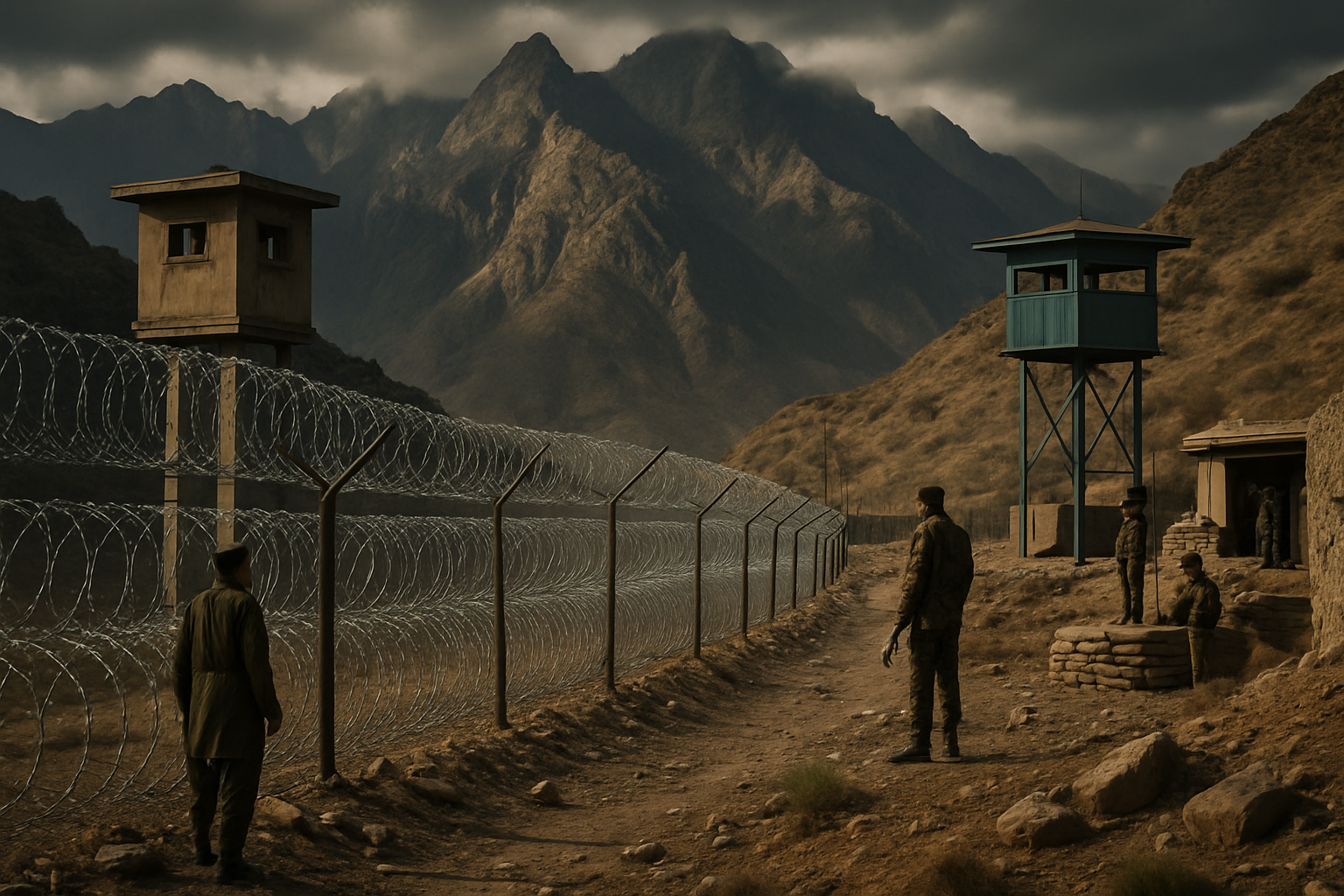
At the heart of the current crisis lies the disputed 2,640-kilometer Durand Line, established in 1893 during British colonial rule. No Afghan government has ever formally recognized this border, viewing it as an artificial division of Pashtun tribal areas. The porous mountainous terrain provides sanctuary for militant groups, complicating security operations and bilateral relations.
Pakistan maintains that TTP operates "with impunity from Afghan soil" despite Taliban assurances that no armed groups use Afghan territory for attacks on neighboring countries. The Taliban government categorically rejects these allegations, asserting full territorial control while describing sovereignty protection as both "religious obligations and national duties."
Economic and Humanitarian Consequences
The military confrontation has devastated bilateral trade, which has collapsed by 59% over seven months—Pakistan's exports to Afghanistan dropped from $550 million to $228 million. Traditional trade routes through Chaman-Spin Boldak and Torkham face repeated closures, affecting border communities dependent on cross-border commerce.
This economic disruption compounds Afghanistan's existing humanitarian crisis, where 88% of female-headed households are unable to meet minimum living requirements according to UN data. The World Health Organization has delivered emergency medical oxygen to only 23 hospitals, while hundreds of health centers have closed due to funding cuts and security concerns.
The human cost continues to mount as medical facilities become overwhelmed treating wounded civilians. Rescue operations are ongoing in areas where civilians remain trapped under bombardment rubble, highlighting the urgent need for humanitarian corridors and civilian protection measures.
Regional and International Implications
The crisis represents the most serious test of post-2021 South Asian security architecture, involving nuclear-armed Pakistan in sustained military operations against its neighbor. Chinese officials have warned the UN Security Council about the presence of ISIS-K, al-Qaeda, and East Turkestan Islamic Movement operatives in Afghanistan, contradicting Taliban claims of having "defeated terrorism."
Pakistan acknowledges its diminished regional influence in Afghanistan compared to wealthier powers including Turkey, the UAE, Qatar, Saudi Arabia, and China. This recognition has contributed to Pakistan's increased reliance on military solutions when diplomatic leverage proves insufficient.
The international community faces mounting pressure to develop effective conflict prevention mechanisms before the confrontation escalates into a broader regional war. The stakes extend beyond the immediate bilateral relationship, potentially setting precedents for how territorial sovereignty and transnational terrorism challenges are managed in the 21st century.
Religious and Cultural Dimensions
The timing of military operations during Ramadan has added religious sensitivity to the crisis. Prominent Islamic scholar Ali al-Qaradaghi, president of the International Union of Muslim Scholars, issued a fatwa calling for an immediate ceasefire during the holy month, stating that fighting between Muslim nations contradicts Islamic teachings.
Mass protests have erupted across Afghanistan, with hundreds gathering at Kabul's Eidgah Mosque to condemn Pakistani airstrikes and express unity with the Taliban government's defensive actions. These demonstrations reflect significant public support for the Taliban's response to what Afghans view as unprovoked aggression.
Path Forward
The success of current diplomatic initiatives may depend on several critical factors: the Taliban's capability and willingness to control militant groups operating from Afghan territory, Pakistan's commitment to pursuing diplomatic rather than purely military solutions, and sustained engagement from regional mediators.
UN Human Rights Chief Volker Türk has expressed grave concern over the escalating military clashes, while multiple international bodies call for immediate cessation of hostilities and protection of civilians. The religious dimension introduced by the Ramadan fatwa may provide a face-saving opportunity for both sides to de-escalate.
As the crisis enters a critical diplomatic phase, the international community watches closely to determine whether innovative conflict resolution mechanisms can prevent a broader regional confrontation. The template established by this crisis may influence how similar challenges involving territorial sovereignty and transnational terrorism are addressed globally, making the stakes far greater than the immediate bilateral dispute between Afghanistan and Pakistan.
The coming days will be decisive in determining whether sustained diplomatic engagement can overcome military escalation, or whether the region faces prolonged confrontation with implications extending far beyond the disputed Durand Line.