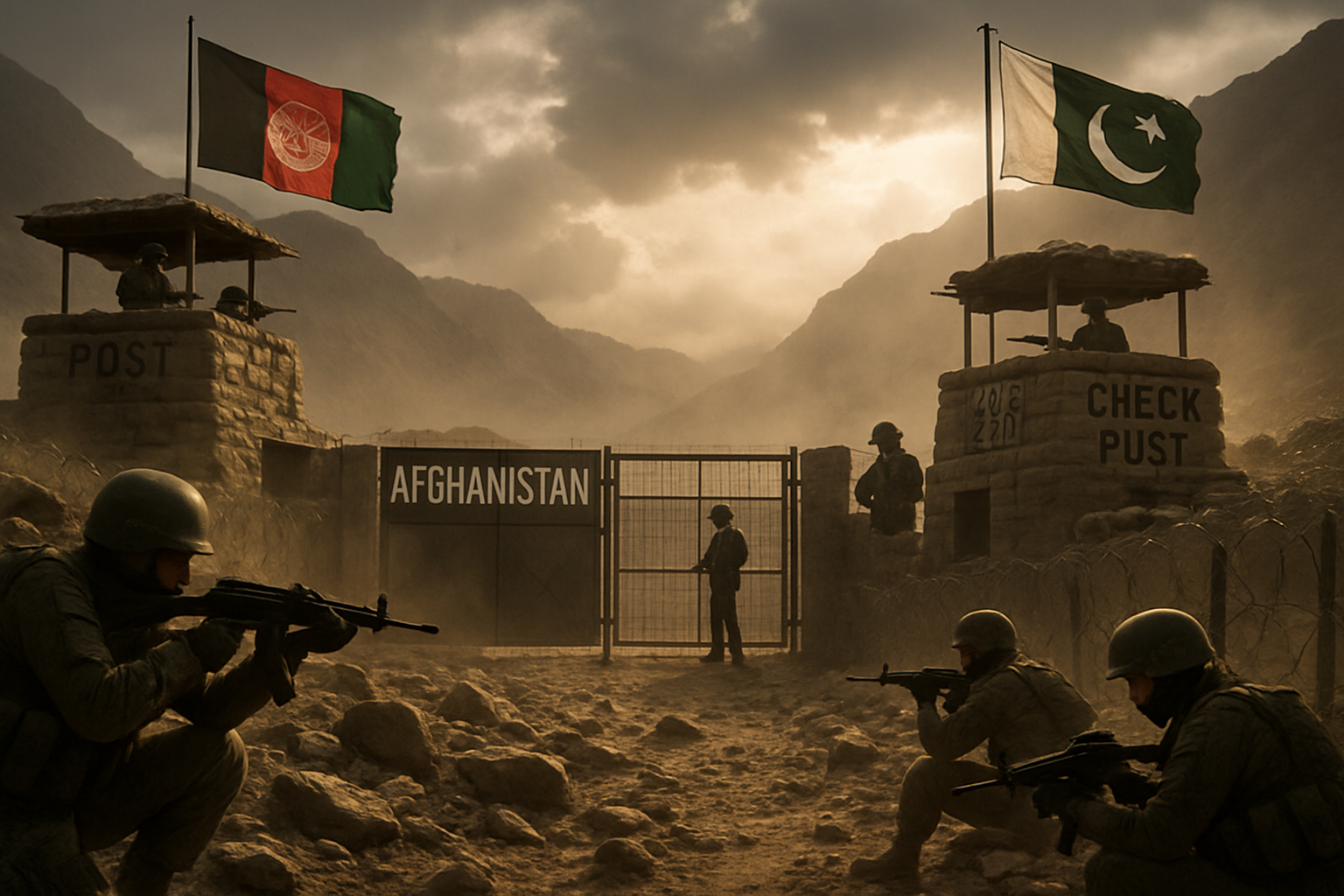
The United Nations human rights chief has issued urgent warnings over escalating military clashes between Pakistani forces and Taliban fighters along the disputed Afghanistan-Pakistan border, as prominent Islamic scholars call for an immediate ceasefire during the holy month of Ramadan.
UN High Commissioner for Human Rights Volker Türk expressed growing concern over the intensifying confrontations that have claimed hundreds of lives since February, marking the most serious cross-border violence since the Taliban's return to power in August 2021.
The crisis reached a dangerous new phase this week as religious leaders joined international appeals for peace. Ali al-Qaradaghi, president of the International Union of Muslim Scholars, issued a religious ruling (fatwa) calling for an immediate halt to fighting between the two Muslim nations during Ramadan, stating that such conflicts "contradict Islamic teachings" and that "the lives of Muslims must be protected."
Economic Stakes Compound Military Crisis
Beyond the humanitarian concerns, the border violence threatens to undermine Pakistan's crucial economic recovery efforts. The escalation comes at a particularly sensitive time as International Monetary Fund inspectors arrived in Islamabad to conduct a third-round review of Pakistan's economic recovery program – a visit that could unlock the next tranche of desperately needed rescue funding.
The timing could not be worse for Pakistan's fragile economy. Bilateral trade between the two neighbors has already collapsed by 59%, with Pakistani exports plummeting from $550 million to just $228 million over seven months of the current fiscal year. Traditional trade routes through Chaman-Spin Boldak and Torkham have faced repeated closures, devastating border communities dependent on cross-border commerce.
The economic disruption compounds Afghanistan's existing humanitarian crisis, where UN data shows 88% of female-headed households are unable to meet minimum living requirements. The World Food Programme has warned that the escalating border violence is severely restricting humanitarian aid access to Afghanistan, one of the world's most severe hunger crises.
Historical Roots of the Conflict
The current crisis stems from deep-rooted disputes over the 2,640-kilometer Durand Line, a colonial-era border established in 1893 that has never been formally recognized by any Afghan government. The porous mountainous terrain provides sanctuary for militant groups while the disputed boundary represents what Afghans view as an artificial division of Pashtun tribal lands.
Violence erupted in February following a Tehrik-e-Taliban Pakistan (TTP) attack in Bajaur district that killed 11 Pakistani soldiers. Pakistan responded with airstrikes on seven alleged terrorist camps in Afghanistan's Nangarhar and Paktika provinces, claiming to have killed over 80 militants. However, the strikes also resulted in civilian casualties, including eight schoolchildren, prompting Taliban threats of "measured and appropriate response."
The situation escalated dramatically when Pakistani Defense Minister Khawaja Asif declared "open war" against Afghanistan's Taliban government on February 27, launching Operation Ghazab-ul-Haq with coordinated strikes across multiple Afghan provinces including the capital Kabul.
International Mediation Efforts Fall Short
Despite intensive diplomatic efforts by regional powers, mediation attempts have failed to de-escalate the crisis. Saudi Arabia facilitated a prisoner exchange in February, releasing three Pakistani soldiers captured during October 2025 border clashes. Iran, Turkey, and Russia have all offered mediation services, but underlying security challenges persist.
Pakistan maintains that TTP operates "with impunity from Afghan soil" despite Taliban assurances that no armed groups use Afghan territory for attacks against neighboring countries. The Taliban, for its part, has filed complaints with the UN Security Council condemning what it calls violations of Afghan sovereignty and international law.
The crisis has exposed Pakistan's diminished regional influence compared to wealthier powers like Turkey, UAE, Qatar, Saudi Arabia, and China, forcing Islamabad to increasingly rely on military solutions rather than diplomatic leverage.
Civilian Casualties Mount
The UN Assistance Mission in Afghanistan (UNAMA) has documented alarming civilian casualties, reporting 185 people killed and wounded between February 26 and March 5, with more than half being women and children. The casualties resulted from airstrikes and indirect fire along the disputed border regions.
Medical facilities across the border areas are overwhelmed with wounded civilians, while rescue operations continue for those trapped under rubble from bombardments. The World Health Organization has been forced to deliver emergency medical oxygen to 23 hospitals as the healthcare system struggles to cope with the influx of casualties.
The violence has also triggered a massive displacement crisis, with UN humanitarian agencies reporting that 16,370 families have been newly displaced across 10 Afghan provinces, adding to the millions already facing humanitarian emergencies.
Nuclear Dimension Raises Stakes
The involvement of nuclear-armed Pakistan adds a particularly dangerous dimension to the conflict that has caught international attention. This represents the most serious Pakistan-Afghanistan confrontation in decades, testing the post-2021 South Asian security architecture.
China has warned the UN Security Council about the presence of ISIS-K, al-Qaeda, and other terrorist groups in Afghanistan, contradicting Taliban claims of having defeated terrorism. These warnings underscore the complexity of the security challenges facing both countries and the broader international community.
The crisis serves as a critical test of whether diplomatic frameworks can effectively manage the intersection of territorial sovereignty concerns with transnational terrorism challenges – a template-setting precedent for 21st-century conflict resolution mechanisms.
Religious Leaders Step Forward
The intervention by Islamic scholars represents a significant development in efforts to halt the violence. The fatwa issued by Al-Qaradaghi emphasizes that fighting between Muslim nations during Ramadan violates Islamic principles and calls for immediate dialogue to resolve differences peacefully.
This religious dimension adds moral pressure to the diplomatic efforts, as both Pakistan and Afghanistan are Islamic republics where religious rulings carry significant weight in public opinion and policy decisions.
Regional and Global Implications
The Afghanistan-Pakistan border crisis extends far beyond bilateral relations, affecting broader regional stability and international security cooperation. The conflict disrupts counterterrorism efforts in the region while straining relationships between key allies in the fight against extremism.
For Afghanistan, the crisis threatens to further isolate the Taliban government, which has been seeking international recognition and economic assistance. The violence undermines Taliban claims of maintaining security and controlling militant groups within their territory.
For Pakistan, the crisis diverts resources from other pressing challenges including economic recovery, domestic security threats, and development priorities. The country's reputation as a regional power broker continues to diminish as it struggles to resolve the conflict through diplomatic means.
"This crisis represents one of the most serious challenges to regional stability since the Taliban's return to power. The international community must act swiftly to prevent broader regional confrontation."
— Senior UN Official, speaking on condition of anonymity
Path Forward Remains Uncertain
As the crisis enters its second month, the path toward resolution remains unclear. Both sides have invested significant political capital in their positions, making compromise difficult. Pakistan demands concrete action against militant groups operating from Afghan territory, while the Taliban insists on respect for Afghan sovereignty and an end to cross-border attacks.
The involvement of international mediators offers hope, but previous efforts have shown limited success in addressing the root causes of the conflict. The religious appeal for peace during Ramadan provides a potential face-saving opportunity for both sides to step back from military escalation.
However, the underlying issues – disputed borders, militant sanctuaries, economic interdependence, and competing security priorities – require sustained diplomatic engagement and innovative solutions that go beyond traditional approaches.
The coming weeks will be crucial in determining whether the international community can develop effective mechanisms to prevent the crisis from escalating into a broader regional conflict with potentially catastrophic consequences for South Asian stability and global security efforts.