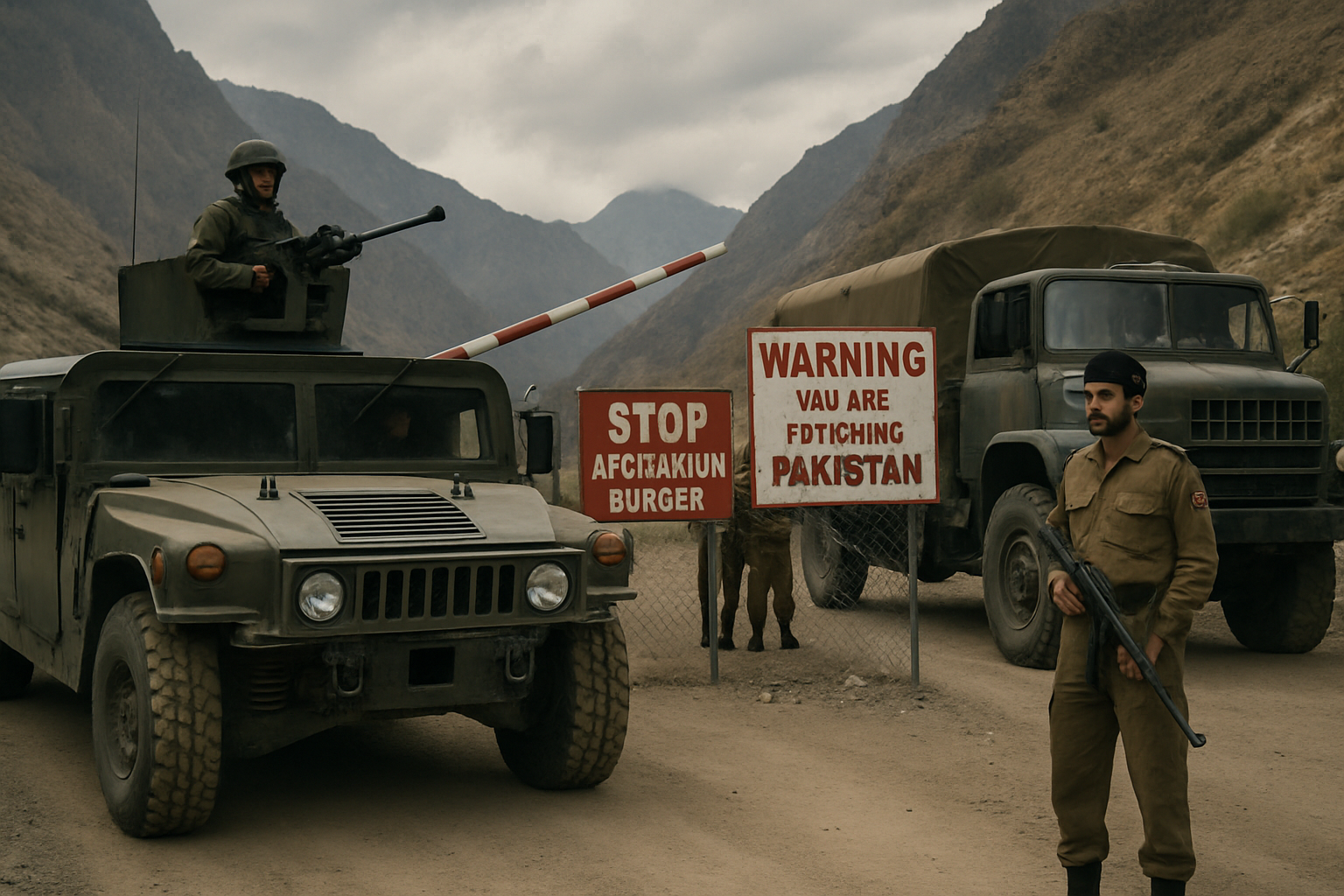
The International Crisis Group has issued a stark warning that rising tensions between Afghanistan and Pakistan risk spiraling into further deadly conflict unless both sides return to dialogue, as Pakistani military forces continue to violate temporary ceasefire agreements and target civilian areas.
Fresh violence erupted Sunday morning when Pakistani military forces fired mortar shells into Afghanistan's Kunar province, killing one civilian and wounding another woman, according to Hamdullah Fitrat, deputy spokesman of the Islamic Emirate. The attack occurred in the Shanpat area of Nari district at 9:30 AM, marking yet another violation of the historic Eid al-Fitr ceasefire that was achieved through intensive diplomatic mediation just days earlier.
Ceasefire Violations Continue Despite Religious Diplomacy
The latest incident represents a dangerous pattern of ceasefire violations that began almost immediately after both nations announced a temporary suspension of military operations for Eid al-Fitr (March 18-23). The religious-based truce, the first significant de-escalation since Pakistani Defense Minister Khawaja Asif declared "open war" on February 27, was achieved through sustained diplomatic pressure from Saudi Arabia, Qatar, and Turkey.
Pakistani forces also opened fire on a civilian vehicle in Shakin district of Paktika province, though no casualties were reported in that incident. The Pakistani government had earlier announced it would halt attacks on Afghanistan until Monday night in observance of the Islamic holiday, making these violations particularly concerning to international observers.
The International Crisis Group, in their recent statement, emphasized that last week's reported strike on a hospital in Kabul marked a significant escalation, pushing already strained relations closer to direct confrontation. The organization warned that without immediate return to dialogue, the situation could deteriorate into a broader regional conflict with devastating consequences.
Month-Long Crisis Reaches Critical Point
The current crisis represents the most serious Pakistan-Afghanistan confrontation since the Taliban's return to power in August 2021. The escalating conflict began on February 16 when a Tehreek-e-Taliban Pakistan (TTP) attack in Bajaur killed 11 Pakistani soldiers using a vehicle-borne improvised explosive device.
Pakistan responded with coordinated airstrikes on February 22, targeting seven alleged terrorist camps in Afghanistan's Nangarhar and Paktika provinces. While Pakistani officials claimed to have killed over 80 militants, the strikes also resulted in civilian casualties, including eight schoolchildren in Behsud district, according to United Nations documentation.
"The path of talks remains open. We seek mutual understanding and respect."
— Taliban Spokesman, on diplomatic solutions
The crisis escalated dramatically when Defense Minister Khawaja Asif declared "open war" against Afghanistan's Taliban government on February 27, launching Operation Ghazab lil-Haq. The military campaign expanded beyond border regions to target strategic installations including Bagram Airfield and facilities in Kabul, representing an unprecedented expansion of cross-border military operations.
Humanitarian Catastrophe Unfolds
The humanitarian impact of the sustained military confrontation has been severe. The United Nations Office for the Coordination of Humanitarian Affairs (OCHA) reports that 16,370 families have been newly displaced across 10 Afghan provinces. The UN Assistance Mission in Afghanistan (UNAMA) has documented 185 civilian casualties since February 26, with 56 killed and 129 wounded, the majority being women and children.
The World Health Organization has been forced to deliver emergency medical oxygen to only 23 hospitals, while hundreds of health centers have closed due to funding cuts and security concerns. The conflict compounds Afghanistan's existing humanitarian crisis, where 88% of female-headed households are unable to meet minimum living requirements.
Economic devastation has been equally severe, with bilateral trade collapsing by 59% over seven months. Pakistan's exports to Afghanistan dropped from $550 million to $228 million, severely affecting border communities that depend on cross-border commerce. Traditional trade routes through Chaman-Spin Boldak and Torkham have faced repeated closures.
International Mediation Efforts Face Setbacks
Despite intensive international mediation efforts, diplomatic solutions have proven insufficient to address the underlying security challenges. Saudi Arabia facilitated a prisoner exchange in February 2026, releasing three Pakistani soldiers from Taliban custody as a confidence-building measure during Ramadan. However, this gesture failed to prevent the escalation of military operations.
Turkish Foreign Minister Hakan Fidan launched shuttle diplomacy initiatives, while Iran, Russia, and China all offered mediation services. Religious scholars, including Ali al-Qaradaghi of the International Union of Muslim Scholars, issued fatwas calling for ceasefires during the holy month of Ramadan, but military operations continued despite these religious appeals.
The temporary Eid ceasefire, achieved through faith-based diplomacy leveraging religious and cultural influence, demonstrated the potential effectiveness of alternative mediation approaches. However, the immediate violations show the fragility of such agreements without addressing core issues.
Root Causes: Durand Line Disputes and Cross-Border Terrorism
At the heart of the crisis lies the disputed 2,640-kilometer Durand Line, the colonial-era border established in 1893 that has never been recognized by any Afghan government. Afghanistan views the boundary as an artificial division of Pashtun tribal lands, while Pakistan maintains it as an international border.
Pakistan claims that the TTP operates "with impunity from Afghan soil," using mountainous sanctuaries to launch attacks against Pakistani forces. The Taliban government categorically denies providing sanctuary to militant groups or allowing Afghan territory to be used for attacks against neighboring countries.
"Pakistan maintains that concrete, verifiable measures must be taken against all terror groups operating from Afghan soil."
— Pakistani Government Position
The porous mountainous terrain along the border complicates security control for both sides. Pakistan has acknowledged its diminished influence in Afghanistan compared to wealthier regional powers such as Turkey, UAE, Qatar, Saudi Arabia, and China, leading to increased reliance on military solutions.
Nuclear Implications and Regional Security
The crisis carries significant nuclear implications, as Pakistan is a nuclear-armed nation and this represents the most serious confrontation involving nuclear weapons since the Taliban's return to power. International monitoring is crucial to prevent escalation beyond conventional operations.
Chinese warnings at the UN about the presence of ISIS-K, al-Qaeda, and ETIM (East Turkestan Islamic Movement) in Afghanistan contradict Taliban claims of having defeated terrorism. This disagreement over the security situation adds complexity to diplomatic efforts.
The confrontation serves as a critical test of the post-2021 South Asian security architecture and provides a template for managing 21st-century challenges where territorial sovereignty intersects with transnational terrorism concerns.
International Crisis Group's Warning
The International Crisis Group's warning comes at a crucial juncture as both sides maintain hardline positions despite the temporary ceasefire. The organization emphasized that the reported hospital strike in Kabul represented a significant escalation that could push the crisis beyond the point of diplomatic resolution.
The Taliban maintains that "the path of talks remains open" and seeks "mutual understanding and respect," while Pakistan indicates there is "no rush" to end its military campaign without concrete anti-militant measures being implemented by the Afghan government.
The five-day Eid ceasefire window provides a crucial opportunity for intensive diplomatic engagement to address underlying issues including cross-border terrorism, disputed borders, and competing sovereignty claims that remain fundamentally unresolved.
Looking Forward: Diplomatic Challenges Ahead
The success or failure of current diplomatic efforts will influence approaches to territorial sovereignty versus transnational terrorism challenges globally. The crisis extends beyond bilateral relations to affect regional stability mechanisms and international conflict resolution approaches worldwide.
Regional powers including Malaysia, Iran, and others have offered additional mediation support, while Ireland's decision to maintain cricket diplomacy with Afghanistan demonstrates how sports and cultural exchanges can provide alternative engagement pathways when official diplomatic channels are strained.
The coming days will be decisive in determining whether the temporary ceasefire can be transformed into a sustainable peace framework or whether the region will return to military confrontation after Eid celebrations conclude. The stakes extend far beyond the immediate bilateral relationship, potentially setting precedents for how nuclear-armed neighbors manage disputes in the 21st century.
As the International Crisis Group warns, without sustained dialogue and genuine commitment from both sides to address core issues, the region risks descending into prolonged conflict with devastating humanitarian consequences and broader implications for global security architecture.