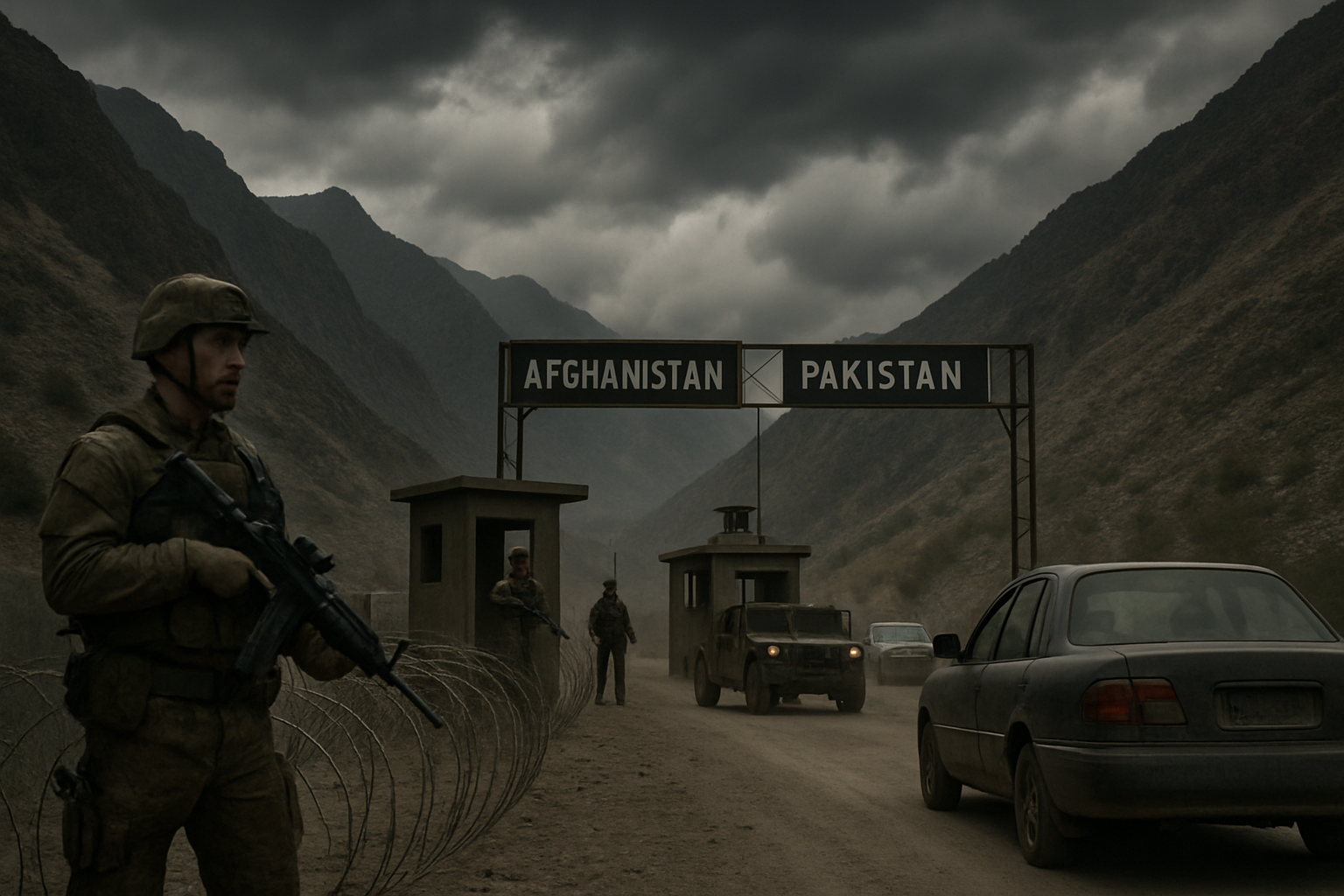
Civilians continue to fall victim to Afghanistan-Pakistan border violence as a female health worker and her three-year-old child were killed in a reported Pakistani attack in Afghanistan's Kunar province, raising serious questions about the viability of the historic Eid al-Fitr ceasefire declared just days earlier.
The deadly strike occurred Thursday morning in the Nari district of Kunar province, where the woman's husband, one of her sons, and their driver were also wounded, according to local sources. The victim worked at a health center in the area, highlighting the devastating impact of the conflict on Afghanistan's already fragile healthcare system.
Historic Ceasefire Under Immediate Strain
The attack comes just days after both Pakistan and Afghanistan announced a temporary suspension of military operations for Eid al-Fitr (March 18-23), marking the first significant de-escalation since Pakistani Defense Minister Khawaja Asif declared "open war" on February 27, 2026. The ceasefire was achieved through intensive faith-based diplomacy led by Saudi Arabia, Qatar, and Turkey, leveraging religious and cultural influence during Ramadan.
Pakistani Information Minister Attaullah Tarar had announced a pause in Operation Ghazab lil-Haq against "terrorists and their support infrastructure in Afghanistan," while Taliban spokesman Zabiullah Mujahid reciprocated by temporarily halting "Rad al-Zulm" defensive operations, though warning of a "brave response to any aggression."
Expert Warnings About Ceasefire Sustainability
Former Pakistan special envoy for Afghanistan Asif Durrani has warned that the current ceasefire between the Taliban and Islamabad will not last unless concrete action is taken against Tehrik-i-Taliban Pakistan (TTP). Writing on X on Thursday, Durrani said the pause in hostilities could turn into a durable truce only if the Afghan Taliban carry out decisive measures against the Pakistani militant group.
"The current ceasefire will not last without concrete action against TTP. This is not just a military challenge but a test of governance and international commitment."
— Asif Durrani, Former Pakistan Special Envoy for Afghanistan
Durrani's assessment reflects deeper structural issues that have fueled the month-long crisis. Pakistan maintains that TTP operates "with impunity from Afghan soil," while the Taliban categorically denies providing militant sanctuary or territorial use against neighboring countries.
Month of Unprecedented Military Confrontation
The current crisis represents the most serious Pakistan-Afghanistan confrontation since the Taliban's 2021 return to power. The conflict began on February 16 when a TTP vehicle-borne improvised explosive device killed 11 Pakistani soldiers in Bajaur district. Pakistan retaliated on February 22 with airstrikes on seven terrorist camps, claiming to kill 80+ militants but causing civilian casualties including eight schoolchildren.
The situation dramatically escalated when Defense Minister Khawaja Asif declared "open war" against the Taliban government on February 27, launching Operation Ghazab lil-Haq with coordinated strikes across multiple Afghan provinces including Kabul, Kandahar, and Paktia.
International monitoring organizations have documented the devastating human cost. The UN Assistance Mission in Afghanistan (UNAMA) reports 185 civilian casualties (56 killed, 129 wounded) since February 26, with the majority being women and children. The UN Office for the Coordination of Humanitarian Affairs (OCHA) reports that 16,370 families have been newly displaced across 10 provinces.
Economic Warfare and Humanitarian Crisis
Beyond the human toll, the conflict has devastated bilateral economic relations. Trade between the two countries has collapsed by 59%, with Pakistan's exports to Afghanistan dropping from $550 million to $228 million over seven months. Traditional trade routes through Chaman-Spin Boldak and Torkham have faced repeated closures, severely affecting border communities dependent on cross-border commerce.
This economic devastation compounds Afghanistan's existing humanitarian crisis, where 88% of female-headed households are unable to meet minimum living requirements according to UN data. The World Health Organization has been forced to provide emergency medical oxygen to only 23 hospitals, while hundreds of health centers have closed due to funding and security concerns.
The Durand Line: Colonial Legacy, Modern Conflict
At the heart of the dispute lies the 2,640-kilometer Durand Line, established by British colonial authorities in 1893 but never formally recognized by any Afghan government. Afghanistan views the border as an artificial division of Pashtun tribal areas, while Pakistan considers it the legitimate international boundary.
The porous, mountainous terrain along this disputed border has long provided sanctuary for militant groups, complicating efforts by both governments to control cross-border movement and prevent terrorist activities. Pakistan has acknowledged its diminished influence in Afghanistan compared to wealthier regional powers including Turkey, UAE, Qatar, Saudi Arabia, and China, forcing greater reliance on military solutions.
International Mediation: Success and Limitations
The achievement of even a temporary ceasefire represents a significant diplomatic breakthrough, particularly given the failure of previous mediation efforts. Saudi Arabia's February 2026 prisoner exchange that released three Pakistani soldiers from Taliban custody, along with Turkish, Iranian, Russian, and Chinese mediation offers, had all proved insufficient before the current religious diplomacy success.
Chinese Foreign Minister Wang Yi has been particularly active, with special envoys shuttling between capitals and emphasis on face-to-face dialogue. Religious scholars, including Ali al-Qaradaghi of the International Union of Muslim Scholars, issued fatwas calling for Muslim nation ceasefires during the holy month, providing moral pressure for the breakthrough.
Faith-Based Diplomacy Template
The success of religious and cultural diplomacy using the Ramadan/Eid framework provides a potential template for 21st-century conflict resolution. This approach demonstrates how religious and cultural considerations can provide leverage for peace that traditional diplomatic mechanisms may lack.
Nuclear Implications and Regional Security
The crisis carries particularly serious implications given Pakistan's nuclear capabilities. This represents the most serious confrontation involving a nuclear-armed state since the Taliban's return, requiring careful international monitoring to prevent escalation beyond conventional military operations.
Chinese warnings at the UN about the presence of ISIS-K, al-Qaeda, and ETIM in Afghanistan contradict Taliban claims of having defeated terrorism, adding complexity to regional security calculations. The confrontation serves as a critical test of the post-2021 South Asian security architecture.
Underlying Challenges Remain Unresolved
Despite the ceasefire breakthrough, fundamental issues remain unaddressed. The Taliban maintains that "the path of talks remains open" while seeking "mutual understanding and respect." However, Pakistan indicates there is "no rush" to end its military campaign without concrete anti-militant measures from Kabul.
The five-day ceasefire window provides a crucial period for intensive diplomatic engagement, but the underlying disputes over cross-border terrorism, territorial sovereignty, and border recognition require sustained effort that extends far beyond temporary religious observances.
Template for Global Conflict Resolution
The Afghanistan-Pakistan crisis has implications that extend far beyond bilateral relations, potentially setting precedents for how the international community manages disputes involving territorial sovereignty versus transnational terrorism in the 21st century. The success or failure of diplomatic containment will influence global approaches to regional stability and conflict resolution mechanisms.
The current situation represents a watershed moment testing whether innovative diplomatic frameworks can effectively balance legitimate security concerns with respect for territorial integrity, civilian protection, and international law compliance. As military operations pause for Eid celebrations, the international community faces a critical window to build on religious diplomacy success and address the structural issues that have brought two neighboring nations to the brink of sustained warfare.
The death of civilians like the health worker in Kunar province serves as a stark reminder of the human cost of diplomatic failure and the urgent need for sustainable solutions that go beyond temporary truces to address the root causes of this dangerous confrontation.