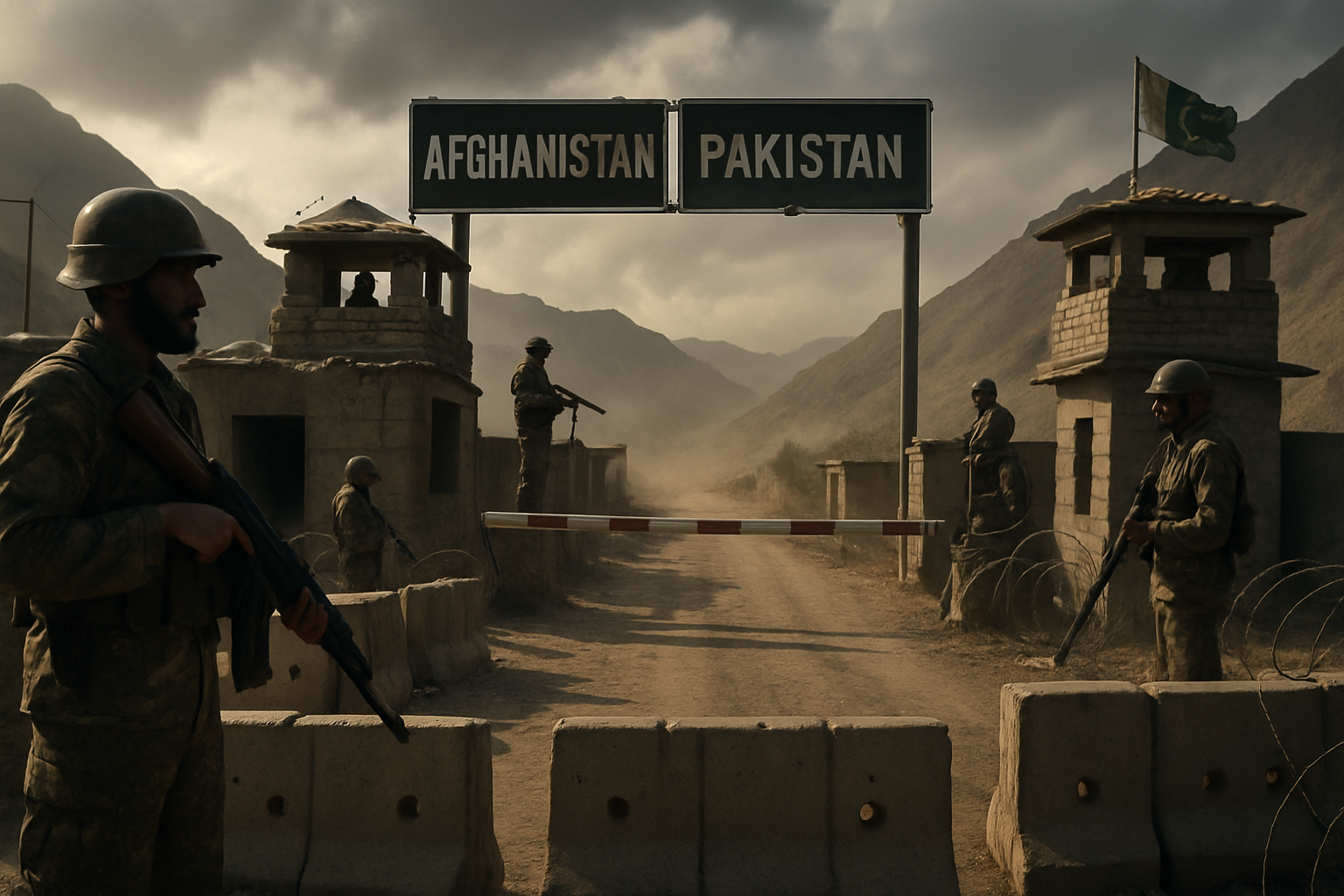
Military confrontations between Afghanistan's Taliban government and Pakistan have reached unprecedented levels, with Afghan authorities claiming to have shot down a Pakistani military aircraft and captured its pilot in Nangarhar province, marking the most serious escalation in cross-border tensions since the Taliban's return to power in August 2021.
The crisis has rapidly evolved from diplomatic protests to active military engagement, with both sides conducting airstrikes across the disputed 2,640-kilometer Durand Line border. Afghan forces claim successful strikes against Pakistani military installations in Miranshah and Spinwam, while Pakistan has launched coordinated operations targeting what it describes as terrorist camps harboring militants.
Aircraft Incident Marks New Escalation
According to Sayed Tayyeb Hammad, spokesman for the Nangarhar Police Command, Afghan forces successfully shot down a Pakistani fighter jet in the province's 6th district near Jalalabad. The pilot reportedly survived the incident and was taken into custody, though Pakistani authorities have denied these claims.
The incident represents a significant escalation beyond previous ground clashes and cross-border artillery exchanges that have characterized the deteriorating relationship between the neighboring nations since February 2026.
Taliban Retaliatory Strikes
Afghanistan's Ministry of Defense announced that Taliban forces conducted precision airstrikes against Pakistani military facilities around midnight, targeting installations in Miranshah and Spinwam. The Taliban described these operations as "successful" responses to Pakistani air raids.
"The Taliban described the strikes as 'successful' and said they were carried out around midnight in response to Pakistani air raids."
— Taliban Ministry of Defense Statement
The strikes reportedly resulted in significant damage to Pakistani military infrastructure, though independent verification of casualty figures remains difficult due to the remote nature of the border regions and restricted media access.
International Mediation Efforts
Despite the military escalation, Taliban Foreign Minister Amir Khan Muttaqi has held separate phone calls with senior officials from Qatar and Saudi Arabia, focusing on the recent tensions. These diplomatic contacts suggest both regional powers are attempting to mediate the crisis before it spirals into broader regional conflict.
During conversations with Qatar's Minister of State for Foreign Affairs, Mohammed bin Abdulaziz Al-Khulaifi, and Saudi officials, Muttaqi described Afghanistan's recent security actions as defensive measures aimed at protecting national sovereignty.
Pakistan has categorically rejected Taliban calls for dialogue. According to Pakistan's Prime Minister's Press Secretary Musharraf Zaidi, there will be no negotiations while cross-border terrorism continues from Afghan territory.
Economic and Humanitarian Impact
The deteriorating security situation has devastated bilateral trade relations, with Pakistan's exports to Afghanistan collapsing by 59% in the current fiscal year. Pakistani exports dropped from over $550 million to just $228 million in the first seven months, severely affecting border communities dependent on cross-border commerce.
This economic disruption compounds Afghanistan's existing humanitarian crisis, where 88% of female-headed households are unable to meet minimum living requirements according to United Nations data. The World Health Organization has delivered emergency medical oxygen to 23 hospitals amid the broader healthcare system challenges.
Border Closure Consequences
Traditional trade routes through Chaman-Spin Boldak and Torkham crossing points face repeated closures, disrupting the livelihoods of thousands of families who depend on cross-border commerce. The restrictions have particularly impacted Afghan refugees and migrant workers in Pakistan, with reports of intensified arrests despite valid documentation.
Historical Context and Durand Line Disputes
The current crisis stems from long-standing disputes over the Durand Line, the colonial-era border established by the British in 1893. No Afghan government has ever formally recognized this boundary, viewing it as an artificial division of Pashtun tribal territories.
The porous mountainous terrain along this 2,640-kilometer frontier has historically provided sanctuary for various militant groups, complicating bilateral relations. Pakistan maintains that the Tehreek-e-Taliban Pakistan (TTP) operates "with impunity from Afghan soil," despite Taliban assurances that they prevent the use of Afghan territory for attacks on neighboring countries.
Recent Escalation Timeline
The current crisis began escalating in February 2026 following a series of cross-border incidents:
- February 16: TTP attack in Pakistan's Bajaur district killed 11 Pakistani soldiers using a vehicle-borne improvised explosive device
- February 22: Pakistan conducted airstrikes on seven alleged terrorist camps in Afghanistan's Nangarhar and Paktika provinces
- February 27: Pakistani Defense Minister Khawaja Asif declared "open war" against the Taliban government
- February 28: Taliban claims of downing Pakistani aircraft and capturing pilot
International Response
The escalating tensions have prompted concern from regional and global powers. Iran has offered mediation services, warning that the conflict could destabilize the broader region. The United States is closely monitoring the situation, while China has expressed concerns about the presence of various terrorist groups in Afghanistan.
The European Union and United Nations have called for immediate de-escalation and a return to diplomatic dialogue. The crisis threatens to undermine broader international efforts to engage constructively with Afghanistan while addressing legitimate counter-terrorism concerns.
Security Implications
Military analysts note that the conflict represents a critical test of the Taliban's governance capabilities versus Pakistan's resolve to use military action for border security. The outcome could influence future approaches to managing territorial sovereignty and transnational terrorism challenges in the 21st century.
Pakistan has acknowledged its diminished regional influence compared to wealthier powers like Turkey, the UAE, Qatar, Saudi Arabia, and China, potentially increasing its reliance on military solutions rather than diplomatic leverage.
Looking Forward
The success or failure of current mediation efforts will likely determine whether the crisis can be contained through diplomatic means or will escalate into sustained military confrontation. The international community faces pressure to develop effective conflict prevention mechanisms before the situation deteriorates further.
The crisis occurs against the backdrop of Afghanistan's worst humanitarian emergency in 25 years, with millions dependent on international aid. Continued military escalation threatens to further complicate humanitarian access and regional stability.
As both sides maintain their positions - Pakistan demanding concrete action against militant groups and Afghanistan asserting its territorial sovereignty - the coming days will be crucial in determining whether diplomatic engagement can prevent a broader regional conflict with potentially devastating consequences for both nations and the wider South Asian region.