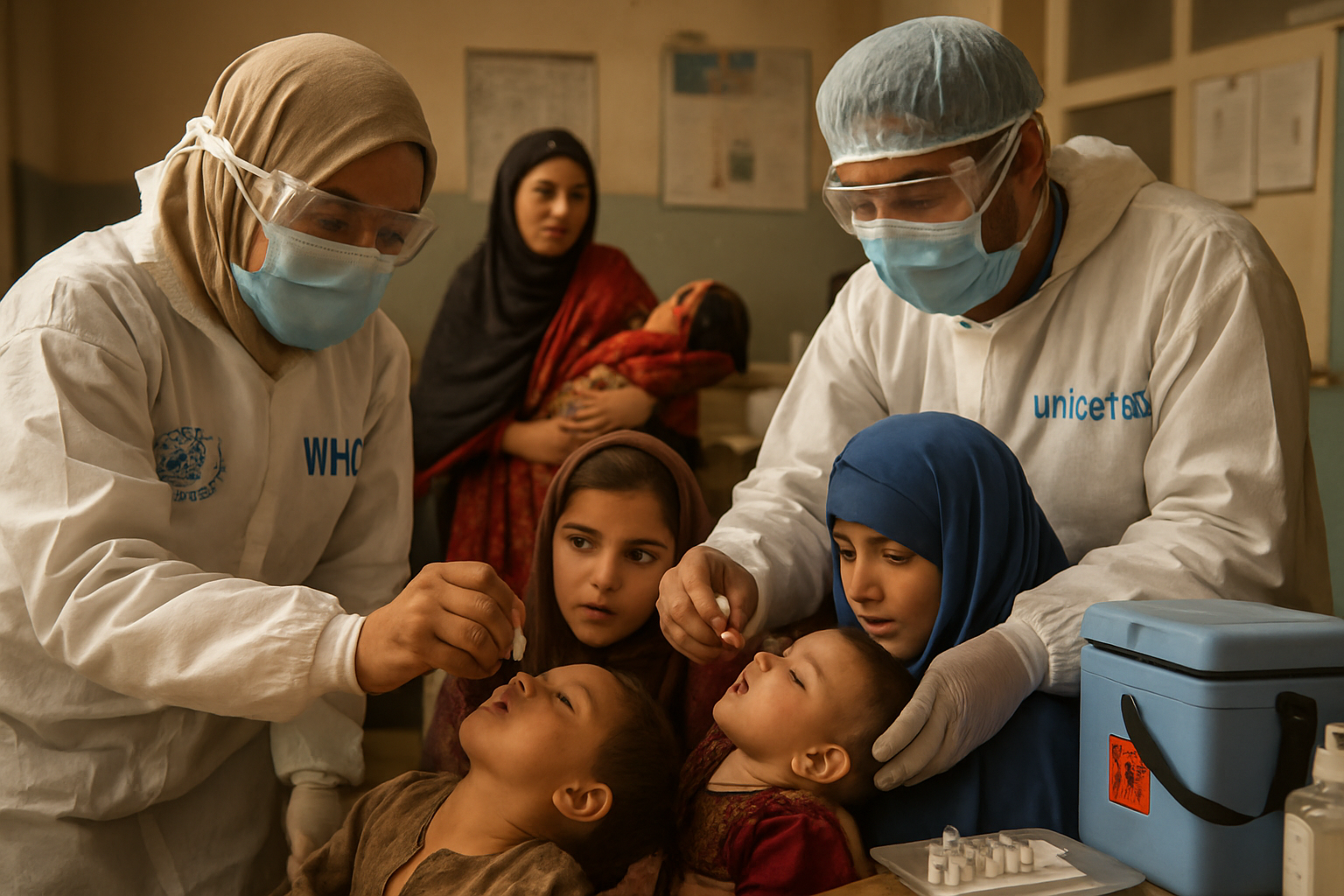
Afghanistan's Ministry of Public Health launched the country's first nationwide polio vaccination campaign of 2026 on Sunday, targeting approximately 12.6 million children under the age of five, even as the nation grapples with escalating security challenges that have devastated civilian communities and strained the healthcare system.
The three-day campaign represents a crucial step toward preventing poliovirus spread and strengthening child health nationwide, according to ministry officials. However, the initiative unfolds against a backdrop of severe security incidents, including a deadly attack in Herat province that killed 11 civilians and wounded 11 others, highlighting the complex challenges facing Afghanistan's public health efforts.
Ambitious Vaccination Goals Despite Security Constraints
Minister of Public Health Noor Jalal Jalali emphasized the ministry's commitment to polio eradication during the campaign launch, stating that the government, in cooperation with international partners, remains dedicated to preventing poliovirus spread and working toward its complete elimination in Afghanistan.
The campaign has been temporarily postponed in Daikundi and Bamiyan provinces due to cold weather conditions, while implementation in Ghor province has been delayed by one week. These adjustments reflect the practical challenges of conducting nationwide health initiatives in Afghanistan's diverse geographical and climatic conditions.
"This campaign is a key step toward preventing the spread of the poliovirus and strengthening child health nationwide," Jalali said, calling on religious scholars and community leaders to support the vaccination effort.
— Noor Jalal Jalali, Minister of Public Health
Security Crisis Compounds Healthcare Challenges
The vaccination campaign coincides with a devastating security incident in western Afghanistan that has shocked the international community. Unidentified gunmen opened fire on families gathered for a picnic near a Shia shrine in Deh Mehri village, Injil district of Herat province, on Friday afternoon.
The attack resulted in at least 11 deaths and 11 injuries, including women and children, according to confirmed reports. The United Nations Assistance Mission in Afghanistan (UNAMA) expressed condolences to the victims and their families, describing the incident as a "terrible crime."
UN Officer-in-charge of Afghanistan Georgette Gagnon called on authorities to conduct a thorough investigation and ensure the protection of all communities across the country. The timing of such violence underscores the persistent security threats that complicate essential public health initiatives.
Historical Context of Afghanistan's Healthcare Crisis
Afghanistan's healthcare system faces unprecedented challenges that extend far beyond the immediate security concerns. According to recent assessments, the World Health Organization confirms that emergency medical oxygen is available at only 23 hospitals (12 in Kabul and 11 in provinces), while hundreds of health centers have closed due to funding cuts and security concerns.
The systematic exclusion of women from the workforce has created an acute shortage of female medical professionals, particularly critical in a cultural context where religious and social norms often require female healthcare providers to treat women patients. This workforce crisis has severely hampered healthcare delivery to vulnerable populations.
The International Federation of Red Cross and Red Crescent Societies (IFRC) has delivered services to more than 2 million people through 128 healthcare centers in 2025, but continues to face significant operational challenges due to the restriction of female staff.
Afghanistan Among Last Two Countries with Wild Poliovirus
Afghanistan remains one of only two countries in the world where wild poliovirus continues to circulate, making the current vaccination campaign particularly crucial for global eradication efforts. The persistence of polio in Afghanistan represents both a national health emergency and an international concern, as the virus can spread across borders.
Previous vaccination campaigns have faced significant obstacles, including security restrictions, difficult terrain, and community resistance in some areas. The current campaign's success will depend largely on the cooperation of local communities, religious leaders, and the maintenance of adequate security for healthcare workers.
Broader Humanitarian Emergency
The polio vaccination campaign takes place within the context of what the United Nations describes as the worst humanitarian crisis in 25 years. Afghanistan ranks as the world's unhappiest country for the third consecutive year, with a record hunger crisis affecting millions.
An estimated 4 million children are at risk of malnutrition at the highest level in the country's history. The World Food Programme has been forced to turn away three out of four hungry children due to budget shortfalls, while 88% of female-headed households cannot meet minimum living requirements compared to 75% of the general population.
Two-thirds of the population faces food insecurity, creating a compound humanitarian emergency that affects children's health and their ability to benefit from vaccination programs. Malnutrition weakens immune systems, making children more vulnerable to preventable diseases like polio.
International Support and Cooperation
Despite political complexities and international isolation, the polio vaccination campaign has received support from international partners, including the World Health Organization and UNICEF. This cooperation demonstrates the global commitment to disease eradication that transcends political boundaries.
The campaign represents one of the few areas where international humanitarian organizations can still operate effectively in Afghanistan, providing essential services to children regardless of political circumstances. However, funding constraints and access limitations continue to pose significant challenges.
Recent international assistance has included medical aid deliveries from various countries, including India's provision of 2.5 tons of emergency medical supplies to Kabul in March 2026, demonstrating alternative models of humanitarian engagement that prioritize civilian welfare.
Regional Security Implications
The security challenges facing Afghanistan extend beyond isolated incidents like the Herat attack. The country has experienced significant border tensions with Pakistan since February 2026, resulting in hundreds of civilian casualties and the displacement of thousands of families.
These regional tensions have severely impacted bilateral trade, with Pakistan-Afghanistan commerce collapsing by 59% over seven months, affecting border communities and further straining Afghanistan's economy. Traditional crossing points like Chaman-Spin Boldak and Torkham have faced repeated closures.
The deteriorating security environment creates additional challenges for health workers conducting vaccination campaigns, particularly in border regions where military confrontations have occurred. Access to remote communities becomes even more difficult when security forces are deployed for defense rather than civilian protection.
Climate and Environmental Challenges
Afghanistan's vaccination campaign occurs during a period of unprecedented environmental stress. March 2026 marked the 23rd consecutive month of global temperatures exceeding 1.5°C above pre-industrial levels, creating the longest sustained warming period on record.
Climate-related disasters have compounded Afghanistan's humanitarian crisis, with recent weeks seeing devastating convergences of extreme weather including heavy rains, flash floods, landslides, and earthquakes that have resulted in hundreds of casualties and further displaced vulnerable populations.
Traditional construction methods prove inadequate against intensified precipitation and extreme weather events, while Afghanistan's mountainous terrain creates particular vulnerabilities to flash flooding and landslides that can disrupt vaccination campaigns and emergency medical responses.
Innovation in Crisis Response
Despite overwhelming challenges, Afghanistan's healthcare workers have demonstrated remarkable resilience in maintaining essential services during multiple concurrent crises. The continuation of vaccination campaigns amid natural disasters, conflict, and economic collapse provides important lessons for maintaining critical public health functions under extreme conditions.
The current polio campaign incorporates lessons learned from previous initiatives, including enhanced security protocols for healthcare workers, community engagement strategies that work within cultural constraints, and flexible implementation schedules that can adapt to local conditions.
Mobile vaccination teams have been equipped to operate in challenging terrain and security environments, while coordination with local religious and community leaders helps ensure broader acceptance and participation in vaccination efforts.
Future Implications for Global Health
The success or failure of Afghanistan's polio vaccination campaign carries implications far beyond the country's borders. As one of the last two countries with circulating wild poliovirus, Afghanistan's progress is crucial for global eradication efforts that have been ongoing for decades.
The campaign also serves as a critical test of the international community's ability to maintain essential health services in complex emergencies characterized by political isolation, economic collapse, and security challenges. The lessons learned may prove invaluable for future humanitarian responses in similarly challenging environments.
Moreover, the campaign occurs during what health experts describe as a critical climate action decade, when traditional response frameworks designed for sequential emergencies prove inadequate for simultaneous crisis types. Success in Afghanistan could provide templates for maintaining essential services during the compound emergencies expected to become more routine in the 2030s.
Looking Ahead
As Afghanistan begins this critical vaccination campaign, the international community faces a fundamental challenge in balancing humanitarian imperatives with political considerations. The need to protect children from preventable diseases transcends political boundaries, yet the practical implementation of health programs requires sustained cooperation and security.
The coming days will test whether Afghanistan's healthcare system, supported by international partners, can successfully reach 12.6 million children despite the significant obstacles. The campaign's success will depend on the dedication of healthcare workers, the cooperation of communities, and the maintenance of security conditions that allow medical teams to operate safely.
For the children of Afghanistan, this vaccination campaign represents hope for protection against a devastating disease. For the global community, it represents a crucial step toward finally eradicating polio worldwide. The convergence of these aspirations amid Afghanistan's complex challenges makes this campaign one of the most significant public health initiatives of 2026.