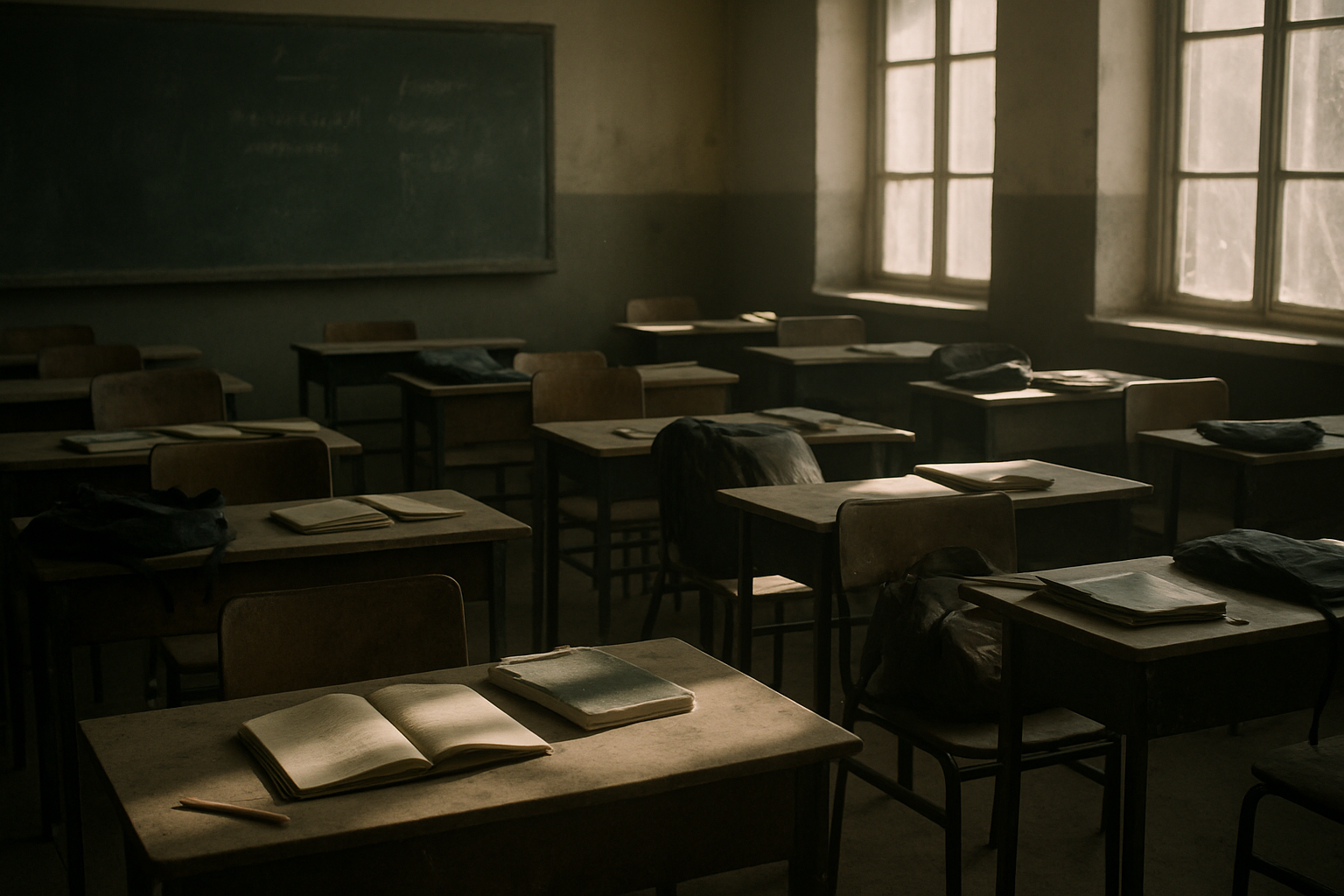
Afghanistan opened its new academic year on Thursday, March 26, 2026, with girls above grade six once again barred from returning to classrooms, marking the fifth consecutive year that the Taliban has denied secondary education to female students since returning to power in August 2021.
The Taliban's Education Ministry announced that the 1405 academic year officially began in Kabul with senior officials attending a formal ceremony, while schools in colder provinces also resumed classes. However, the systematic exclusion of girls from secondary and higher education remains unchanged, creating what international experts describe as the most severe rollback of women's educational rights in modern history.
International Outcry Intensifies
The start of the school year prompted renewed international condemnation and calls for immediate action. Tajudeen Oyewale, a UNICEF representative in Afghanistan, wrote on social media that "every girl in the country has the right to go to school," emphasizing that "when girls are educated, communities grow stronger and the future becomes brighter for everyone."
Former President Hamid Karzai issued a stark warning that continued restrictions on girls' education and women's employment could "seriously damage Afghanistan's stability and future progress." In a message marking the start of the new school year, Karzai congratulated students and described the ringing of the school bell as "a symbol of fresh hope for the country's future," while calling education for all Afghan children "a basic pillar" of national development.
"Education for all Afghan children, both girls and boys, is a basic pillar of development and progress. The continuation of restrictions undermines our society's potential and threatens long-term stability."
— Hamid Karzai, Former President of Afghanistan
Five Years of Systematic Exclusion
Since the Taliban's return to power in August 2021, the group has implemented increasingly restrictive policies that have systematically excluded women and girls from public life. The education ban represents just one component of what international observers have termed a "gender apartheid" system that has relegated Afghanistan to dead last—181st out of 181 countries—in the Georgetown Institute for Women, Peace and Security Index.
The scale of the educational crisis is staggering. According to UN assessments, the Taliban's restrictions affect approximately half of Afghanistan's potential workforce, with 88% of female-headed households unable to meet minimum living requirements compared to 75% of the general population. This systematic exclusion has created structural economic damage that affects not just women and girls, but the entire Afghan society.
The World Food Programme provided school meals to 880,000 children in 2025, but girls excluded from secondary education represent an unprecedented educational emergency that has created what experts describe as a "lost generation" of Afghan women.
Healthcare and Humanitarian Consequences
The education ban has created cascading effects throughout Afghan society, particularly in the healthcare sector. UN Special Rapporteur Richard Bennett has warned of an acute shortage of female medical professionals, a critical issue in a society where cultural and religious norms require female patients to be treated by female healthcare providers.
The World Health Organization has been forced to deliver emergency medical oxygen to only 23 hospitals across the country, while hundreds of health centers have closed due to international aid cuts. This healthcare infrastructure collapse occurs amid what the WHO describes as the worst humanitarian crisis in 25 years.
The International Federation of Red Cross and Red Crescent Societies (IFRC) served more than 2 million people in 2025 while supporting 128 healthcare centers, demonstrating the ongoing international effort to address civilian needs despite the challenging political environment.
Global Response and Diplomatic Pressure
The persistence of the education ban has prompted increasingly coordinated international pressure. UN Special Rapporteur Richard Bennett is expected to present comprehensive documentation to the 61st UN Human Rights Council session in Geneva, providing recommendations for international action to protect the fundamental rights of systematically excluded Afghan women and girls.
The UN Security Council's recent decision to approve only a three-month extension of the UN Assistance Mission in Afghanistan (UNAMA) mandate, rather than the usual annual renewal, reflects growing international frustration with the lack of progress on human rights issues. This shorter extension signals that the international community is conducting a comprehensive review of its engagement with the Taliban government.
International legal experts argue that the Taliban's restrictions violate fundamental human rights and potentially constitute crimes under international law. The systematic nature of the exclusions also contradicts authentic Islamic principles, according to numerous global Islamic scholars who have spoken out against the policies.
Economic and Social Impact
Beyond the immediate educational consequences, the ban has created profound economic disruption. The systematic exclusion of women from education and employment has removed approximately half of Afghanistan's potential workforce from economic participation, creating what economists describe as structural damage that affects the entire population.
Trade relationships have also suffered significantly. Pakistan-Afghanistan bilateral trade has collapsed by 59%, with exports dropping from $550 million to $228 million over seven months, affecting border communities and essential goods flow. Traditional trade routes like Chaman-Spin Boldak and Torkham have been repeatedly closed, compounding the economic isolation.
The Taliban's Taliban Order No. 12, which banned women from working in civil society organizations, has further worsened humanitarian access at a time when international assistance is desperately needed. UN Women condemned this as a "serious violation of human rights" that deepens gender-based violence and worsens humanitarian conditions.
Regional and Security Implications
The education crisis occurs amid broader regional security challenges. Despite Taliban claims of having "defeated terrorism," Chinese warnings at the UN about the continued presence of ISIS-K, al-Qaeda, and ETIM contradict the group's security assertions. This has complicated both humanitarian aid delivery and diplomatic engagement efforts.
Recent cross-border tensions have resulted in 185 civilian casualties between February 26 and March 5, 2026, further destabilizing an already fragile situation. UN experts have called for urgent ceasefires as violence has forced the displacement of 16,370 families across 10 provinces.
Looking Ahead: A Critical Juncture
As Afghanistan enters its fifth year without girls in secondary schools, the international community faces complex challenges in balancing humanitarian needs with political pressure for policy changes. The upcoming UN Human Rights Council session in Geneva will be crucial in determining the trajectory of international engagement and the potential for creating space that could allow Afghan women and girls to reclaim their fundamental right to education.
The crisis in Afghanistan represents more than a national tragedy—it serves as a global test of the international community's commitment to gender equality and human rights in the 21st century. The systematic exclusion of half the population from education and public life has created what experts describe as the most severe rollback of women's rights in modern history, with implications that extend far beyond Afghanistan's borders.
As UNICEF's representative emphasized, the path forward requires sustained international attention and innovative approaches that can create opportunities for Afghan women and girls to access their fundamental rights while addressing the immediate humanitarian needs of millions of vulnerable people facing the worst crisis in 25 years.
The stakes could not be higher. The coming months will be crucial in determining whether sustained international pressure and humanitarian engagement can create the space necessary for Afghan women and girls to reclaim their fundamental rights to education, work, and full participation in society—or whether the systematic exclusion will continue to deepen, affecting generations of Afghan women yet to come.