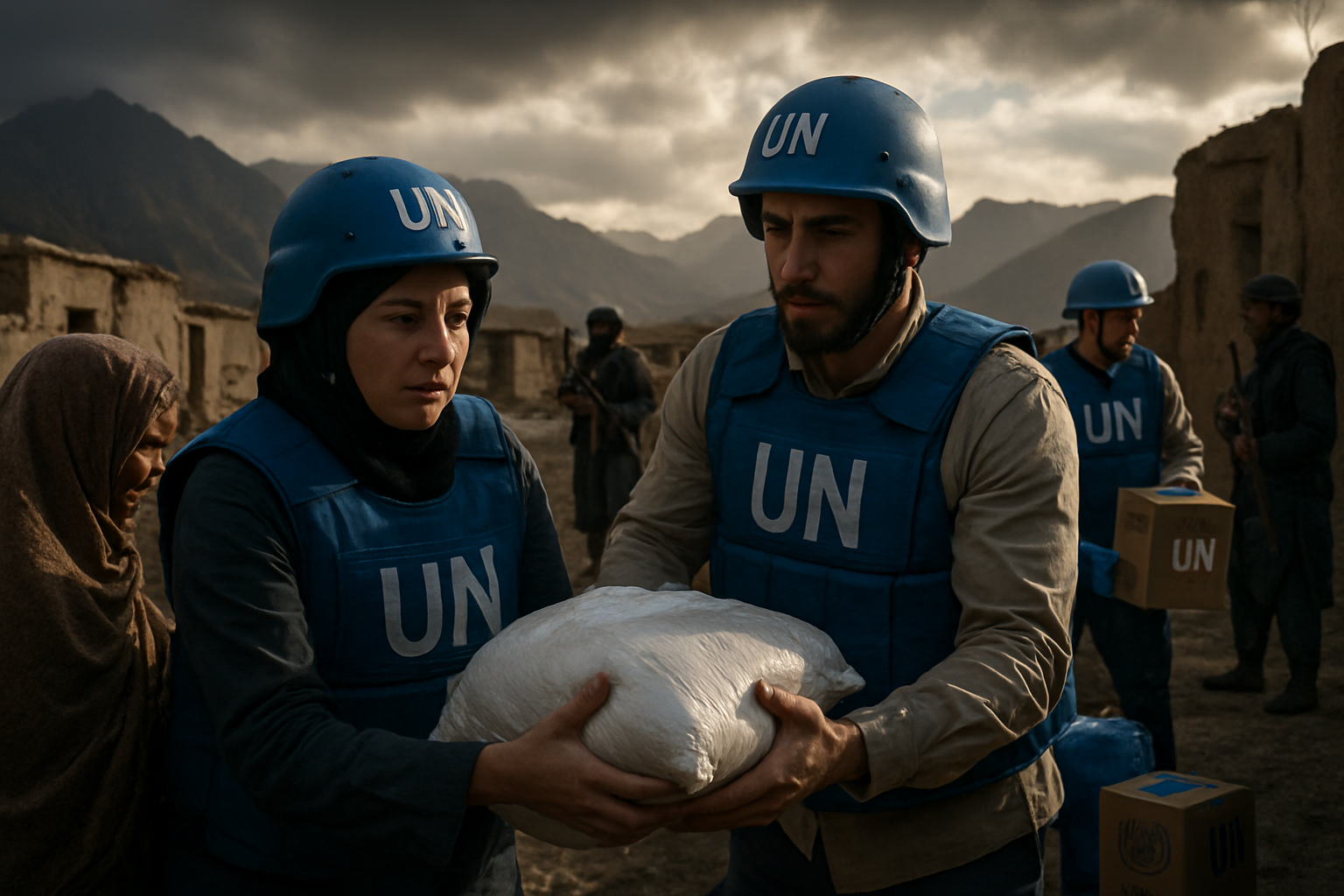
Afghanistan faces an unprecedented convergence of security challenges and humanitarian disruptions as UN agencies report a significant increase in incidents targeting aid operations, while Shiite community leaders in Kabul warn of escalating targeted crimes in the capital's western districts.
The United Nations Office for the Coordination of Humanitarian Affairs (OCHA) recorded 86 security incidents and aid disruptions across Afghanistan in March 2026, resulting in the death of one aid worker and severely hampering relief operations in a country already grappling with what the UN describes as the worst humanitarian crisis in 25 years.
Rising Security Threats in Kabul
Shiite community leaders in Kabul have raised urgent alarms over deteriorating security conditions in the city's western districts, where targeted crimes against minority populations have surged dramatically. The High Commission representing the Shiite community has called for immediate intervention to protect civilians amid what they describe as systematic harassment and violence.
Community leaders have organized neighborhood patrols and established emergency response networks as official security measures have proven inadequate. The escalation in targeted attacks has created a climate of fear among vulnerable populations, particularly affecting women and children who face additional restrictions under Taliban governance.
Local sources report that the nature of these incidents suggests deliberate targeting rather than random criminal activity, with attackers demonstrating detailed knowledge of community routines and movements. This pattern has prompted calls for enhanced security measures specifically designed to protect minority communities.
Humanitarian Operations Under Siege
The 86 security incidents documented by OCHA in March represent a substantial increase from previous months, highlighting the dangerous operating environment facing humanitarian workers. These disruptions have forced aid organizations to suspend operations in multiple provinces, leaving millions without access to essential services.
Afghanistan currently ranks among the world's most severe hunger crises, with the World Food Programme reporting that 4 million children face acute malnutrition risk. The deteriorating security situation has forced WFP to turn away three out of four hungry and malnourished children due to access restrictions and budget shortfalls – a stark indication of the humanitarian system's failure to reach those most in need.
The death of an aid worker in March underscores the extreme risks facing international staff operating in Afghanistan. Organizations have been forced to implement increasingly restrictive security protocols, limiting their ability to deliver life-saving assistance to vulnerable populations across the country.
Healthcare System on the Brink
The World Health Organization continues to deliver emergency medical oxygen to only 23 hospitals across Afghanistan – 12 in Kabul and 11 in provincial areas – as hundreds of health centers remain closed due to funding cuts and security concerns. This represents a catastrophic reduction in healthcare capacity during what UN officials describe as the worst humanitarian crisis in a quarter-century.
The systematic exclusion of women from the healthcare workforce has created acute shortages of female medical professionals, particularly critical given cultural and religious norms requiring female patients to be treated by female providers. This restriction has effectively cut off healthcare access for millions of women and girls across the country.
UN Special Rapporteur Richard Bennett has repeatedly warned that Afghanistan's health system faces unprecedented challenges, with maternal and child health services bearing the brunt of current restrictions and funding shortages. The convergence of security threats with existing healthcare limitations has created what experts describe as a perfect storm for public health catastrophe.
Regional Security Spillover
The deteriorating security situation in Afghanistan continues to have significant regional implications, with neighboring countries reporting increased cross-border incidents and refugee flows. Pakistan and Afghanistan remain locked in a border crisis that has persisted for months, with bilateral trade collapsing by 59% and traditional crossing points repeatedly closed.
Chinese officials have warned the UN Security Council about the continued presence of ISIS-K, al-Qaeda, and the East Turkestan Islamic Movement (ETIM) operating from Afghan territory, contradicting Taliban claims of having defeated terrorism within the country's borders. These warnings highlight the international community's concerns about Afghanistan becoming a safe haven for extremist groups.
The Collective Security Treaty Organization (CSTO) has maintained its warnings about potential security threats emanating from Afghanistan, emphasizing the continued operational capability of multiple militant organizations despite Taliban assurances of territorial control.
Economic and Social Collapse
Afghanistan's economic situation continues to deteriorate, with 88% of female-headed households unable to meet minimum living requirements compared to 75% of the general population. The systematic exclusion of women from employment has removed approximately half of the country's potential workforce, creating structural economic damage that affects the entire population.
International aid cuts and banking restrictions have forced humanitarian organizations to make impossible choices about which populations to serve. The International Federation of Red Cross and Red Crescent Societies (IFRC) served over 2 million people in 2025 through 128 healthcare centers, but female staff exclusion severely hampers their ability to reach vulnerable populations.
The convergence of economic collapse with security deterioration has created what aid officials describe as a compound crisis, where traditional humanitarian responses prove inadequate to address the scale and complexity of needs across Afghanistan.
International Response Challenges
The UN Security Council's decision to approve only a three-month extension for the UN Assistance Mission in Afghanistan (UNAMA), rather than the usual annual renewal, reflects growing international frustration with the lack of progress on human rights and security issues. This shortened mandate signals decreased confidence in the current approach to Afghanistan engagement.
Multiple countries continue to provide humanitarian assistance despite political constraints. The UAE, Qatar, and Turkey have maintained engagement channels, while China has emerged as a significant mediator in regional disputes. However, these efforts have yet to produce meaningful improvements in either security or humanitarian access.
The death of aid workers and continued targeting of humanitarian operations represent a fundamental challenge to the international community's ability to maintain assistance programs. Organizations face the impossible choice between accepting unacceptable risks to staff or abandoning millions of vulnerable people who depend on international aid for survival.
Looking Ahead: Urgent Need for Solutions
The convergence of rising security incidents with escalating humanitarian needs demands innovative approaches to crisis response in Afghanistan. Traditional frameworks for humanitarian assistance and security cooperation have proven inadequate to address the complex challenges facing the country.
Community leaders, aid officials, and international observers agree that sustainable solutions require addressing both immediate security threats and underlying governance issues. The targeting of minority communities in Kabul and attacks on humanitarian workers represent symptoms of broader systemic failures that cannot be resolved through security measures alone.
As Afghanistan approaches the five-year anniversary of Taliban rule, the international community faces critical decisions about engagement strategies that balance principled positions on human rights with pragmatic needs to prevent further humanitarian catastrophe. The current trajectory suggests that without significant changes in approach, both security and humanitarian conditions will continue to deteriorate, with implications extending far beyond Afghanistan's borders.