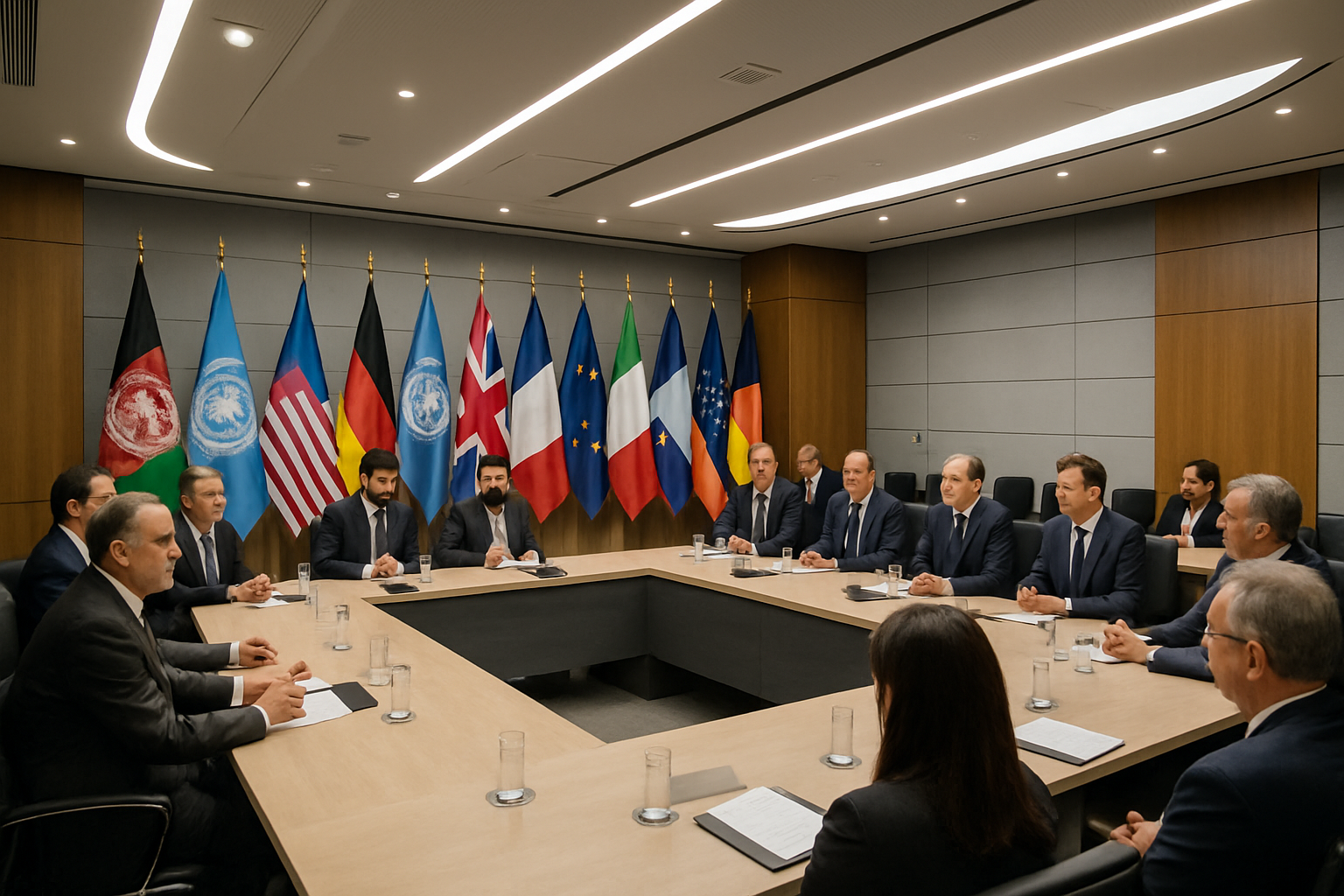
Afghanistan's Taliban-led government is actively pursuing new transit routes and diplomatic agreements with regional partners while continuing to face significant security challenges, including ongoing border tensions with Pakistan and international concerns about militant group activities within its territory.
New Transit Route Negotiations
Afghan officials are engaged in high-level discussions regarding a new transit route with Tatarstan and a memorandum of understanding with Uzbekistan, according to recent diplomatic reports. These initiatives represent part of Afghanistan's broader strategy to position itself as a crucial transit hub connecting Central Asia to global markets.
The diplomatic push builds upon Afghanistan's existing partnerships, particularly the significant agreements signed with Uzbekistan in February 2026. These included 25 trade agreements worth $300 million, which were later expanded in March with additional deals valued at $514.8 million. The cumulative bilateral cooperation now exceeds $814 million across multiple frameworks established throughout 2026.
Regional Diplomatic Progress
Afghanistan's Foreign Ministry has been actively engaging with regional partners to expand economic cooperation. Recent developments include the Afghanistan-Central Asia Consultative Dialogue launched in April 2026, which brought together representatives from five Central Asian nations with the ambitious goal of reaching $10 billion in trade within 3-4 years, up from current levels of $2.7 billion.
The initiative, spearheaded by Afghan Foreign Minister Amir Khan Muttaqi, represents the most comprehensive multilateral engagement since the Taliban's return to power in August 2021. The focus on pragmatic economic cooperation over political ideology demonstrates Afghanistan's strategic approach to regional integration.

Persistent Security Challenges
Despite diplomatic progress, Afghanistan continues to face significant security challenges. A recent shooting incident in Herat province resulted in seven people killed and 13 injured when unidentified gunmen on motorcycles opened fire on civilians gathered for recreation near a picnic area in Qabarzon village, Injil district.
Interior Ministry spokesperson Abdul Mateen Qani confirmed that the attack occurred after midday on Friday, with some of the injured reported to be in critical condition. The incident highlights ongoing security concerns in various parts of the country, even as the Taliban government claims to have established stability.
Pakistan-Afghanistan Relations Strain
The security situation has been further complicated by deteriorating relations with Pakistan. Border tensions that began in February 2026 have evolved into what Pakistani Defense Minister Khawaja Asif declared as "open war" against the Taliban government, marking the most serious military confrontation since the Taliban's return to power.
The crisis began with a February 16 attack by the Tehreek-e-Taliban Pakistan (TTP) in Bajaur that killed 11 Pakistani soldiers, followed by Pakistani airstrikes on alleged terrorist camps in Afghanistan's Nangarhar and Paktika provinces. The conflict has resulted in significant humanitarian consequences, with UN agencies reporting hundreds of civilian casualties and thousands of families displaced across border regions.
"The escalation has led to bilateral trade collapsing by 59% over seven months, with Pakistani exports falling from $550 million to $228 million, severely affecting border communities dependent on cross-border commerce."
— Economic Impact Assessment
International Support and Concerns
The international community has welcomed recent diplomatic engagements between Afghanistan and Pakistan while expressing concerns about the ongoing tensions. Richard Lindsay, the UK's Special Representative for Afghanistan, described recent talks as a positive step forward, emphasizing that "dialogue remains the only way to reduce tensions and achieve sustainable peace."
However, international organizations continue to express concerns about the presence of militant groups within Afghanistan. The Collective Security Treaty Organization (CSTO) has warned about potential security risks emanating from Afghan territory, citing the continued operational capability of groups including ISIS-K, al-Qaeda, and the East Turkestan Islamic Movement (ETIM).
Chinese Mediation Efforts
China has emerged as a key mediator in the regional crisis, with Foreign Minister Wang Yi deploying special envoys for shuttle diplomacy between Kabul and Islamabad. Chinese mediation efforts have included trilateral talks in Urumqi, representing Beijing's direct involvement in managing the crisis, which affects Chinese investments in the China-Pakistan Economic Corridor (CPEC).
Chinese Foreign Ministry spokesperson Mao Ning confirmed that both Afghanistan and Pakistan have committed to exploring diplomatic solutions to reduce border tensions, representing the most significant diplomatic breakthrough since the crisis began.
Economic Development Amid Challenges
Despite security concerns, Afghanistan continues to pursue economic development through infrastructure projects and international partnerships. The Uzbekistan-Afghanistan-Pakistan railway project remains a cornerstone of regional connectivity efforts, enabling landlocked Central Asian nations access to Pakistani ports via the Gwadar/CPEC framework.
Afghanistan has also significantly increased rail freight cooperation with Iran, with a 17-fold increase in goods transport during the 1404 solar year, handling 650,000 tons of goods and 150,000 tons of transit cargo. This positioning as a transit hub represents a crucial element of Afghanistan's economic recovery strategy.
Humanitarian Considerations
The ongoing security challenges and border tensions have created significant humanitarian concerns. The World Health Organization has been forced to deliver emergency oxygen to only 23 hospitals, while hundreds of health centers have closed due to security concerns and funding cuts.
Additionally, an estimated 88% of female-headed households are unable to meet minimum living requirements, highlighting the broader economic and social challenges facing the country. The Taliban's employment restrictions since August 2021 have affected approximately half of the workforce, creating long-term development concerns.
Future Prospects
Afghanistan's path forward appears to involve balancing security challenges with economic development opportunities. The country's strategic location as a potential transit hub between Central Asia and global markets offers significant opportunities, but realizing this potential requires sustained diplomatic engagement and resolution of security concerns.
The success of recent diplomatic initiatives, including the Afghanistan-Central Asia Consultative Dialogue and ongoing negotiations for new transit routes, will largely depend on the country's ability to address international concerns about militant group activities while maintaining regional partnerships.
As the international community continues to grapple with how to engage with Taliban-controlled Afghanistan, the country's focus on pragmatic economic cooperation and regional integration may provide a framework for sustainable development, provided that security challenges can be effectively addressed through continued diplomatic engagement rather than military confrontation.