Afghanistan faces a devastating convergence of security threats and humanitarian catastrophe as the country grapples with its worst crisis in a quarter-century, prompting urgent international intervention and growing regional security concerns.
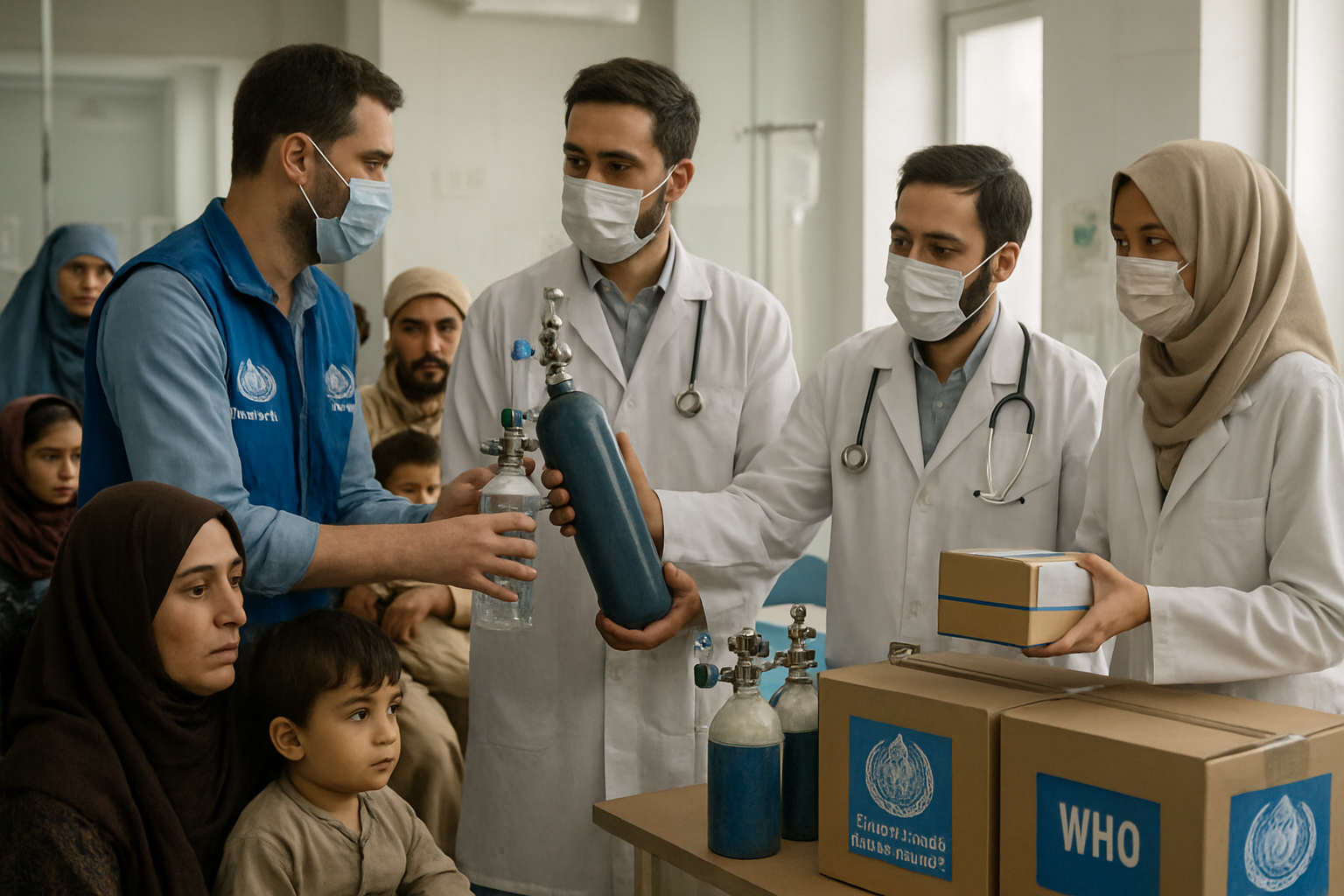
The World Health Organization announced on Thursday that it has successfully delivered critical medical oxygen supplies to 23 hospitals across Afghanistan, providing a lifeline for healthcare facilities serving millions in desperate need. The shipment, which reached 12 hospitals in Kabul and facilities across 11 other provinces, represents a crucial intervention as the country battles what the New York Times describes as its most severe humanitarian crisis in 25 years.
Humanitarian Crisis Reaches Breaking Point
The humanitarian emergency has intensified dramatically following widespread international aid cuts, leaving millions of children exposed to hunger and life-threatening conditions. The sudden halt of U.S. assistance has forced the closure of hundreds of health centers nationwide, creating a healthcare vacuum that puts women and children at severe risk.
WHO's oxygen supply initiative aims to improve patient safety and treatment services at a time when Afghanistan's healthcare system faces unprecedented strain. The organization emphasized that these supplies are essential for maintaining basic medical care as winter conditions exacerbate the humanitarian emergency.
"The shipment is vital for ensuring continuity of medical services during this critical period."
— World Health Organization Statement
Regional Security Concerns Intensify
While humanitarian needs dominate international attention, security threats continue to pose significant challenges for Afghanistan and the broader region. Pakistan's Prime Minister Shehbaz Sharif and Kazakhstan's President Kassym-Jomart Tokayev held high-level discussions this week specifically addressing Afghanistan-related security concerns, underlining the regional dimensions of the crisis.
According to Pakistan's foreign ministry, both leaders stressed that regional stability and economic cooperation are essential for sustainable development and connectivity. The discussions reflect growing concern among Afghanistan's neighbors about the spillover effects of the country's ongoing challenges.
China has taken its concerns to the highest international level, warning the United Nations Security Council that the terrorist threat in Afghanistan remains severe and requires urgent international attention. Speaking at the Council's meeting on threats to international peace and security, Chinese envoy Sun Lei cited the continued presence and activities of several extremist groups on Afghan soil.
"Organizations such as ISIL, al-Qaeda and the East Turkestan Islamic Movement (ETIM) are still operating in Afghanistan and pose persistent threats to the country and the wider region."
— Sun Lei, Chinese Envoy to UN Security Council
Terror Threats Demonstrate Continued Dangers
The security warnings are not merely theoretical. Sun Lei referenced last month's deadly explosion at a Chinese restaurant in Afghanistan, which killed seven people and was claimed by ISIL-K, as a stark reminder of the group's ongoing operational capability. This incident underscores the persistent threat posed by terrorist organizations that continue to operate within Afghanistan's borders.
The Chinese envoy urged Afghan authorities to "attach great importance" to counterterrorism efforts and to take concrete measures to prevent the country from once again becoming a hub for extremist activities. This plea reflects broader international concerns about Afghanistan's potential as a staging ground for terrorist operations that could impact regional and global security.
International Implications Extend Beyond Borders
The crisis has also taken on international dimensions through individual cases that highlight the complex legacy of Afghanistan's recent history. The U.S. Justice Department announced its intention to seek the death penalty for Rahmanullah Lakanwal, an Afghan suspect accused of shooting two National Guard members near the White House in November.
Lakanwal, who previously worked with U.S. agencies in Afghanistan before relocating to the United States in 2021, pleaded not guilty to nine charges including first-degree murder. This case illustrates the far-reaching consequences of Afghanistan's upheaval and the challenges faced by individuals caught between their past service and current circumstances.
Prosecutors indicated they are pursuing the death penalty as they work through the complex legal and personal dimensions of a case that reflects broader questions about the aftermath of America's longest war.
The Path Forward
As Afghanistan confronts these dual crises, the international community faces difficult choices about engagement and assistance. The WHO's oxygen delivery program represents the kind of practical humanitarian intervention that can save lives immediately, while regional diplomatic efforts seek to address longer-term security concerns.
The convergence of humanitarian emergency and security threats creates a complex challenge that requires sustained international attention and coordinated responses. Pakistan and Kazakhstan's discussions about regional stability reflect recognition that Afghanistan's problems cannot be contained within its borders.
The Chinese warning to the UN Security Council adds urgency to international efforts, emphasizing that terrorist threats emanating from Afghanistan pose risks not just regionally but globally. As winter deepens and humanitarian needs intensify, the stakes continue to rise for both Afghanistan's population and international security.
The ongoing crisis tests the international community's ability to balance humanitarian imperatives with security concerns, while Afghanistan's neighbors grapple with the regional implications of continued instability in this strategically crucial country at the heart of Central and South Asia.