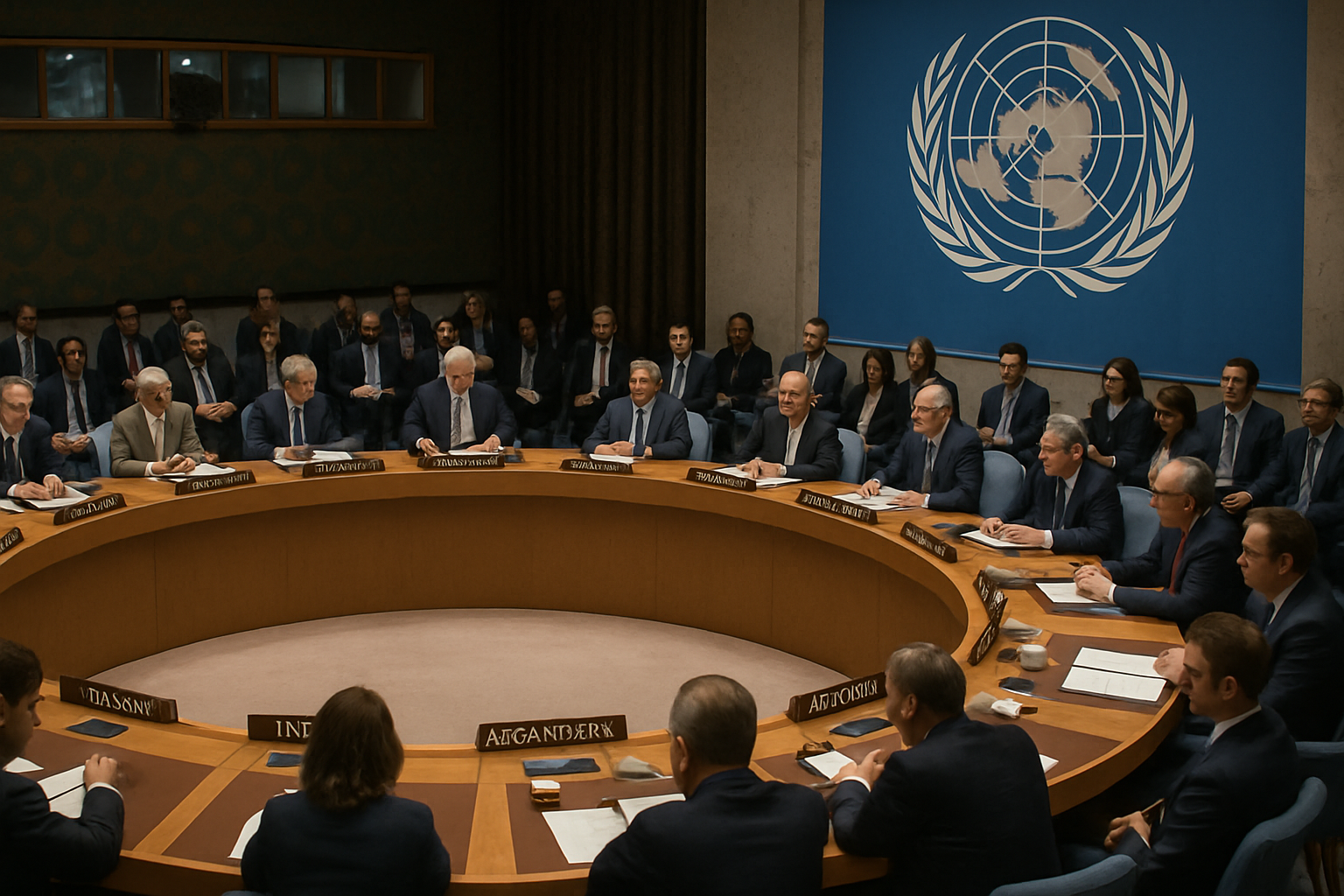
The Taliban government sharply rejected US accusations of engaging in "hostage diplomacy" following heated exchanges at the United Nations Security Council, where Washington renewed its commitment to monitoring Afghanistan through sanctions while the Islamic Emirate called continued punitive measures "illogical" and counterproductive.
At Thursday's UN Security Council session reviewing the 1988 sanctions mandate, US deputy representative Tammy Bruce delivered a stern assessment of Afghanistan's current trajectory under Taliban rule, specifically targeting what she characterized as systematic hostage-taking by the Islamic Emirate of Afghanistan (IEA).
"The Taliban must end all forms of hostage-taking and wrongful detentions," Bruce declared during the formal proceedings. "The UN 1988 sanctions regime and its Monitoring Team remain critical tools for the international community to hold the Taliban accountable, including for these deplorable tactics."
Allegations of Prisoner Exchange Diplomacy
Bruce's most serious allegation centered on what she described as the IEA's pursuit of prisoner exchanges involving high-profile detainees. According to the US representative, Taliban officials have sought the release of an al-Qaeda operative currently held at Guantanamo Bay detention facility in exchange for American citizens detained in Afghanistan.
The accusation represents a significant escalation in diplomatic rhetoric, particularly given the sensitive nature of such negotiations and their implications for broader counterterrorism cooperation. The US maintains that the Monitoring Team's ongoing assessments remain "vital for assessing security and human rights conditions in Afghanistan," providing crucial intelligence on the Islamic Emirate's counterterrorism efforts and its treatment of women and girls.
These claims come amid broader concerns about Afghanistan's role in regional security architecture, particularly following recent terrorist incidents that have heightened international scrutiny of the Taliban's governance capabilities.
Taliban's Firm Rejection and Counter-Narrative
The Islamic Emirate's response came swiftly through Deputy Spokesperson Hamdullah Fitrat, who issued a comprehensive statement Friday dismissing the UN Security Council's decision to extend sanctions oversight for another year. Fitrat's remarks represented not just a rejection of US accusations but a broader critique of what the Taliban government views as failed international policy.
"Sanctions and restrictions have yielded no results in the past and will not benefit anyone in the future. The repeated use of such measures and what he called 'failed experiences' is not logical."
— Hamdullah Fitrat, Deputy Spokesperson, Islamic Emirate
Fitrat's statement reflected a calculated diplomatic strategy, acknowledging support from major powers while critiquing Western approaches. He specifically praised the positions taken by China and Russia during the Security Council deliberations, describing their stances as "worthy of appreciation" and more aligned with Afghanistan's current realities.
The Taliban spokesperson emphasized what he characterized as a fundamental disconnect between current sanctions—imposed during a period of active conflict—and present-day conditions in Afghanistan. "The tangible progress and current realities in Afghanistan are not compatible with sanctions that were imposed during a period of crisis and have continued until now," Fitrat argued.
International Dynamics and Regional Perspectives
The diplomatic exchange occurred against a backdrop of complex international positioning on Afghanistan policy. China's envoy Fu Cong welcomed aspects of the monitoring process while expressing concerns about maintaining regional stability, reflecting Beijing's nuanced approach to Taliban governance.
Historical context from Planet News archives reveals this dispute fits within broader patterns of Afghanistan-US tensions that have persisted since the Taliban's return to power in August 2021. Previous reports document ongoing disagreements over counterterrorism cooperation, with the Taliban maintaining they have successfully eliminated ISIS-Khorasan presence while international intelligence assessments suggest continued terrorist threats.
The Islamic Emirate's current diplomatic strategy appears focused on distinguishing between what it views as legitimate engagement with regional partners versus continued Western isolation policies. Fitrat's emphasis on Afghanistan being "on a path of progress and engagement with various countries" reflects efforts to build alternative diplomatic relationships beyond traditional Western frameworks.
Practical Implications for Regional Security
The "hostage diplomacy" allegations carry significant implications for broader regional security cooperation. Recent Planet News investigations have documented ongoing challenges in Afghanistan-Pakistan border management, where spillover effects from various militant groups continue to create regional instability.
Intelligence assessments referenced in the UN proceedings highlight persistent concerns about terrorist group presence in Afghanistan, despite Taliban claims of successful counterterrorism operations. The Chinese restaurant bombing that killed seven people, claimed by ISIS-K, serves as a stark reminder of ongoing security challenges that complicate international engagement.
The prisoner exchange allegations, if accurate, would represent a continuation of tactics that have characterized Taliban negotiations since their initial rise to power. However, the Islamic Emirate's consistent denial of such practices reflects their broader effort to present themselves as legitimate governing authorities rather than insurgent negotiators.
Economic Sanctions and Humanitarian Consequences
Beyond the diplomatic rhetoric, the continued sanctions regime has profound humanitarian implications for Afghanistan's 40 million citizens. World Health Organization reports documented in Planet News archives show critical medical supply shortages affecting 23 hospitals across Afghanistan, representing the worst humanitarian crisis in 25 years according to international assessments.
The Islamic Emirate's argument that sanctions represent "failed experiences" resonates with humanitarian organizations that have documented the disproportionate impact of economic restrictions on ordinary Afghans rather than Taliban leadership. This humanitarian dimension adds complexity to international policy formulation, as documented in previous diplomatic initiatives including the Doha Process counter-narcotics meetings.
Fitrat's emphasis on Afghanistan's improving "security and stability" day by day represents an attempt to reshape international perceptions of Taliban governance effectiveness, particularly in areas where they have achieved measurable success such as opium cultivation reduction.
Future Diplomatic Trajectories
The current diplomatic standoff reflects deeper structural challenges in international engagement with the Taliban government. The Islamic Emirate's rejection of "hostage diplomacy" accusations while simultaneously calling for sanctions relief reveals the complex balancing act required for any future diplomatic progress.
Recent precedents from other diplomatic initiatives, including the successful prisoner releases facilitated by countries like Azerbaijan and the UAE, suggest that pragmatic humanitarian cooperation remains possible even amid broader political disagreements. However, the US position on maintaining monitoring mechanisms and sanctions oversight indicates limited immediate prospects for comprehensive policy shifts.
The Taliban's strategic praise for Chinese and Russian positions at the Security Council reflects their broader diplomatic pivot toward non-Western partners, consistent with patterns observed in other recent international engagements. This alignment with major powers that oppose Western sanctions approaches provides the Islamic Emirate with important diplomatic cover for their resistance to continued punitive measures.
As international attention focuses on multiple global crises from Ukraine to the Middle East, Afghanistan's diplomatic status remains in a complex middle ground—neither fully isolated nor formally recognized, but increasingly engaged through practical necessities that transcend official policy frameworks. The outcome of this latest diplomatic exchange may well determine whether pragmatic engagement or continued isolation becomes the dominant paradigm for Afghanistan's international relations in 2026 and beyond.