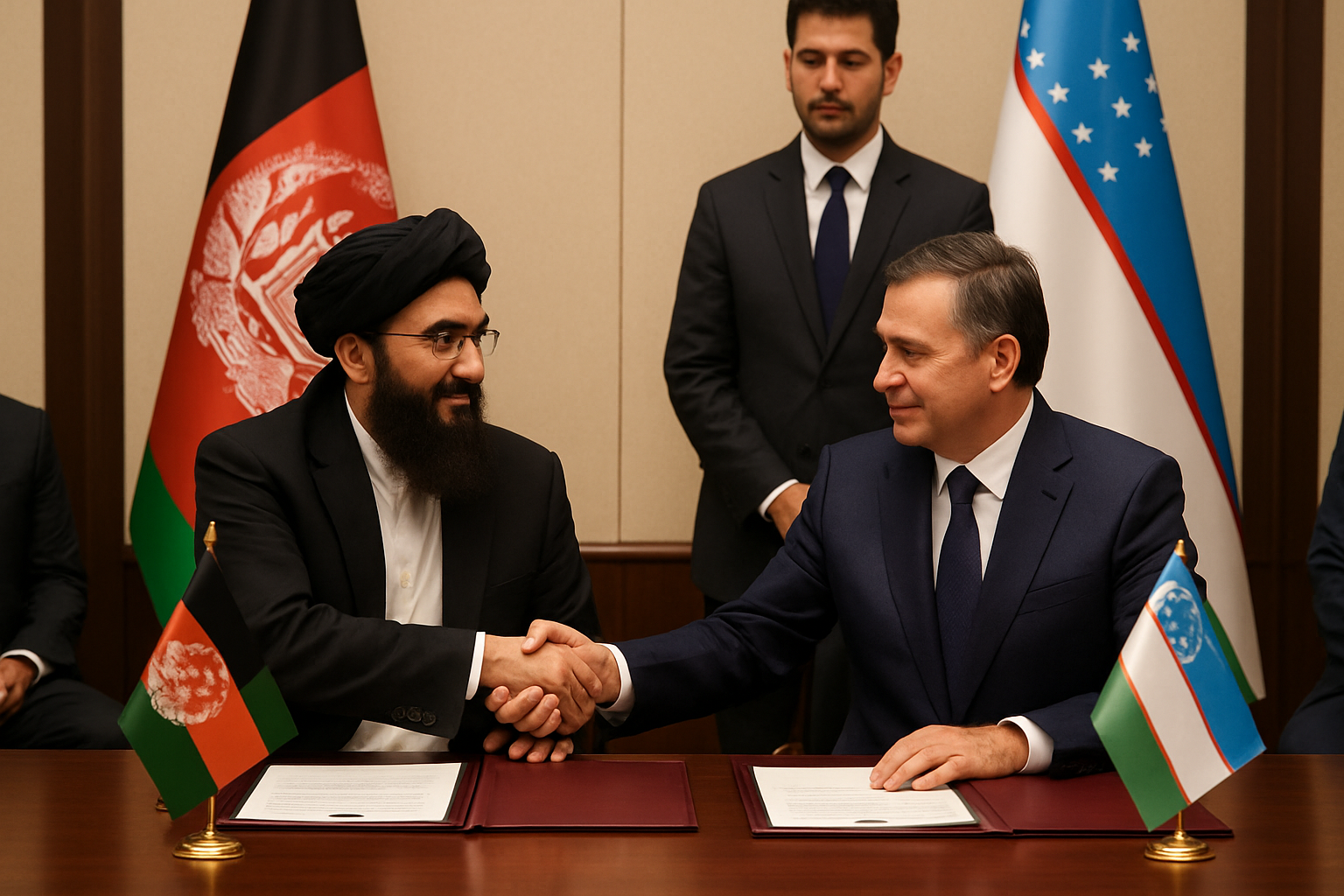
Afghanistan and Uzbekistan have signed a comprehensive package of 25 trade agreements worth $300 million, representing a watershed moment for bilateral economic cooperation and regional integration in Central Asia.
The agreements were formalized during a high-level Afghanistan–Uzbekistan business forum attended by Afghanistan's Minister of Industry and Commerce Nuruddin Azizi and Uzbekistan's Syrdarya regional Governor Erkinjon Turdimov, along with senior officials and business leaders from both nations.
Unprecedented Economic Momentum
Minister Azizi emphasized the strong political and economic momentum driving the expansion of bilateral ties, noting that trade between the two countries has experienced unprecedented growth in recent years. The minister expressed confidence that both nations are positioned to significantly increase trade volumes in 2025 compared to 2024, highlighting substantial untapped potential in the relationship.
"There is tremendous opportunity for our two nations to deepen economic cooperation across multiple sectors," Azizi stated during the forum. The agreements represent a major step forward in Afghanistan's efforts to strengthen its economic position through regional partnerships.
"Both countries aim to increase trade volumes in 2025 compared to 2024, pointing to significant untapped potential in bilateral economic cooperation."
— Nuruddin Azizi, Afghanistan Minister of Industry and Commerce
Strategic Trade Arrangements
A key feature of the new framework is the establishment of preferential trade arrangements covering eight Afghan export items and six Uzbek products. These preferential terms are designed to facilitate smoother trade flows and reduce barriers for priority goods from both countries.
Governor Turdimov underscored the long-standing historical and economic links between Afghanistan and Uzbekistan, noting the increasingly active role of Afghan traders in the Syrdarya region. This growing commercial presence reflects the deepening economic integration between the two neighboring nations.
The agreements span multiple sectors and are expected to create new opportunities for businesses on both sides of the border. The preferential arrangements will enable exporters to access favorable conditions when trading specific products identified as priorities by both governments.
Regional Context and Significance
The $300 million trade package comes at a crucial time for Afghanistan as the country seeks to rebuild its economy and strengthen international partnerships. For Uzbekistan, the agreements represent part of its broader strategy to position itself as a key hub for Central Asian trade and commerce.
The timing of these agreements is particularly significant as it demonstrates Afghanistan's continued integration into regional economic networks despite ongoing challenges. The partnership with Uzbekistan provides a vital trade corridor and helps diversify Afghanistan's economic relationships.
Central Asia has emerged as an increasingly important region for international trade and investment, with countries seeking to leverage their strategic geographic positions to facilitate commerce between Europe, Asia, and the Middle East. The Afghanistan-Uzbekistan partnership fits within this broader regional development trend.
Implementation and Future Prospects
The successful implementation of these agreements will require sustained cooperation between government agencies, business communities, and trade organizations in both countries. The preferential trade arrangements will need careful monitoring to ensure they achieve their intended objectives of boosting bilateral commerce.
Both nations have committed to working closely together to realize the full potential of their economic partnership. Regular consultations and review mechanisms are expected to be established to track progress and address any implementation challenges that may arise.
The Afghanistan-Uzbekistan trade agreements serve as a model for other regional partnerships, demonstrating how neighboring countries can work together to create mutually beneficial economic arrangements despite broader geopolitical complexities.
Economic Impact and Opportunities
The $300 million value of the agreements represents a substantial commitment by both countries to deepening their economic relationship. For Afghan businesses, the preferential access to Uzbek markets opens new opportunities for expansion and growth.
Uzbek companies similarly stand to benefit from improved access to Afghan markets and the preferential terms negotiated for their priority products. The agreements are expected to stimulate increased business-to-business contacts and joint ventures between companies from both nations.
The framework established through these agreements provides a foundation for further expansion of trade relations as both countries continue to develop their economies and strengthen their international partnerships. The emphasis on preferential arrangements for specific products demonstrates a targeted approach to trade facilitation.
As Afghanistan continues its economic recovery and development efforts, partnerships like the one with Uzbekistan provide crucial opportunities for growth and integration into regional and global markets. The success of these agreements could pave the way for similar partnerships with other neighboring countries and contribute to broader regional stability and prosperity.