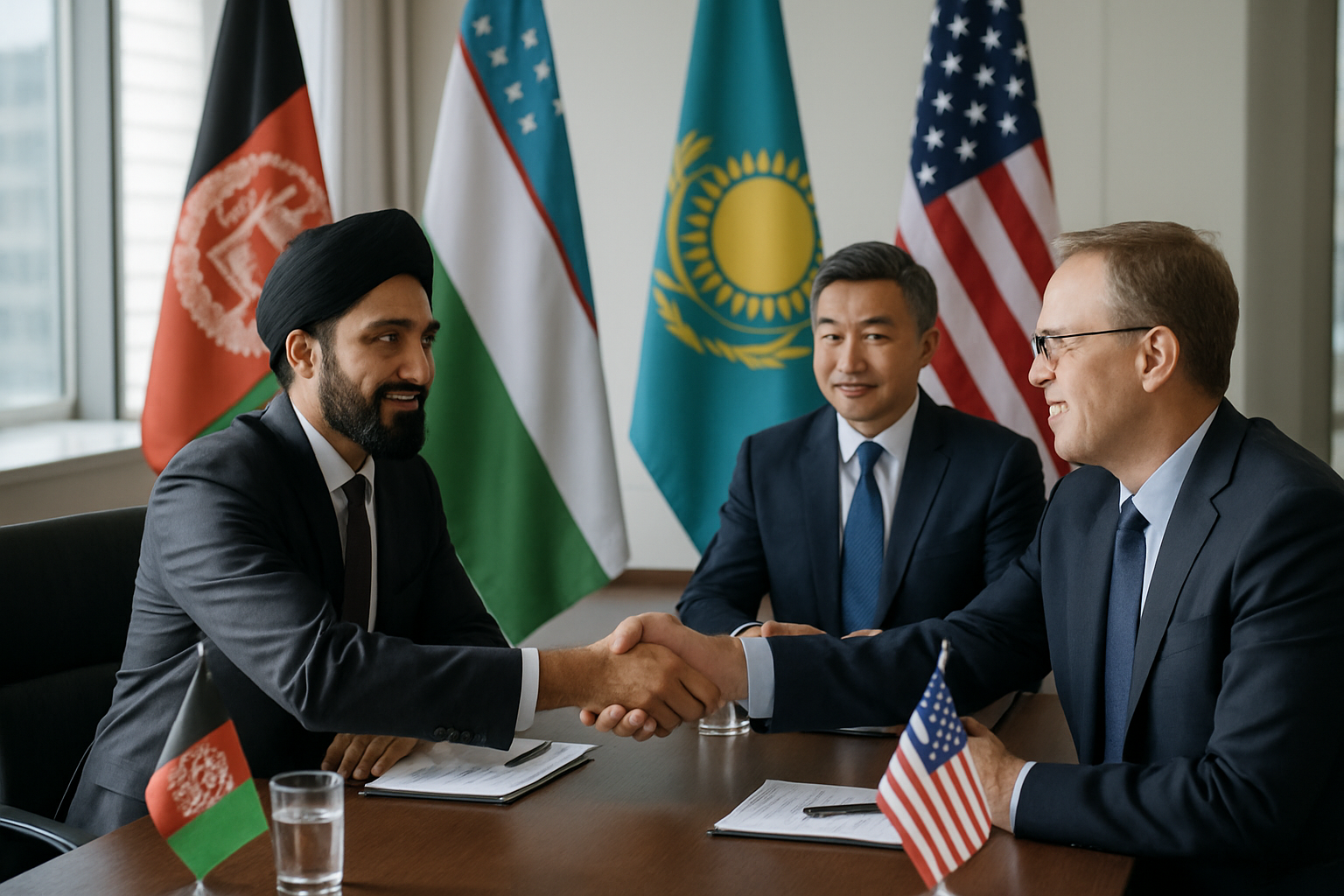
Central Asia is experiencing a dramatic surge in international business partnerships as Afghanistan and Uzbekistan deepen their trade relationship while Kazakhstan secures a massive $1.1 billion mining investment from US partners, signaling a fundamental shift in the region's economic landscape and growing confidence from international investors.
Afghanistan-Uzbekistan Trade Partnership Expands
The Afghanistan-Uzbekistan economic relationship continues to strengthen following recent high-level discussions between officials from both nations. Building on the foundation of 25 comprehensive trade agreements worth $300 million signed in February 2026, the two countries are implementing preferential trade arrangements that cover eight Afghan export items and six Uzbek products.
These developments represent a critical milestone in Afghanistan's regional economic integration efforts, occurring alongside Uzbekistan's strategic positioning as Central Asia's premier trade hub. The partnership demonstrates how neighboring countries can achieve mutually beneficial arrangements despite broader geopolitical challenges affecting the region.
"Central Asia is not merely a neighbor for Azerbaijan, but a natural partner. This principle applies equally to the growing cooperation between all Central Asian nations."
— Farid Shafiyev, CAIR Chairman
The bilateral trade framework established between Afghanistan and Uzbekistan includes regular consultation mechanisms and review processes, providing a foundation for continued expansion. Governor Erkinjon Turdimov of Uzbekistan's Syrdarya region has emphasized the historical and economic links between the nations, highlighting the active role of Afghan traders in regional commerce.
Kazakhstan Secures Major US Mining Investment
In a parallel development showcasing Central Asia's growing appeal to international investors, Kazakhstan has attracted significant attention from US capital markets. Minister of Industry and Construction Yersaiyn Nagaspayev held strategic discussions with Cove Kaz Capital Group CEO Dominic Heaton regarding a substantial $1.1 billion investment project focused on developing major mineral deposits in the Karagandy Region.
This mining sector investment represents a cornerstone of expanding US-Kazakhstan cooperation, demonstrating international confidence in Central Asia's economic stability and resource potential. The partnership aligns with broader trends showing increased American interest in diversifying critical mineral supply chains away from traditional sources.
The investment discussions reflect Kazakhstan's successful positioning as a reliable partner for international business ventures. Recent developments include the country's historic World Bank Group partnership framework (2026-2031) providing up to $1 billion in annual financing, and completion of major infrastructure projects establishing seven international road corridors for enhanced regional connectivity.
Regional Economic Integration Momentum
These business partnerships occur within the context of unprecedented regional economic development across Central Asia. Kazakhstan has achieved recognition as a leading scientific research nation in the CIS according to SCImago rankings, while implementing digital tenge integration across multiple economic sectors. The country's strategic approach to international cooperation emphasizes pragmatic sovereignty-based partnerships.
Uzbekistan's banking sector has demonstrated remarkable growth, with commercial banking loan portfolios reaching 604 trillion soums (13% increase) and banking system assets totaling 924.8 trillion soums (20% growth). State-owned banks control 63% of assets and 67% of loans, providing stability for international partnership development.
The region's infrastructure development has created favorable conditions for business expansion. Recent completion of transportation networks, including the ratified Uzbekistan-Afghanistan-Pakistan railway project, enables enhanced trade flows and market access for international partners.
Strategic Context and Global Implications
These developments reflect Central Asia's evolution from a peripheral region to a strategic economic hub attracting international investment and partnership. The Afghanistan-Uzbekistan trade expansion demonstrates practical economic cooperation prioritizing mutual benefit and regional stability, while Kazakhstan's US mining partnership showcases the region's appeal to major international investors.
The partnerships align with global trends toward supply chain diversification and strategic resource development. As traditional economic relationships face pressures from geopolitical tensions and supply chain vulnerabilities, Central Asian nations are positioned to offer alternative pathways for international business cooperation.
Recent infrastructure investments across the region, including renewable energy projects and transportation networks, have created foundations supporting expanded international commerce. Azerbaijan's positioning as a recognized East-West energy coordinator and Kazakhstan's development of green fuel production capabilities demonstrate the region's technological sophistication and environmental awareness.
Technology Integration and Modern Partnership Models
Contemporary business partnerships in Central Asia increasingly emphasize technology transfer and institutional capability building rather than simple commodity exchanges. Kazakhstan's quantum technology center development through partnership with Singapore exemplifies this sophisticated approach to international cooperation.
Digital transformation initiatives, including Uzbekistan's banking sector modernization and Kazakhstan's digital currency integration, provide technological infrastructure supporting international business operations. These developments enable more efficient cross-border transactions and enhanced transparency for international partners.
The emphasis on technology integration extends to environmental considerations, with renewable energy projects and sustainable development practices becoming standard requirements for international partnerships. This approach aligns with global trends toward environmentally conscious business practices and climate adaptation.
Economic Multiplier Effects and Future Prospects
The cumulative impact of these international business partnerships extends beyond immediate project scope to create broader economic multiplier effects. Infrastructure development supports manufacturing capabilities, technology transfer builds human capital, and international partnerships enhance Central Asia's integration into global economic networks.
Success in attracting international investment and developing regional trade relationships positions Central Asian nations as increasingly important players in global commerce. The region's strategic location between Europe and Asia, combined with abundant natural resources and improving business environments, creates competitive advantages for continued economic development.
"The region is witnessing a fundamental transformation from traditional export dependence toward diversified economic models with global implications for resource-rich developing economies."
— Regional Development Analysis, February 2026
Looking ahead, these partnerships provide templates for sustainable economic development that balance international cooperation with domestic priorities. The success of current initiatives could trigger additional international investment, creating positive development cycles that strengthen Central Asia's position in the global economy.
The institutional frameworks being established through these partnerships, including regular consultation mechanisms and joint investment committees, provide foundations for sustained cooperation extending beyond current political cycles. This approach ensures that economic relationships can weather short-term challenges and continue delivering benefits to all parties involved.