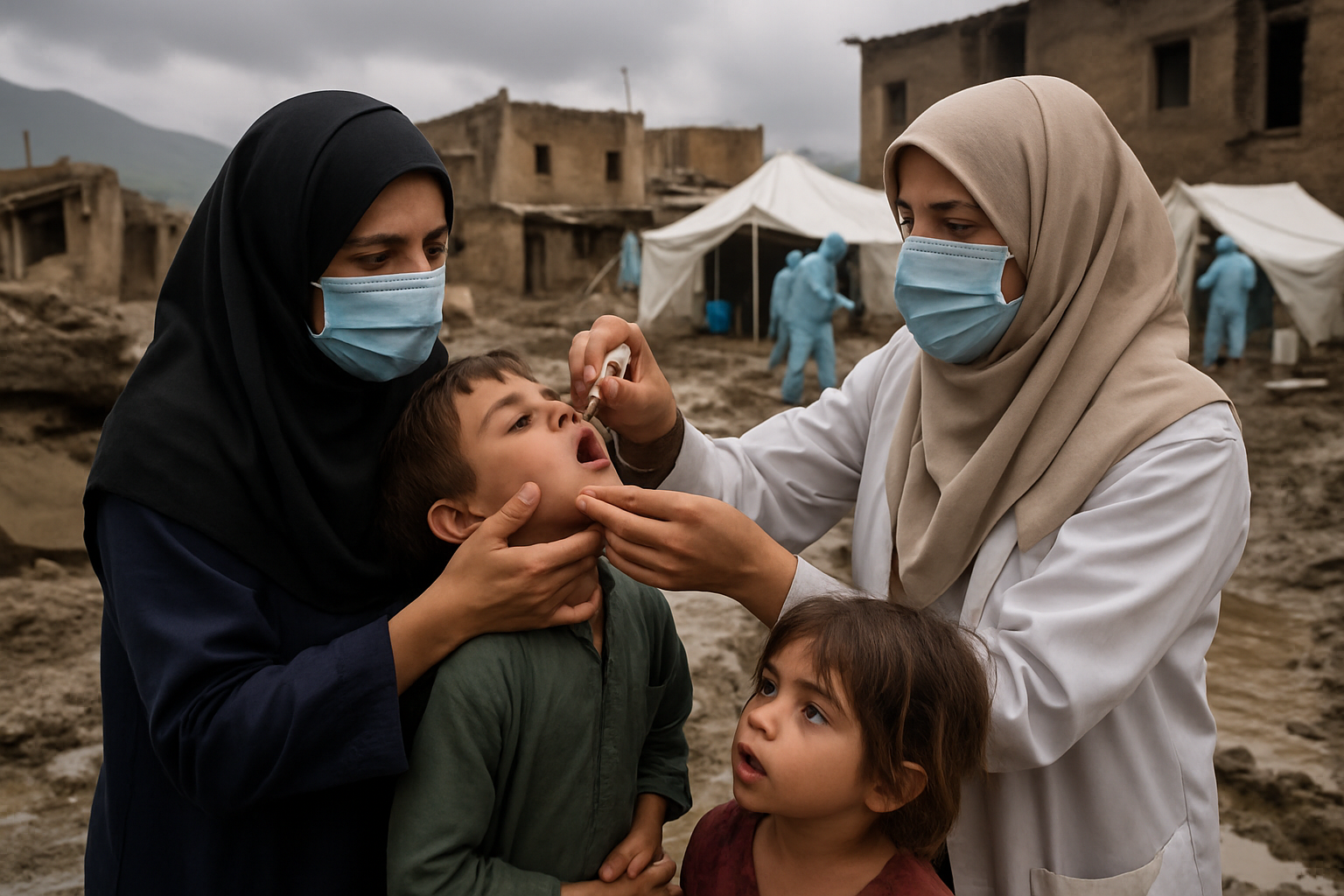
Afghanistan is grappling with a devastating convergence of extreme weather disasters and urgent health challenges as officials report 148 deaths and 216 injuries from severe weather in the past two weeks, while health authorities prepare to launch a critical nationwide polio vaccination campaign across the embattled nation.
The latest wave of extreme weather has unleashed heavy rain, flash floods, landslides, earthquakes and lightning strikes across large parts of the country, adding to what is already one of the world's most severe humanitarian crises. According to Afghan disaster authorities, the casualties represent a sharp escalation in weather-related fatalities that have plagued the nation throughout 2026.
Devastating Weather Toll Mounts
The extreme weather events have struck multiple provinces simultaneously, overwhelming emergency response capabilities already stretched thin by years of crisis. The death toll of 148 represents one of the deadliest two-week periods from natural disasters in recent Afghan history, highlighting the country's acute vulnerability to climate-related emergencies.
Flash flooding has been particularly devastating, with traditional infrastructure proving inadequate against the intensity of recent precipitation. Landslides triggered by saturated ground have claimed additional lives, while lightning strikes during severe thunderstorms have added to the casualty count. The compound nature of these disasters—occurring simultaneously rather than sequentially—has created unprecedented challenges for emergency responders.
"The latest wave of extreme weather has added to growing humanitarian pressure in one of the world's most vulnerable nations."
— Afghan Disaster Management Authority
The weather crisis unfolds against the backdrop of Afghanistan's position as the world's unhappiest country for the third consecutive year according to the World Happiness Report 2026, while simultaneously facing the worst hunger crisis in its recorded history with 4 million children at risk of malnutrition.
Polio Campaign Amid Crisis
Despite the challenging conditions, Polio-Free Afghanistan has announced a new nationwide anti-polio vaccination campaign set to begin next Monday, calling on families across the country to ensure their children receive the life-saving immunization. The campaign aims to protect children under five years of age and advance Afghanistan's long-standing goal of eradicating polio completely.
The timing of the campaign during the current weather emergency underscores both the urgency of polio eradication efforts and the resilience of health workers operating under extremely difficult circumstances. Campaign organizers face the dual challenge of reaching vulnerable populations while navigating flood-damaged infrastructure and displacement caused by the recent disasters.
Afghanistan remains one of only two countries worldwide where wild poliovirus continues to circulate, making this vaccination campaign critical not only for national health security but for global eradication efforts. The country's healthcare system, already severely constrained by funding cuts and restrictions, must now deliver this vital service while responding to weather-related medical emergencies.
Healthcare System Under Pressure
The convergence of natural disasters and public health challenges highlights the precarious state of Afghanistan's healthcare infrastructure. According to the World Health Organization, emergency medical oxygen is available at only 23 hospitals across the country—12 in Kabul and 11 in provincial areas—while hundreds of health centers have been forced to close due to funding shortfalls.
The systematic exclusion of women from the workforce has created acute shortages of female medical professionals, a critical gap when cultural and religious norms require female healthcare providers to treat female patients. This staffing crisis becomes even more acute during emergency responses when medical needs surge dramatically.
International health organizations continue to provide support despite political complexities. The International Federation of Red Cross and Red Crescent (IFRC) delivered health services to over 2 million people during 2025 through more than 128 healthcare centers, demonstrating the continued commitment to humanitarian medical assistance even under challenging circumstances.
Climate Crisis Context
Afghanistan's weather disasters occur within the context of unprecedented global climate volatility. The recent extreme weather events align with patterns observed globally during what has become the 23rd consecutive month of temperatures exceeding 1.5°C above pre-industrial levels—the longest sustained warming period in recorded human history.
Traditional construction methods prevalent throughout Afghanistan have proven inadequate for the intensified precipitation and extreme weather patterns. The country's mountainous terrain, while offering strategic advantages, creates particular vulnerabilities to flash flooding and landslides when extreme precipitation events occur.
Climate experts note that Afghanistan's position at the intersection of multiple climate systems makes it particularly vulnerable to the atmospheric disruption patterns that have characterized global weather in 2026. The combination of extreme heat events, irregular precipitation patterns, and intensified storm systems creates compound risks that challenge traditional disaster preparedness approaches.
Humanitarian Crisis Deepens
The weather disasters compound Afghanistan's existing humanitarian emergency, which has been described as the worst in 25 years. Eighty-eight percent of female-headed households are unable to meet minimum living requirements, compared to 75% of the general population, highlighting how systematic workforce exclusions create structural economic damage affecting the most vulnerable populations.
The World Food Programme has been forced to turn away three out of four hungry children due to budget shortfalls, representing what observers call a fundamental failure of global humanitarian architecture. This crisis of resource allocation becomes even more acute when natural disasters create additional emergency needs that compete for limited humanitarian funding.
"We are witnessing a convergence of natural disasters, economic collapse, and systematic human rights violations that is testing the limits of international humanitarian response."
— International Aid Official
Regional security challenges further complicate humanitarian access. Border violence with Pakistan has resulted in 289 civilian casualties and displaced over 115,000 people since late February. Bilateral trade has collapsed by 59%, from $550 million to $228 million, as the Chaman-Spin Boldak and Torkham border crossings face repeated closures.
International Response Challenges
The scale and complexity of Afghanistan's compound crises—natural disasters, health emergencies, economic collapse, and political isolation—present unprecedented challenges for international humanitarian organizations. Traditional response frameworks designed for sequential emergencies prove inadequate when multiple crisis types occur simultaneously.
The UN Security Council's decision to approve only a three-month extension for UNAMA, rather than the usual annual renewal, reflects international frustration with the lack of progress on human rights issues. This shortened mandate cycle creates additional uncertainty for long-term humanitarian planning precisely when sustained engagement is most critical.
Despite these challenges, innovative cooperation models continue to emerge. India's recent delivery of 2.5 tons of emergency medical supplies to Kabul demonstrates how bilateral humanitarian diplomacy can maintain civilian welfare focus despite broader political complexities. Similarly, the continued success of vaccination programs shows that public health cooperation can transcend political boundaries when lives are at stake.
Building Resilience
Afghanistan's current crisis provides insights into the challenges facing vulnerable nations as climate change intensifies extreme weather events. The country's experience demonstrates how traditional infrastructure and emergency response systems designed for historical climate patterns prove inadequate for current conditions.
The resilience shown by healthcare workers continuing vaccination campaigns amid natural disasters illustrates the importance of maintaining essential services during emergencies. These efforts provide templates for how critical public health programs can adapt to operate effectively under increasingly challenging environmental conditions.
Recovery approaches increasingly emphasize "building back better" with climate-resilient infrastructure rather than simply restoring previous systems. This transformation requires sustained international support that addresses both immediate humanitarian needs and longer-term adaptation requirements.
Looking Forward
The convergence of weather disasters and health campaigns in Afghanistan represents both crisis and opportunity. While immediate humanitarian needs demand urgent attention, the country's experience provides lessons for the international community about managing compound emergencies in an era of climate volatility.
The success of the upcoming polio vaccination campaign will serve as an important test of Afghanistan's ability to maintain critical public health functions amid multiple ongoing crises. International support for both emergency response and long-term health system strengthening remains essential for protecting vulnerable populations and advancing global health security objectives.
As climate scientists warn that current extreme weather patterns may become routine by the 2030s without comprehensive adaptation measures, Afghanistan's experience underscores the urgent need for international cooperation frameworks that can address humanitarian, health, and climate challenges simultaneously rather than as separate issues.
The coming weeks will be critical in determining whether the international community can maintain adequate humanitarian support for Afghanistan's multiple crises while helping build the resilience necessary to protect vulnerable populations from increasingly frequent and severe climate-related disasters.