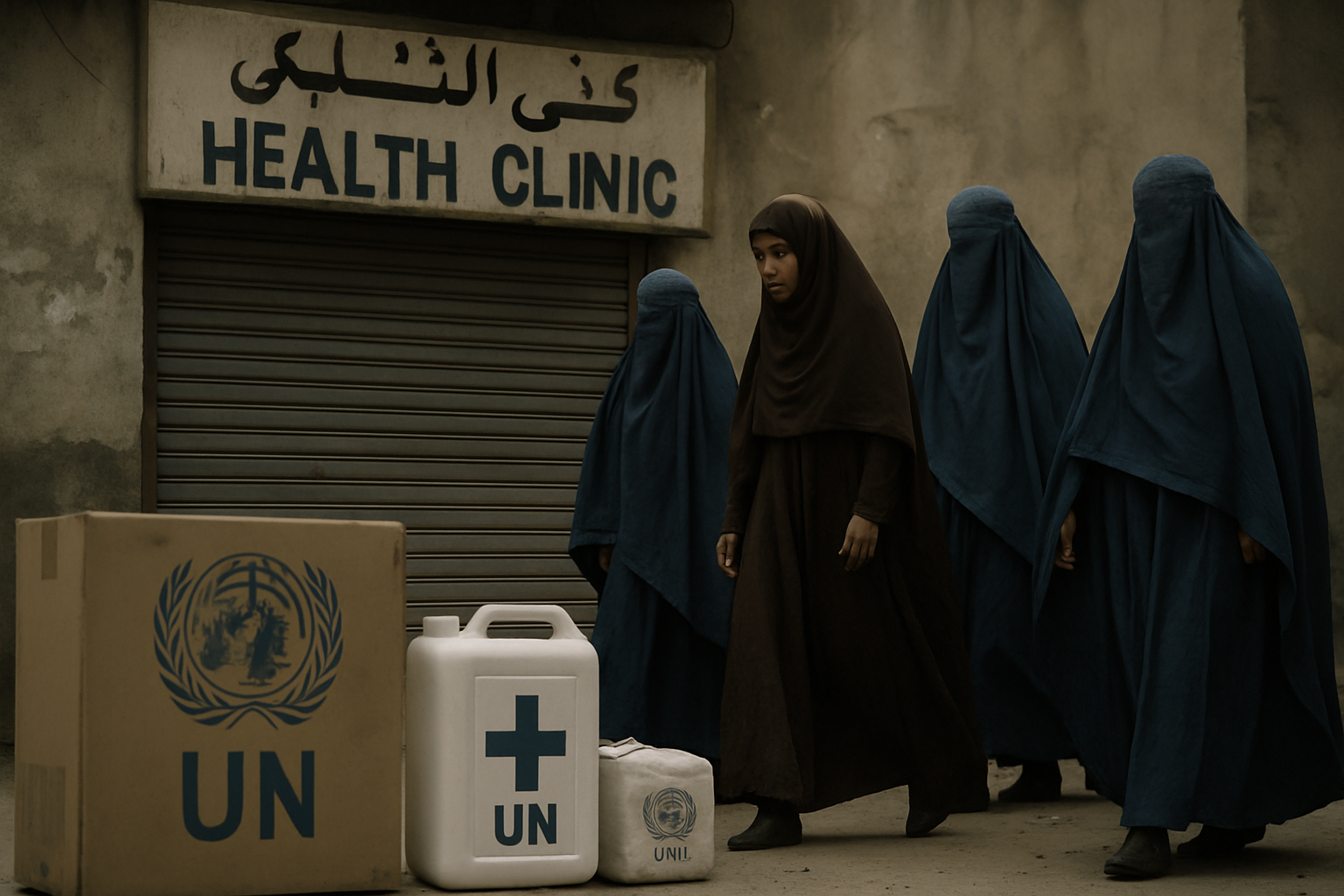
The United Nations has issued urgent warnings about the catastrophic deterioration of women's rights in Afghanistan, as new Taliban restrictions on female civil society workers compound an already devastating healthcare crisis affecting millions of Afghan women and girls.
UN Women strongly condemned Taliban Order No. 12, issued in February 2026, which bans women from working in national and international civil society organizations. Susan Ferguson, UN Women's Special Representative in Afghanistan, described the directive as a "serious violation of human rights" that deepens gender-based violence and worsens humanitarian conditions for the country's most vulnerable populations.
Healthcare System Faces Critical Female Doctor Shortage
UN Special Rapporteur on Human Rights in Afghanistan, Richard Bennett, revealed in his latest report that the country's health system faces an acute shortage of female medical professionals due to sweeping restrictions on women's participation in public life. The crisis has created a devastating paradox: healthcare remains one of the limited sectors where women can work, yet systematic barriers prevent adequate staffing.
"Afghanistan's health sector faces critical shortages of female doctors due to sweeping restrictions on women," Bennett stated in his February 25, 2026 report. The shortage is particularly concerning given that cultural and religious norms require female patients to be treated by female healthcare providers in many circumstances.
"Sweeping restrictions and sharp international funding cuts are severely undermining Afghan women's access to essential healthcare services, deepening an already fragile health system."
— Richard Bennett, UN Special Rapporteur on Human Rights in Afghanistan
Unprecedented Employment Restrictions Target Civil Society
The latest Taliban directive represents an escalation in systematic exclusion of women from Afghanistan's workforce. Since the Taliban's return to power in August 2021, women have been progressively banned from most forms of employment, leaving healthcare as one of the few remaining sectors where female participation was permitted.
UN Development Programme reports reveal that 88% of female-headed households are unable to meet minimum living requirements, compared to 75% of the general population. This economic crisis affects approximately half of Afghanistan's workforce, as women comprised a significant portion of the labor force before the Taliban's restrictions.
International Aid Crisis Compounds Healthcare Challenges
The healthcare emergency has been exacerbated by international aid cuts that have forced hundreds of health center closures across Afghanistan. The World Health Organization (WHO) has responded by delivering medical oxygen to 23 hospitals (12 in Kabul and 11 in other provinces) to address critical shortages in the country's devastated healthcare infrastructure.
Afghanistan is currently experiencing what the WHO describes as the worst humanitarian crisis in 25 years. The combination of economic collapse, natural disasters, and systematic exclusion of women from essential services has created a perfect storm of human suffering.
Regional and International Response
The deteriorating situation has prompted broader international concern about regional stability. Pakistan's Prime Minister Shehbaz Sharif and Kazakhstan's President Tokayev have discussed Afghanistan's security implications, emphasizing that regional stability is essential for development.
China has warned the UN Security Council about severe terrorist threats in Afghanistan, citing the continued presence of ISIL, al-Qaeda, and the East Turkestan Islamic Movement (ETIM). Chinese envoy Sun Lei referenced recent attacks, including a bombing at a Chinese restaurant that killed seven people, as evidence of ongoing security challenges.
Humanitarian Agencies Struggle to Maintain Operations
Despite the challenging operating environment, international humanitarian organizations continue their efforts to serve Afghanistan's population. The International Federation of Red Cross and Red Crescent (IFRC) provided health services to over 2 million people during 2025, supporting more than 128 healthcare centers in what represents one of the largest coordinated medical responses in the region's history.
The World Food Programme (WFP) provided school meals to 880,000 children across Afghanistan during 2025, supporting education amid worsening hunger and economic hardship. However, the new restrictions on female civil society workers threaten to further limit humanitarian access and effectiveness.
Economic Implications of Gender Restrictions
Economic analysts warn that the systematic exclusion of women from Afghanistan's workforce has created long-term structural damage to the economy. With women representing approximately half of the potential workforce, their exclusion has significantly reduced the country's productive capacity and economic resilience.
The restrictions particularly impact sectors that relied heavily on female participation, including education, healthcare, and social services. This has created service delivery gaps that affect the entire population, not just women and girls.
International Legal and Diplomatic Pressure
The Taliban's latest restrictions have drawn condemnation from international legal experts who argue they violate fundamental human rights principles. The UN Human Rights Council has documented systematic discrimination against women and girls as potentially constituting crimes under international law.
Several countries have indicated they will not normalize relations with the Taliban government while these restrictions remain in place. The international community faces the challenge of balancing humanitarian needs with political pressure to address human rights violations.
Future Outlook and Challenges
Bennett's upcoming presentation to the 61st UN Human Rights Council session in Geneva is expected to provide comprehensive documentation of the deteriorating situation. The report will likely include recommendations for international action to protect the fundamental rights of Afghan women and girls who have been systematically excluded from public life.
The convergence of humanitarian emergency and systematic rights violations presents the international community with complex challenges. Regional neighbors recognize that spillover effects cannot be contained within Afghanistan's borders, requiring coordinated responses that address both immediate humanitarian needs and longer-term stability concerns.
As Afghanistan enters its third year under Taliban rule, the situation for women and girls continues to deteriorate. The international community's response will be crucial in determining whether effective mechanisms can be developed to protect human rights while addressing the urgent humanitarian needs of Afghanistan's population.