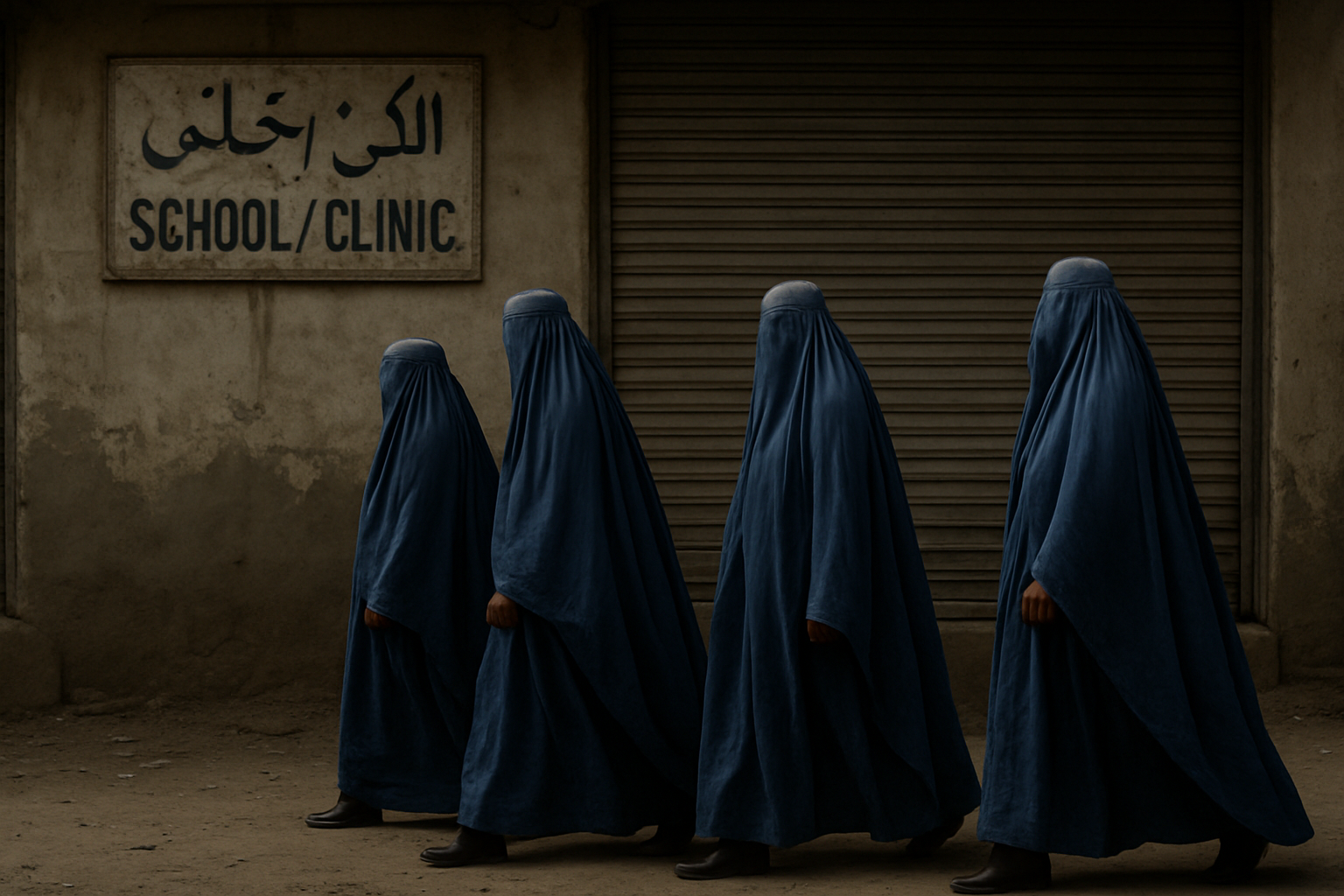
United Nations experts are issuing urgent warnings that systematic restrictions on women's rights in Afghanistan could trigger a broader health and humanitarian catastrophe, as new data reveals the devastating toll of Taliban policies on the country's most vulnerable populations.
UN Special Rapporteur Richard Bennett warned Monday that restrictions on women and girls in Afghanistan risk creating a severe health crisis throughout the country, with policies systematically excluding women from public life contributing to what experts describe as the world's worst humanitarian emergency in 25 years.
The warnings come as UNICEF announced it treated 610,000 children suffering from severe acute malnutrition in Afghanistan during the past year, highlighting the intersection between gender-based restrictions and the broader collapse of essential services affecting millions of Afghans.
Healthcare System Under Unprecedented Strain
Bennett's assessment reveals critical shortages of female medical professionals due to systematic restrictions on women's participation in healthcare - a crisis made more severe by cultural and religious norms requiring female patients to be treated by female healthcare providers.
"The sweeping restrictions and sharp international funding cuts are severely undermining Afghan women's access to essential healthcare services, deepening the already fragile health system," Bennett emphasized in his latest report.
The healthcare emergency has been exacerbated by international aid cuts that forced hundreds of health center closures throughout the country. The World Health Organization delivered medical oxygen to just 23 hospitals in February 2026 - 12 in Kabul and 11 across the provinces - addressing critical shortages in what WHO assessments describe as the worst humanitarian crisis in 25 years.
Malnutrition Crisis Reaches Critical Levels
UNICEF's announcement Monday that it treated 610,000 severely malnourished children represents a staggering humanitarian emergency, with millions more children remaining at risk amid worsening food insecurity across Afghanistan.
The UN Children's Fund reported that together with its partners, the organization has been working to address severe acute malnutrition affecting Afghanistan's youngest and most vulnerable populations, but the scale of need continues to outstrip available resources.
"The intersection of gender-based restrictions and humanitarian needs is creating a perfect storm that threatens the survival of Afghanistan's most vulnerable populations."
— UN Humanitarian Official
The malnutrition crisis occurs against the backdrop of systematic restrictions that have effectively removed women from Afghanistan's workforce since August 2021, with UN Development Programme data showing 88% of female-headed households unable to meet minimum living requirements compared to 75% of the general population.
International Response and Historical Context
Afghanistan currently ranks 181st out of 181 countries in the Georgetown Institute's Women, Peace and Security Index, marking the absolute lowest position globally. The systematic exclusion of women from public life has created what international experts describe as a "gender apartheid" system unprecedented in modern history.
The International Federation of Red Cross and Red Crescent Societies provided health services to more than 2 million people in Afghanistan during 2025, supporting 128+ healthcare centers amid the deteriorating conditions. The World Food Programme provided school meals to 880,000 children in 2025, but girls remain excluded from secondary education under Taliban restrictions.
Recent developments have seen escalating tensions as Taliban Order No. 12 banned women from national and international civil society organizations, further limiting the already constrained humanitarian response. UN Women condemned the order as a "serious violation of human rights" that deepens gender-based violence and worsens humanitarian conditions.
Economic Dimensions of the Crisis
The systematic exclusion of women from Afghanistan's economy represents a fundamental structural challenge affecting not just female-headed households but the entire population. The removal of approximately half of Afghanistan's potential workforce has created economic damage that reverberates throughout society.
Service delivery gaps caused by women's exclusion from employment affect healthcare, education, and social services that serve men, women, and children alike. The economic impact has been compounded by international sanctions and aid restrictions that have further weakened Afghanistan's capacity to provide basic services.
International legal experts argue that the systematic restrictions on women's rights violate fundamental human rights and may constitute crimes under international law, challenging both international human rights principles and authentic Islamic interpretations according to global Islamic scholars.
Regional and International Implications
The Afghanistan crisis has broader regional implications, with neighboring countries grappling with spillover effects including refugee flows and security concerns. China has warned the UN Security Council about the continued presence of ISIS-K, al-Qaeda, and other terrorist groups in Afghanistan, contradicting Taliban claims of having defeated terrorism.
The interconnected challenges of governance limitations, security concerns, and humanitarian crisis create complex dynamics that require sustained international attention and coordinated response mechanisms.
Looking Forward: Urgent Action Needed
Bennett's upcoming presentation to the 61st UN Human Rights Council session in Geneva is expected to provide comprehensive documentation of the healthcare access restrictions and their impact on maternal and child health, along with recommendations for international action to protect the systematically excluded Afghan women and girls.
Humanitarian organizations stress that the current trajectory threatens not only the immediate welfare of Afghan women and children but could set dangerous precedents for women's rights globally. The convergence of gender-based restrictions, economic collapse, and health system failure represents what experts describe as a comprehensive challenge to fundamental principles of human dignity and equality.
As the international community grapples with balancing humanitarian needs against political considerations under Taliban governance, the deteriorating conditions for women and children underscore the urgent need for innovative approaches that can address civilian needs while protecting the systematically excluded from further harm.
The warnings from UN experts reflect growing consensus among international observers that Afghanistan's restrictions on women's rights represent not just a national tragedy but a global challenge that threatens to undermine decades of progress on gender equality and human rights worldwide.